
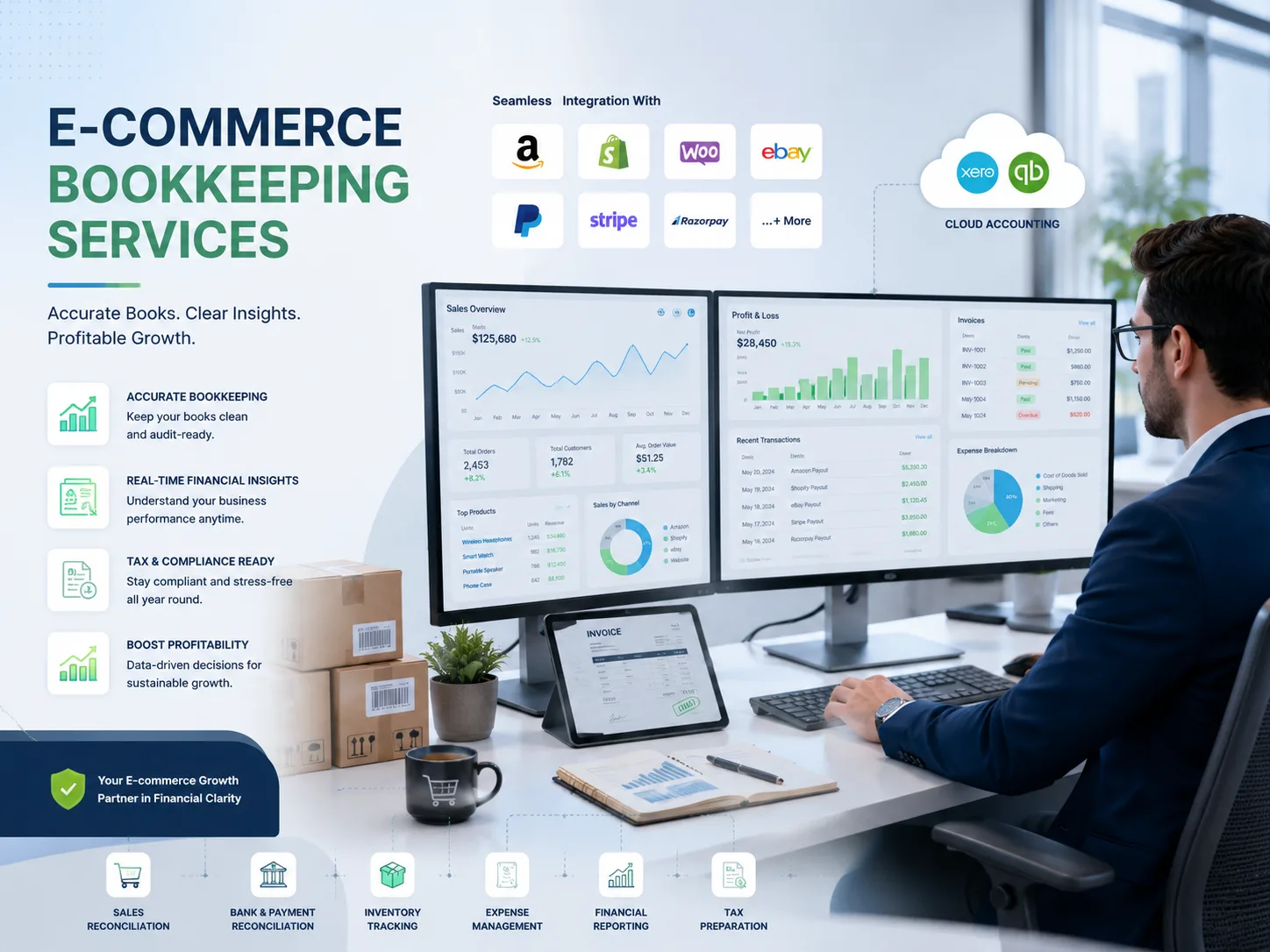
Running an online store involves much more than selling products and managing customers. Behind every successful e-commerce brand is accurate financial tracking, organized records, and reliable reporting. As digital businesses scale, understanding finances becomes essential for making profitable decisions. This is where bookkeeping for ecommerce business operations plays a critical role in maintaining financial health and supporting long-term growth.
Whether you operate a small Shopify store or a growing online marketplace, proper bookkeeping helps you monitor cash flow, manage expenses, and prepare for future opportunities.
What Is E-Commerce Bookkeeping and Why Does It Matter?
E-commerce bookkeeping is the process of recording, organizing, and analyzing financial transactions for an online business. Unlike traditional bookkeeping, e-commerce bookkeeping must handle unique challenges such as payment gateway fees, marketplace commissions, inventory costs, refunds, sales tax, and multiple revenue channels.
A reliable bookkeeping system helps online sellers:
- Track daily sales and expenses accurately
- Monitor inventory costs and profit margins
- Reconcile payments from platforms like Shopify, Amazon, and PayPal
- Prepare accurate financial reports
- Identify opportunities to reduce unnecessary spending
Many growing businesses also use ecommerce accounting services to simplify financial management and ensure their records remain accurate as sales volume increases.
Is AI Replacing Bookkeepers? The Future of Financial Management
Artificial intelligence has transformed many industries, including accounting. AI-powered tools can automate repetitive tasks such as transaction categorization, invoice processing, and financial reporting. However, AI is not completely replacing professional bookkeepers.
Instead, technology is changing the role of bookkeepers. Modern professionals now focus more on financial analysis, strategy, compliance, and helping business owners make better decisions.
AI tools can process information quickly, but they cannot fully replace human expertise in areas like:
- Understanding business goals
- Identifying financial risks
- Providing personalized advice
- Handling complex accounting situations
Businesses still benefit from combining automation with professional oversight for better accuracy and efficiency.
How Much Should a Bookkeeper Charge Per Hour?
Bookkeeping rates vary depending on experience, location, business complexity, and the services provided. Generally, professional bookkeepers may charge anywhere from $25 to $100+ per hour.
Factors that influence pricing include:
- Number of monthly transactions
- Inventory management requirements
- Accounting software setup
- Financial reporting needs
Industry experience
For e-commerce businesses, investing in quality bookkeeping can prevent costly mistakes and provide valuable financial insights that support growth.
Is QuickBooks Good for E-Commerce Businesses?
QuickBooks remains one of the most popular accounting platforms for small and medium-sized businesses. It offers useful features such as expense tracking, reporting, invoicing, and integration with many e-commerce platforms.
However, QuickBooks may require additional tools or integrations to handle complex online sales operations. Businesses with large inventories or multiple sales channels often need customized solutions.
While QuickBooks can be effective for many sellers, choosing the right system depends on the size, goals, and complexity of the business.
What Are Businesses Replacing QuickBooks With?
Some businesses are exploring alternatives to QuickBooks because they need more advanced automation, industry-specific features, or improved scalability.
Popular alternatives include:
- Xero for cloud-based accounting and collaboration
- NetSuite for larger businesses needing enterprise solutions
- Sage for advanced financial management
Zoho Books for affordable accounting automation
The right choice depends on factors such as sales volume, inventory requirements, integrations, and reporting needs.
Which Accounting Software Is Best for E-Commerce?
There is no single accounting platform that works best for every online business. The ideal software should integrate smoothly with sales platforms, payment processors, inventory systems, and tax tools.
Some important features to look for include:
- Automated transaction syncing
- Multi-channel sales tracking
- Inventory management support
- Real-time financial reporting
Tax preparation assistance
Working with experienced financial professionals like Berg Advisors can help e-commerce owners select suitable accounting solutions and create a bookkeeping process that supports business growth.
Why Accurate Bookkeeping Gives E-Commerce Businesses a Competitive Edge
Poor financial tracking can lead to missed expenses, inaccurate profit calculations, and cash flow problems. On the other hand, organized bookkeeping provides business owners with a clear understanding of where money is coming from and where it is going.
Professional bookkeeping helps online businesses:
- Make informed financial decisions
- Improve profitability
- Plan future investments
- Maintain accurate tax records
- Scale operations confidently
Conclusion: Build a Strong Financial Foundation for Your Online Store
E-commerce success requires more than strong marketing and great products. Accurate financial management is the foundation that allows online businesses to grow sustainably. From choosing the right software to maintaining accurate records, professional bookkeeping creates clarity and confidence.
Partnering with Berg Advisors can help e-commerce businesses streamline their financial processes, improve reporting accuracy, and focus on achieving long-term success.