The digital revolution has completely reshaped how businesses sell, deliver, and serve customers. At the center of this transformation lies E-Commerce and Supply Chain Management, a powerful combination that determines speed, efficiency, customer satisfaction, and long-term business growth.
In the digital age, customers expect fast delivery, real-time order tracking, flexible returns, and seamless shopping experiences. Meeting these expectations is impossible without a well-integrated approach to E-Commerce and Supply Chain Management.
This blog explores how e-commerce and supply chain management work together, the technologies driving change, benefits, challenges, future trends, and answers to common questions.
Understanding E-Commerce and Supply Chain Management
E-Commerce refers to buying and selling products or services online through websites, mobile apps, or digital marketplaces.
Supply Chain Management (SCM) involves managing the flow of goods, information, and finances—from raw material sourcing to production, warehousing, logistics, and final delivery.
When combined, E-Commerce and Supply Chain Management create an integrated digital ecosystem that ensures products are available, orders are fulfilled quickly, and customers remain satisfied.
Why E-Commerce and Supply Chain Management Are Inseparable Today
In traditional retail, supply chains operated behind the scenes. In the digital era, however, the supply chain is visible to customers.
Key reasons why e-commerce and supply chain management must work together:
- Customers demand same-day or next-day delivery
- Inventory must sync across multiple online channels
- Order volumes fluctuate rapidly
- Global sourcing and cross-border shipping are common
- Real-time tracking is expected
Without a strong supply chain backbone, even the best e-commerce platform will fail.
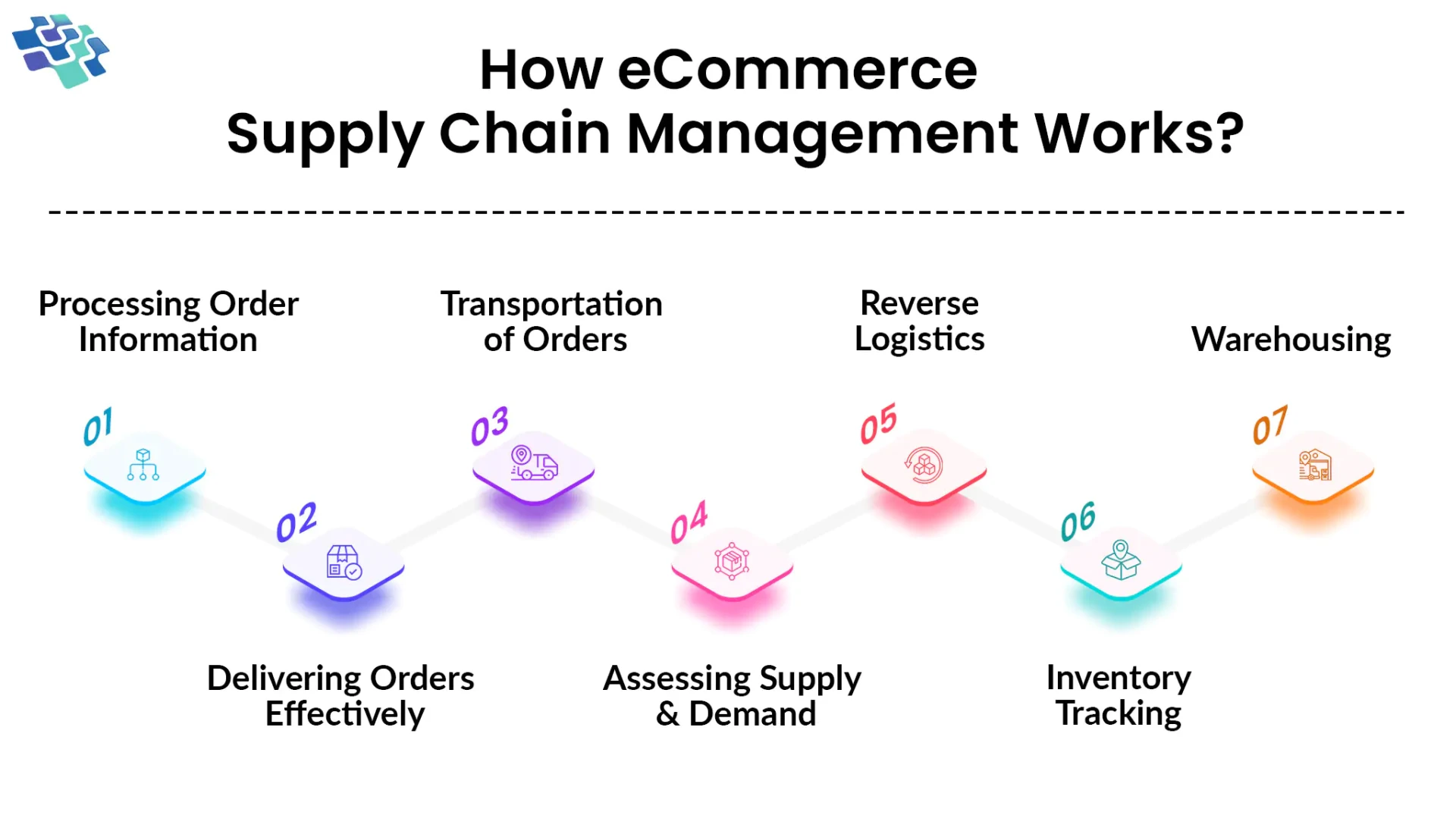
How Digital Transformation Is Reshaping Supply Chains
1. Real-Time Data & Visibility
Modern E-Commerce and Supply Chain Management systems provide real-time insights into:
- Inventory levels
- Order status
- Shipment tracking
- Supplier performance
This visibility helps businesses respond instantly to demand changes.
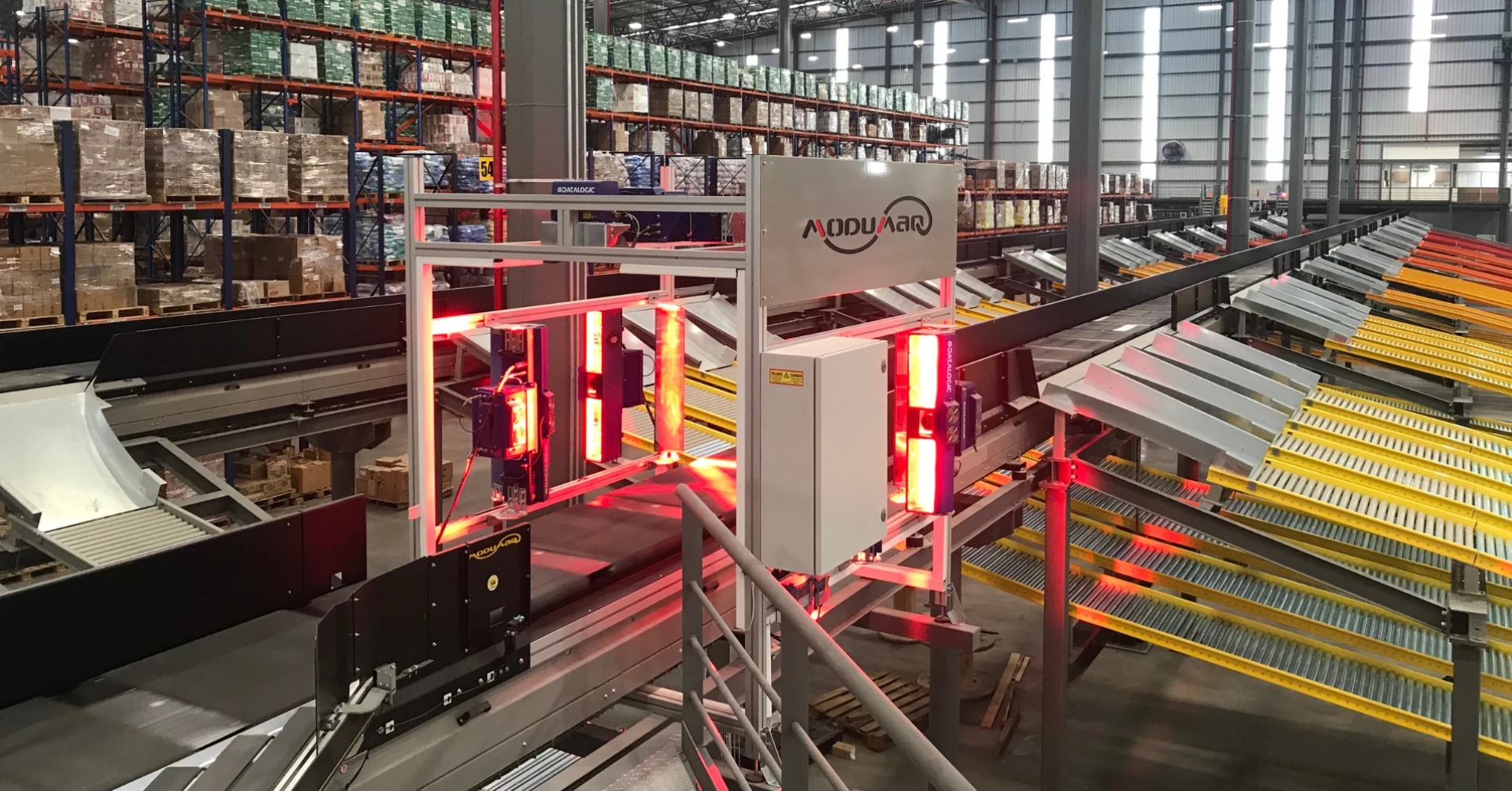
2. Automation & Smart Warehousing
Automation is a game-changer in e-commerce supply chains:
- Automated picking and packing
- Barcode and RFID scanning
- Robotics in warehouses
- Smart inventory replenishment
These technologies reduce errors and speed up order fulfillment.
3. Cloud-Based Supply Chain Platforms
Cloud solutions allow e-commerce businesses to:
- Scale operations easily
- Integrate suppliers, warehouses, and logistics partners
- Access data from anywhere
Cloud-based E-Commerce and Supply Chain Management improves agility and reduces infrastructure costs.
4. AI & Predictive Analytics
Artificial Intelligence helps forecast demand, optimize routes, and predict disruptions.
Benefits include:
- Accurate demand planning
- Reduced stockouts and overstock
- Optimized delivery routes
AI-powered insights are transforming how e-commerce supply chains operate.
Key Components of E-Commerce and Supply Chain Management
Inventory Management
Effective inventory management ensures:
- Right product, right quantity
- Reduced dead stock
- Faster order fulfillment
Integrated systems update inventory automatically after every sale.
Order Management System (OMS)
OMS acts as the brain of e-commerce operations:
- Captures orders from multiple channels
- Routes orders to nearest warehouse
- Manages cancellations and returns
Warehouse & Fulfillment Management
Efficient warehousing ensures:
- Faster picking and packing
- Accurate shipments
- Reduced delivery time
Modern warehouses are designed for speed and scalability.
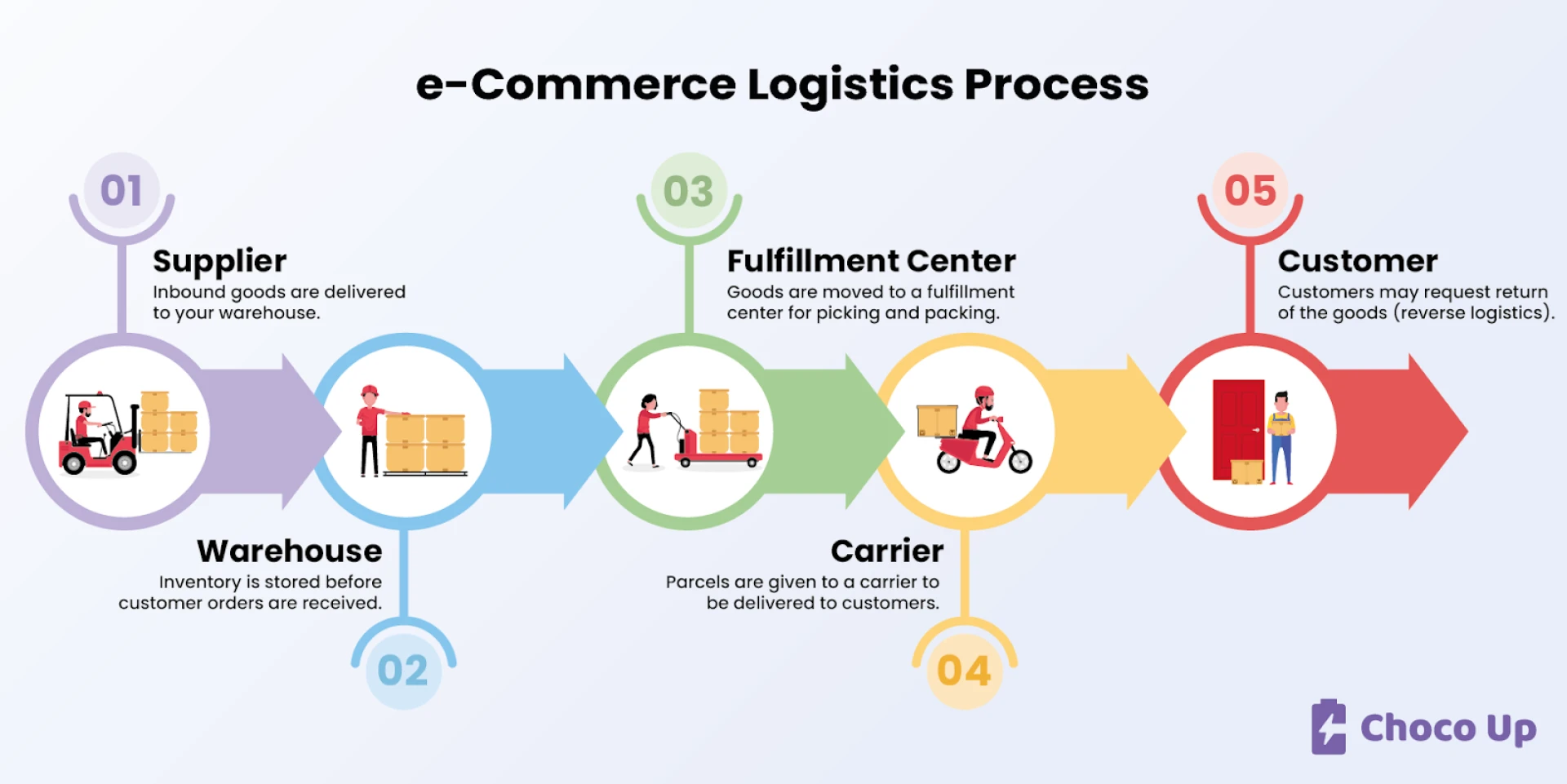
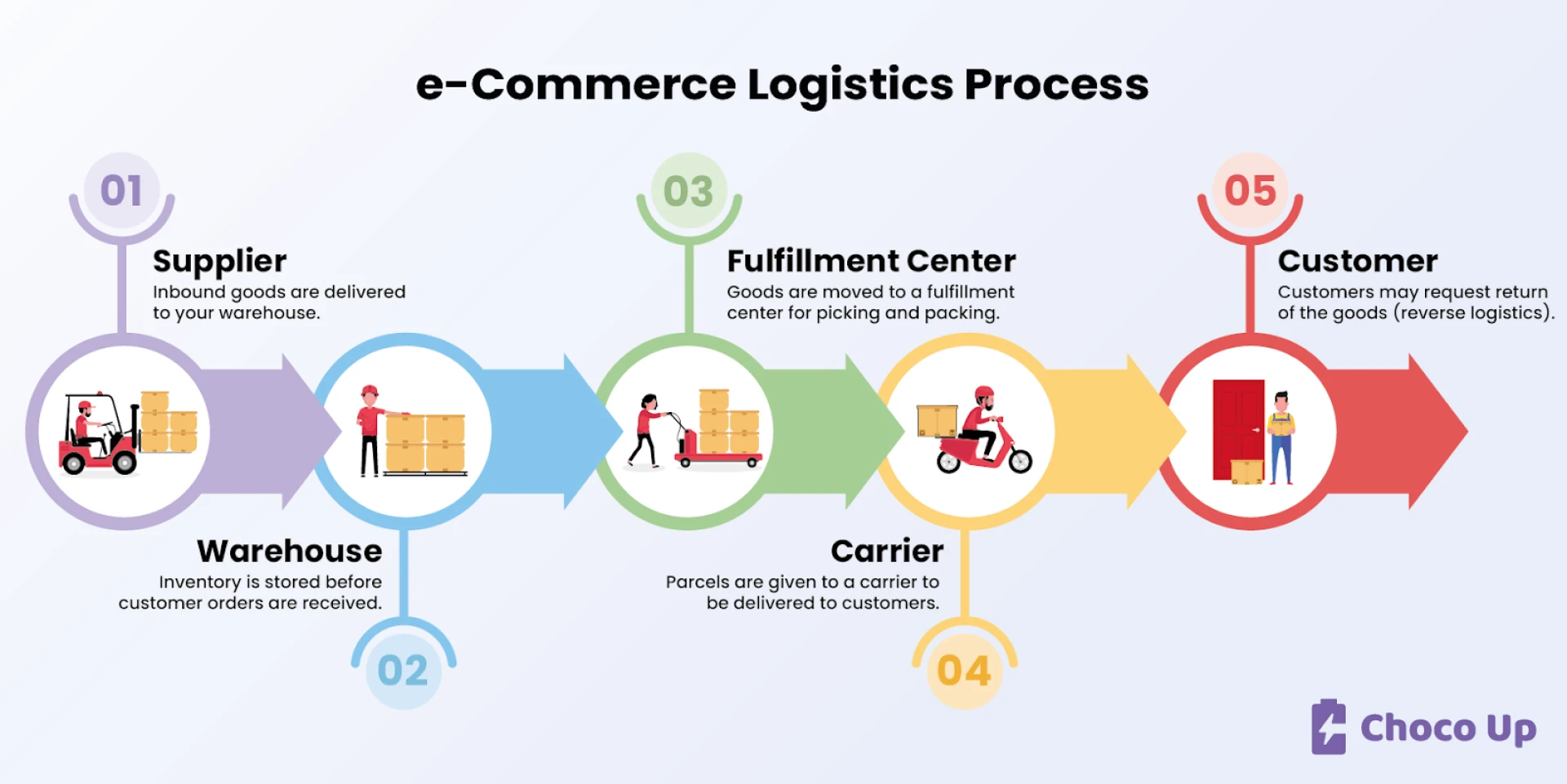
Logistics & Transportation
Logistics is the most visible part of E-Commerce and Supply Chain Management:
- Last-mile delivery
- Reverse logistics
- Carrier integration
- Route optimization
Returns & Reverse Supply Chain
Returns are common in e-commerce. A smooth reverse supply chain:
- Improves customer trust
- Reduces operational losses
- Enhances brand reputation
Benefits of Integrated E-Commerce and Supply Chain Management
1. Faster Order Fulfillment
Integrated systems reduce manual steps and speed up processing.
2. Improved Customer Experience
Real-time updates, accurate deliveries, and easy returns build customer loyalty.
3. Cost Optimization
Better demand forecasting and inventory control reduce wastage and logistics costs.
4. Scalability & Flexibility
Businesses can scale operations during peak seasons without disruption.
5. Data-Driven Decision Making
Analytics help businesses make smarter decisions across procurement, pricing, and delivery.
Challenges in E-Commerce Supply Chain Management
Despite its benefits, managing e-commerce supply chains is complex.
Demand Volatility
Flash sales and seasonal spikes strain supply chains.
Multi-Channel Complexity
Managing inventory across websites, marketplaces, and stores is challenging.
Last-Mile Delivery Issues
Urban congestion and remote locations increase delivery costs.
Returns Management
High return rates impact profitability.
Digital tools and automation are key to overcoming these challenges.
Future Trends in E-Commerce and Supply Chain Management
Hyperlocal Fulfillment
Warehouses closer to customers enable faster delivery.
Sustainable Supply Chains
Eco-friendly packaging and optimized routes reduce carbon footprint.
Blockchain for Transparency
Blockchain ensures secure, transparent transactions across supply chains.
Autonomous Delivery
Drones and self-driving vehicles will redefine last-mile logistics.
Best Practices for Businesses
To succeed in the digital age:
- Invest in integrated ERP & SCM systems
- Use data analytics for forecasting
- Automate warehousing and fulfillment
- Partner with reliable logistics providers
- Focus on customer-centric supply chain strategies
Strong alignment between E-Commerce and Supply Chain Management is no longer optional—it’s essential.
Conclusion
In the digital age, E-Commerce and Supply Chain Management together define business success. Customers don’t just buy products—they experience your supply chain.
A digitally enabled, agile, and intelligent supply chain ensures:
- Faster deliveries
- Lower costs
- Better customer satisfaction
- Sustainable growth
Businesses that invest in modern e-commerce supply chain strategies today will lead tomorrow’s digital economy.
Frequently Asked Questions (FAQs)
1. What is E-Commerce and Supply Chain Management?
It refers to the integration of online selling platforms with supply chain processes like inventory, warehousing, logistics, and order fulfillment.
2. Why is supply chain management critical for e-commerce?
Because fast delivery, accurate inventory, and smooth returns depend entirely on an efficient supply chain.
3. How does technology improve e-commerce supply chains?
Technologies like AI, cloud platforms, automation, and analytics improve visibility, speed, and decision-making.
4. What role does inventory management play in e-commerce?
It ensures product availability, prevents stockouts, reduces excess inventory, and supports faster fulfillment.
5. What are the biggest challenges in e-commerce supply chains?
Demand volatility, last-mile delivery, high return rates, and multi-channel complexity are major challenges.
6. Is cloud-based supply chain management suitable for small businesses?
Yes, cloud solutions are scalable, cost-effective, and ideal for growing e-commerce businesses.