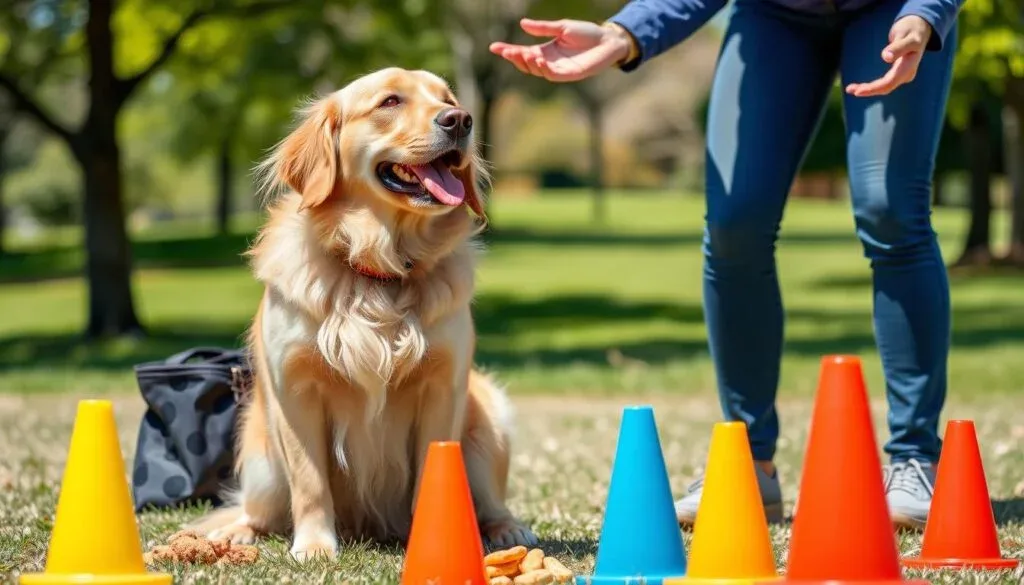
Your Golden Retriever has just spotted a squirrel across the park. Her ears lift, her body locks, and the recall you practised in the living room disappears.
Most Golden owners know this moment. These dogs are friendly and eager to please, but they are also bred to chase and retrieve. That drive is a gift in the field and a challenge at the park.
This is where modern e-collar training for a Golden Retriever comes in. Used properly, an e-collar is not a punishment device. It is a communication tool that helps your dog understand what you are asking, even at a distance and under distraction.
This guide explains how the tool works, when to introduce it, and how to build reliable obedience with a clear, reward-based approach.
Why Golden Retrievers Respond Well to Structured Training
Golden Retrievers were developed in 19th-century Scotland to retrieve waterfowl for hunters. Their soft mouths, strong noses, and drive to work with people are all products of that purpose. Stanley Coren’s well-known research ranks the breed fourth among all breeds for working and obedience intelligence.
That intelligence cuts both ways. A smart, driven dog learns quickly, but she also learns that ignoring you can pay off when a bird, a ball, or a fascinating smell is nearby.
Drive Is the Foundation, Not the ProblemYour retriever is a predator at heart. Her desire to pursue and retrieve is the engine of her training. Effective trainers connect that natural drive to trained responses rather than trying to suppress it. Pat Nolan calls this training in drive: linking obedience to the thing your dog wants most, so she learns that doing the right thing leads to the reward.
Where Standard Training Often Falls ShortTreats and a leash work well in a quiet kitchen. They have limits when:
- Your dog is 80 yards away and focused on a flushed bird
- Distractions are intense and constant
- You need a precise, consistent signal that doesn’t depend on your voice or your dog’s mood
An e-collar, introduced correctly, can bridge that gap.
What an E-Collar Actually Is (and Isn’t)
An e-collar, or electronic collar, is a remote-controlled collar that delivers an adjustable level of stimulation. Quality modern units offer many levels, so the trainer can find the lowest level the dog notices.
The Right Mindset: Communication, Not CorrectionThe most common misconception is that the collar exists to hurt or scare a dog. In a well-run program, it works differently. The stimulation becomes information. Your dog learns that she can turn it off, and that earns her a reward, by responding to a command correctly.
Pat Nolan’s e-collar course is built on this idea. It teaches your dog to stop and prevent the stimulation and make the reward happen by responding correctly. Obedience becomes the path to what she wants, not an obstacle in the way.
Is It Safe for Golden Retrievers?Goldens are generally sensitive, people-focused dogs. That is exactly why technique matters so much with them. A harsh or poorly timed approach can create anxiety or shut a soft dog down. A patient, conditioned approach does the opposite.
Research on e-collar welfare is mixed and still developing, so owners should be wary of anyone who claims there is no risk or that the tool is inherently cruel. The consistent finding in the training community is that outcomes depend heavily on how the tool is used. Before you start, talk to your veterinarian if your dog has any medical or skin concerns, and consult a qualified trainer if you’re unsure.
When to Start E-Collar Training with Your Golden Retriever
Build the Basics FirstDon’t reach for the collar on day one. A dog should already understand the foundational commands (sit, come, kennel, stay) through positive, reward-based training. If you have a young dog, a solid puppy program comes first. Pat’s online retriever training courses cover this progression from early puppy work through advanced field skills.
Age and ReadinessMany trainers wait until a Golden is roughly six months or older and mentally mature enough to handle the work. Every dog is different. Look for these readiness signs:
- She knows basic commands in a low-distraction setting
- She can focus on you for short sessions
- You can read her body language and recognize stress
Step-by-Step: How to Introduce the E-Collar the Right Way
Conditioning is the most important phase of e-collar training for a Golden Retriever. Rush it and you’ll create confusion. Do it patiently and you’ll have a confident, happy working partner.
Step 1: Understand Your Equipment and SettingsLearn your collar before you put it on your dog. Know how the levels work, how the fit should feel (snug, but not tight, with contact points touching the skin), and how to find your dog’s working level, which is the lowest level at which she shows a subtle awareness. Pat’s course starts here, with understanding your e-collar settings.
Step 2: Pair the Collar with Good ThingsLet your dog wear the collar during fun activities (meals, play, walks) before it is ever used for training. This keeps the collar from becoming a signal that something unpleasant is about to happen.
Step 3: Teach Through Reward MarkersClear markers tell your dog exactly when she has done something right. A consistent word like “yes” signals that the reward is coming. Pairing the marker with the reward builds clarity, and clarity builds confidence. Reward markers are a core lesson in Pat Nolan’s e-collar program.
Step 4: Reinforce Commands One at a TimeWork through the essential commands in a logical order:
- Come: the most important safety command you’ll ever teach
- Sit: a reliable default behavior and impulse-control tool
- Kennel: useful at home, in the truck, and at events
- Stay: the foundation of steadiness around birds and distractions
Keep sessions short, five to ten minutes, and always end on a success.
Step 5: Add Games and Gradual DistractionsOnce the commands are solid, practice them through games. Structured obedience games keep training fun and help your dog generalize her responses across locations and situations. If your dog is gaining confidence, increase the difficulty a little at a time.
Common Mistakes to Avoid
Even well-meaning owners can undermine their training. Watch for these pitfalls:
Using the Collar Before the Dog Understands the CommandThe collar should confirm and reinforce what the dog already knows. If she doesn’t understand the command, the collar only adds confusion.
Inconsistent Timing and LevelsTiming is everything. Stimulation that arrives late teaches the wrong lesson. Using a level that is too high for a sensitive Golden can make her fearful, and one that’s too low may simply be ignored.
Skipping the RewardThe best e-collar programs are reward-based at their core. If your dog is only ever working to avoid stimulation, and never working toward something she loves, you’ll lose her enthusiasm.
Training When You’re FrustratedIf you’re irritated, end the session. Golden Retrievers read human emotion extremely well, and a tense handler often means a tense dog.
Tips for Success with Your Golden Retriever
- Keep sessions short and upbeat. Goldens thrive on enthusiasm.
- Use real rewards. Food, a favorite toy, or a retrieve all work. Find what your dog values most.
- Be patient with sensitive dogs. If she shuts down, slow down.
- Practice in varied locations. A command that works in the yard needs proofing at the park.
- Get a second opinion. A trainer can spot timing errors you can’t see yourself.
Many owners also find it helpful to build memory and focus skills alongside obedience. Pat offers a free memory and marking drill that makes a useful companion to the basics.
Frequently Asked Questions
Can I use an e-collar on a Golden Retriever puppy?Most trainers recommend building foundation skills first and introducing the collar only when the dog is mature enough, commonly around six months or later. Always follow the guidance of an experienced trainer.
How long does e-collar conditioning take?It varies with the dog and the handler. Most owners see meaningful progress within a few weeks of consistent, short sessions, but reliable off-leash behavior takes ongoing practice.
Will an e-collar make my Golden Retriever fearful?Not when it is introduced gradually, at a low working level, and paired with clear rewards. Fear usually comes from poor timing, excessive levels, or skipped conditioning steps.
Final Thoughts: A Tool Is Only as Good as the Training Behind It
E-collar training for a Golden Retriever works best when it is patient, fair, and built on a foundation of clear communication and reward. The goal is not a dog who obeys out of worry. It is a confident, motivated partner who understands that listening leads to the things she loves.
If you want a structured path, Pat Nolan’s e-collar conditioning course walks you through the settings, reward markers, core commands, and obedience games step by step. You can also learn more about Pat, browse the training blog, or get in touch with questions.
Start slow, stay consistent, and enjoy the process. Your Golden will thank you for it.