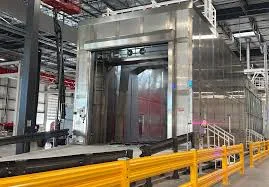
Some manufacturing environments need more than clean air and a tidy workspace. They also require extremely low levels of moisture in the surrounding atmosphere. These specialised spaces are known as dry rooms, and they are used when even a small amount of water vapour could affect a product, material or manufacturing process.
Industries that produce batteries, electronic components, pharmaceuticals and other moisture-sensitive products may depend on carefully controlled dry rooms. Inside these spaces, the air is treated to remove excess moisture and maintain a specific humidity level. However, controlling the room itself is only part of the challenge. Every entrance creates a possible route for moisture to enter, which makes the choice of door especially important.
Dry room door systems are designed to help separate low-humidity environments from surrounding areas. They must support the room's moisture-control strategy while allowing employees, materials and equipment to move safely. Their design can influence energy consumption, production efficiency and the ability to maintain stable conditions.
Choosing the right system involves understanding how moisture travels, how frequently an entrance is used and what the facility needs to move through it. A suitable door becomes an important part of the room's environmental control, rather than simply a barrier between two spaces.
What Is a Dry Room?
A dry room is an enclosed area where the amount of moisture in the air is kept at a very low, carefully managed level. Ordinary indoor air contains water vapour, even when the weather feels dry. In many manufacturing processes, that natural moisture is harmless. In certain production environments, however, it can create serious problems.
Consider a dry room as a space that needs to stay as dry as a sealed container. If the container is opened repeatedly in a humid environment, moist air can enter and change the conditions inside. A dry room faces a similar challenge, except that it must support people, machinery and ongoing production activities.
Specialised air-handling equipment removes moisture from incoming air. Sensors monitor conditions, while the building structure and access points are designed to limit unwanted air exchange.
The required dryness depends on the product and manufacturing process. Not every dry room operates at the same humidity level. Some applications require moderate moisture control, while others need exceptionally low levels.
Why Door Systems Matter in Dry Rooms
A dry room can have advanced moisture-removal equipment, but its performance may suffer if the entrance allows too much humid air to enter.
Every time a door opens, air from the surrounding area can move into the controlled space. The amount depends on several factors, including the size of the opening, the time it remains open, air pressure differences and movement through the doorway.
This is similar to trying to keep a refrigerator cold while leaving its door open. The cooling system can work harder, but it still has to deal with the warm air entering through the opening. In a dry room, the challenge involves removing moisture rather than simply reducing temperature.
A suitable dry room door helps reduce unnecessary air exchange. It can also support organised movement between areas with different humidity requirements.
The door is only one part of the overall system. Airlocks, ventilation arrangements, room pressure, staff procedures and material-transfer methods may all contribute to moisture control.
How Moisture Enters Through an Opening
Moisture does not always enter a room in an obvious way. It travels as water vapour within the air. When a door opens, the air on either side can mix, allowing moisture from a more humid area to enter the dry room.
The problem can become more noticeable when doors are opened frequently or left open while equipment passes through. A large opening may allow a greater volume of air to move between spaces, especially when there are pressure differences.
People and materials can also introduce moisture. Clothing, packaging, transport equipment and products brought from another environment may carry moisture on their surfaces or within their materials.
This is why dry room planning should consider the complete movement process. A door with good sealing characteristics cannot compensate for every source of moisture entering the room. The facility also needs suitable procedures for employees, equipment and materials.
Important Features of Dry Room Door Systems
The correct door system depends on the room's operating conditions, but several features are particularly important when selecting a solution.
Effective Sealing
Seals help close the small gaps that may remain around a door when it is shut. Without suitable sealing, air can pass through spaces around the panel or frame.
For a dry room, this can create an additional moisture-control challenge. Door seals should be selected to suit the door design, operating conditions and required environmental performance.
The frame, panel and surrounding wall must also work together. Even a well-made door may not perform as intended if it is installed poorly or if gaps remain around the opening.
Controlled Opening and Closing
A door that opens quickly and closes reliably can help reduce the time an entrance remains exposed. This is especially useful in facilities where employees and materials move through the same doorway throughout the day.
The operating speed should still be appropriate for the people and equipment using it. A door must not move so quickly that it creates a safety risk or makes material handling difficult.
Automatic controls can make operation more consistent. They can also reduce the need for employees to touch door panels while carrying tools, containers or production materials.
Suitable Insulation
Some dry rooms also need temperature control. In these situations, the door may need insulated construction to reduce heat transfer between adjoining areas.
Insulation works in a similar way to a thermal flask. It slows the movement of heat through the material, helping the temperature inside remain more stable.
However, insulation and moisture control are not the same thing. An insulated door does not automatically prevent humid air from entering. The door must also have suitable sealing and be integrated into the room's wider environmental design.
Durable Construction
Dry room doors may operate many times each day. Their panels, frames, hinges, tracks and operating mechanisms need to withstand regular use.
The construction material should also suit the room's cleaning requirements and surrounding conditions. Smooth surfaces can make cleaning easier, while suitable finishes help protect the door from wear.
The best material depends on the application. A battery production area, for example, may have different cleaning and operating requirements from a pharmaceutical manufacturing space.
Reliable Automation
Automated doors can support consistent operation and make material movement easier. Depending on the system, activation may use push buttons, motion sensors, access cards or other controls.
Automation is particularly useful when workers need to move products without stopping to operate a manual door. It can also help reduce the amount of time the opening remains exposed.
The control system should be easy to understand and include appropriate safety functions. Staff must know how to operate the door and what to do if the system stops working.
Common Types of Doors Used in Dry Rooms
Different door designs suit different building layouts and production activities. The right option depends on opening dimensions, traffic levels, environmental requirements and available installation space.
High-Speed Doors
High-speed doors are designed to open and close rapidly. They are often used in areas where people, carts or production materials pass through frequently.
Their fast movement can reduce the period during which the dry room is exposed to surrounding air. This may help the facility manage moisture exchange, although the overall result also depends on sealing, ventilation and room design.
Some high-speed doors use flexible curtain panels, while others have different construction arrangements. The door must be selected according to the environmental conditions and the required level of control.
Sliding Doors
Sliding doors move horizontally along a track instead of swinging into the room. This can be useful where floor space is limited or where equipment needs a clear approach to the entrance.
Large sliding systems can provide generous openings for machinery, material containers and production equipment. Their frames, tracks and seals need to be designed for the intended application.
A sliding door may be particularly useful in a facility where a swinging panel would interfere with nearby workstations or transport routes.
Swing Doors
Swing doors open by rotating on hinges. They are a familiar option for personnel entrances and smaller access points.
They may be suitable for areas with lower traffic or where the opening does not need to accommodate large equipment. Their design should include appropriate seals and hardware to support the room's environmental requirements.
For a busy entrance, the opening direction and available clearance should be considered carefully. A swinging panel must not obstruct workers or create a collision risk.
Insulated Doors
Insulated doors are useful when a dry room also needs to maintain a controlled temperature. Their construction helps reduce heat movement between adjoining spaces.
They may be selected for storage areas, manufacturing zones or other locations where temperature stability is part of the process.
The door's insulation value, sealing arrangement and construction should be assessed together. A good thermal barrier is most effective when the surrounding installation is also properly designed.
Custom-Built Door Systems
Some facilities have unusual opening sizes, special equipment routes or demanding environmental conditions. Standard products may not meet every requirement.
A custom-built dry room door system can be developed around the facility's layout and operating needs. The design may account for large openings, automated operation, specialised seals or connections with other building systems.
Customisation should be based on clear technical requirements. The goal is to create a door that fits the process, not simply a larger version of a standard entrance.
The Role of Airlocks and Interlocking Doors
In many facilities, a single door is not enough to manage movement between a dry room and a more humid area. An airlock can provide an additional separation zone.
An airlock is a small enclosed space with a door on each side. A person or material enters through one door, the first door closes, and then the second door opens to allow movement into the next area.
This arrangement helps reduce direct air exchange between the two environments. It is similar to entering a building through a small lobby instead of opening a door directly from the street into the main room.
Some systems use door interlocks, which prevent both doors from being open at the same time during normal operation. The control arrangement can help support the facility's moisture-management procedures.
The airlock must be designed for the actual movement requirements. Its size, ventilation and operating sequence should account for employees, transport carts and the materials being transferred.
Applications Across Different Industries
Dry rooms are used wherever moisture can interfere with manufacturing, storage or product performance. Their requirements vary according to the materials being handled.
Battery Manufacturing
Battery production is one of the best-known applications for dry rooms. Certain battery materials are sensitive to moisture, and unwanted exposure can affect processing and product quality.
A dry environment helps manufacturers control moisture during selected stages of production. Doors need to support the movement of materials, equipment and employees without creating unnecessary changes in room conditions.
The entrance design should reflect the specific production process and the required environmental limits.
Electronics Manufacturing
Some electronic components and materials can be affected by moisture during manufacturing, handling or storage. In these environments, controlled humidity may help protect sensitive products and support consistent production.
Door systems should be selected to match the cleanliness, temperature and moisture requirements of the relevant area.
Pharmaceutical Production
Certain pharmaceutical processes require carefully managed environmental conditions. Depending on the product and production stage, moisture levels may influence material stability, processing or storage.
A suitable entrance can help separate areas with different environmental requirements. The door design must also be compatible with the facility's cleaning and operating procedures.
Advanced Materials and Research
Laboratories and specialised manufacturing facilities may work with materials that react to moisture or require stable conditions during testing.
Dry rooms provide a controlled space for these activities. Door systems help researchers and technicians move equipment and samples while limiting unwanted environmental changes.
Selecting the Right Door for a Facility
Choosing a door should begin with the process taking place inside the room. A system that works well for a small research area may not be suitable for a high-volume battery production facility.
Facility managers should assess several factors before making a decision:
- Humidity requirements: Identify the moisture level the room must maintain and how sensitive the process is to changes.
- Opening dimensions: Measure the height and width needed for people, equipment and materials.
- Traffic frequency: Consider how often the entrance will be used during a normal shift.
- Door operation: Decide whether manual, automatic or integrated controls are most appropriate.
- Sealing performance: Examine how the panel, frame and surrounding structure limit unwanted air movement.
- Temperature conditions: Determine whether insulation is also required.
- Available space: Check room for sliding tracks, swinging panels and overhead mechanisms.
- Maintenance needs: Consider how easily seals, motors and moving parts can be inspected and serviced.
It is also important to understand the relationship between the door and the building's moisture-control equipment. The selected system should be reviewed as part of the complete room design.
Safety and Everyday Operation
A dry room door must protect the environment without creating difficulties for employees. Large or automated systems should include suitable safety measures, such as obstruction detection, emergency stop controls and safe manual operation where appropriate.
The exact features depend on the door type and installation. Sensors may detect people or objects in the opening, while warning signals can alert nearby workers when the door is moving.
Clear operating procedures are equally important. Employees should know whether they need to wait for one door to close before opening another, how to transfer materials and what steps to follow if an alarm or fault occurs.
Traffic routes should also be organised to prevent people and transport equipment from approaching the entrance from conflicting directions.
Maintenance and Long-Term Performance
A door system needs regular attention to remain dependable. Even a small change in a seal or operating mechanism can affect how well the entrance closes.
Maintenance schedules should follow the manufacturer's instructions and the facility's operating conditions. Inspections may include the door panel, frame, seals, tracks, motors, sensors and control equipment.
Seals deserve particular attention because they help limit unwanted air movement. If they become damaged, loose or worn, they may no longer close the gaps as intended.
The door should also be checked for unusual movement, excessive noise or delays during operation. These signs may indicate a problem that needs professional attention.
Cleaning is another important part of care. The products and methods used should be compatible with the door materials and the facility's procedures. Maintenance work should be planned to avoid introducing unwanted moisture or disrupting sensitive production activities.
Why Professional Door Design Matters
A dry room entrance is connected to several parts of a facility's operation. Its performance can influence moisture management, employee movement, equipment access and production continuity.
A supplier should understand the opening dimensions, expected traffic, environmental conditions and any special requirements associated with the manufacturing process. These details help determine whether a standard door or a more specialised design is appropriate.
Newport Company offers industrial door solutions for facilities with demanding operational requirements. Working with an experienced door manufacturer can help businesses assess their access needs and identify a system that fits the building and its intended use.
The most suitable solution is not necessarily the most complex one. It should provide dependable operation, appropriate sealing and practical access while working alongside the facility's environmental controls.
Conclusion
Dry room door systems play an important role in facilities where controlling moisture is essential. They help separate low-humidity spaces from surrounding environments while allowing people, products and equipment to move through the building.
The right system depends on several connected factors, including humidity requirements, opening size, traffic levels, sealing, insulation and automation. Airlocks and interlocking controls may provide additional separation where the production process requires it.
Careful selection, professional installation and regular maintenance help keep the entrance working as intended. When the door is designed as part of the complete moisture-control strategy, it can support more reliable production and help protect materials that are sensitive to humidity.