
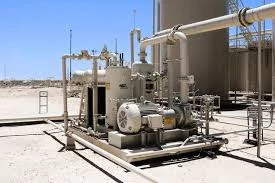
The vapour recovery units (VRUs) market is experiencing robust growth as industries across the globe adopt cleaner and safer operational practices to comply with stringent environmental regulations. These systems, designed to capture and recover vapors of volatile organic compounds (VOCs), are increasingly being deployed in sectors such as oil and gas, petrochemicals, chemicals, and storage terminals. With a heightened focus on reducing air pollution, enhancing worker safety, and maximizing resource efficiency, the VRU market is poised for sustained expansion in the coming years.
Environmental Compliance as a Major Growth Driver
One of the primary forces propelling the vapour recovery units market is the tightening of environmental norms and emissions standards. Regulatory agencies such as the Environmental Protection Agency (EPA) in the U.S., the European Environment Agency (EEA), and other international bodies are mandating the reduction of VOC emissions to limit air pollution and its associated health hazards. VRUs are instrumental in meeting these regulations by capturing vapors that would otherwise escape into the atmosphere during fuel loading, unloading, and storage operations.
Moreover, countries across Asia-Pacific, Latin America, and the Middle East are aligning with global climate goals and updating their environmental policies. This regulatory synchronization has created a ripple effect, encouraging industries in developing nations to adopt vapour recovery technologies to maintain global trade standards and avoid penalties.
Oil and Gas Sector: A Primary Application Area
The oil and gas industry remains the most significant contributor to the vapour recovery units market. Upstream and downstream operations involve the handling of large volumes of volatile hydrocarbons, which makes the sector especially vulnerable to vapor loss and emission violations. Refineries, storage terminals, gas processing plants, and transportation systems are increasingly deploying VRUs to mitigate environmental risks and recover valuable hydrocarbons.
In upstream applications, VRUs are commonly installed at wellheads and tank batteries to capture gas vapors. In downstream segments, terminals and bulk loading facilities use these systems to prevent vapor release during fuel transfer operations. The economic benefit of recovering sellable product, along with regulatory pressure, makes VRUs an attractive investment for oil and gas operators.
Adoption in Other Industrial Sectors
Beyond oil and gas, VRUs are finding applications in various other industries, including chemical manufacturing, food processing, and pharmaceuticals, where the handling of volatile chemicals and solvents is common. These industries are under increasing scrutiny for their contribution to air pollution and are proactively investing in pollution control technologies.
In the chemical industry, for instance, the handling of solvents and organic compounds generates vapors that are both flammable and toxic. Installing vapour recovery units not only prevents environmental contamination but also improves workplace safety by reducing the risk of fire or exposure to hazardous substances.
Technological Advancements Driving Market Expansion
Technological innovations are enhancing the efficiency and versatility of vapour recovery units, making them more attractive to a wide range of industries. Advances in cryogenic condensation, membrane separation, and absorption techniques have improved the recovery rates and lowered the operational costs of VRUs.
Moreover, the integration of automation and digital monitoring systems enables real-time data collection and performance tracking, allowing for predictive maintenance and reduced downtime. These innovations are especially valuable in remote or high-risk environments, where manual monitoring may not be feasible.
Compact and modular VRU designs are also gaining traction, particularly for applications with space or budget constraints. These systems offer scalability, ease of installation, and minimal disruption to existing infrastructure—an advantage for small to medium enterprises or decentralized facilities.
Asia-Pacific and Middle East: Emerging Growth Regions
While North America and Europe currently dominate the vapour recovery units market in terms of revenue, emerging economies in the Asia-Pacific and Middle East regions are expected to exhibit the fastest growth rates. Rapid industrialization, urbanization, and increasing energy consumption in countries like China, India, and the Gulf Cooperation Council (GCC) nations are driving demand for effective emission control technologies.
In addition, many of these countries are investing heavily in expanding their oil and gas infrastructure, refining capacities, and chemical manufacturing sectors. This industrial expansion, coupled with growing environmental awareness and compliance requirements, creates a fertile ground for the adoption of vapour recovery solutions.
Challenges and Future Outlook
Despite the favorable market conditions, some challenges persist. High initial costs of installation, especially for advanced VRU systems, may deter adoption among small businesses or operations in cost-sensitive markets. Maintenance and skilled manpower requirements can also pose barriers, particularly in remote or developing regions.
Nonetheless, the long-term benefits of VRU systems—including regulatory compliance, product recovery, reduced environmental liabilities, and enhanced worker safety—far outweigh these challenges. As industries and governments intensify their commitment to sustainable practices, the market for vapour recovery units is set to witness consistent growth.
Conclusion
The global vapour recovery units market is well-positioned to capitalize on the momentum generated by rising environmental concerns and the global shift toward safer industrial practices. With key industries adopting these technologies to meet regulatory mandates and internal sustainability goals, VRUs are transitioning from optional investments to operational necessities. Continued innovation, policy support, and cross-industry applications will further fuel market expansion, making vapour recovery units an integral part of the industrial landscape in the decades to come.