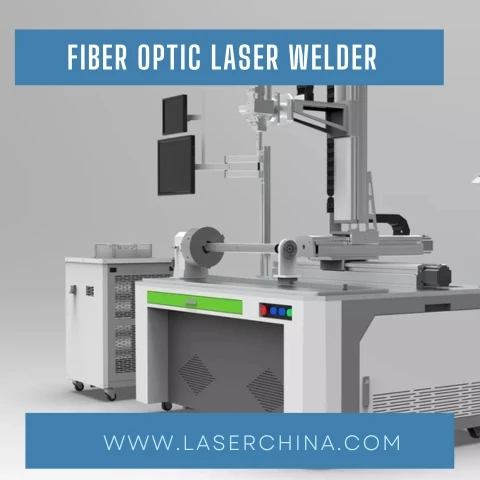
In the ever-evolving world of manufacturing, precision and efficiency are key factors driving innovation. One of the most significant advancements in this space is the development of the fiber optic laser welder. This technology has revolutionized welding processes across a range of industries by providing superior results with reduced operational costs. Whether it's for automotive, aerospace, or electronics, the fiber optic laser welder offers unmatched accuracy and versatility. But what makes it stand out?
What is a Fiber Optic Laser Welder?
A fiber optic laser welder is a cutting-edge welding tool that uses a fiber laser to create high-powered, focused beams of light. These beams are directed onto the surface of a material, where they generate enough heat to melt and fuse materials together. The process is known for its high precision, making it ideal for tasks that require intricate welding. The key advantage of using fiber optics in laser welding is the ability to transmit light over long distances without significant loss of energy. This enables the welder to reach difficult-to-access areas with ease.
Benefits of Fiber Optic Laser Welding
The fiber optic laser welder offers several advantages that make it the preferred choice for modern manufacturing.
- High Precision and Accuracy
- One of the most notable features of the fiber optic laser welder is its ability to weld with extreme precision. This is particularly beneficial for industries like electronics, where tiny components need to be welded together without damaging delicate parts. The focused laser beam allows for highly controlled welding, resulting in cleaner seams and minimal distortion.
- Versatility Across Materials
- Fiber optic laser welding is incredibly versatile. It can be used on a wide range of materials, including metals like stainless steel, aluminum, and titanium. Additionally, it’s effective on materials with varying thicknesses, which makes it suitable for both light and heavy-duty applications.
- Faster and More Efficient Welding
- Traditional welding methods often require multiple steps, including preheating and post-weld processing. Fiber optic laser welding significantly reduces these steps, as it can be performed quickly and with minimal heat input. This speeds up the manufacturing process and reduces energy consumption.
- Minimal Heat Affected Zone
- Since the fiber optic laser welder produces highly focused light, it minimizes the heat affected zone (HAZ), which is the area around the weld that can become structurally compromised due to excessive heat. This results in less thermal distortion and more stable welds.
Applications of Fiber Optic Laser Welders
Fiber optic laser welders are used in a wide variety of industries. In the automotive industry, for example, they’re used to weld small, intricate parts that require both precision and strength. In the medical field, these welders help assemble devices that need to meet strict safety standards. Electronics manufacturers also rely on fiber optic lasers to weld tiny components in mobile phones and other devices.
Choosing the Right Fiber Optic Laser Welder
When selecting a fiber optic laser welder, it’s important to consider factors such as power output, the type of materials being welded, and the desired weld quality. Companies like LaserChina provide high-quality fiber optic laser welding machines that cater to a range of manufacturing needs. With a reliable machine, manufacturers can improve productivity while ensuring superior welds every time.
In conclusion, the fiber optic laser welder is an invaluable tool in modern manufacturing. Its precision, efficiency, and versatility make it an ideal solution for a variety of industries. As technology continues to advance, we can expect even greater innovations in laser welding, further driving the evolution of manufacturing processes.