Navigating the Competitive FMCG Landscape
The packaged snack aisle is arguably the most fiercely contested territory in any modern supermarket. Dominated by multinational conglomerates, this space requires new entrants to deliver exceptional taste, vibrant packaging, and flawless consistency. For regional retail chains and ambitious food startups looking to introduce a private label potato chips line, the financial and logistical hurdles can appear insurmountable.
Constructing a proprietary potato chips manufacturing facility is a multi-million rupee endeavor. It involves securing prime real estate, navigating complex environmental regulations, and purchasing highly specialized equipment. Industrial continuous fryers, mechanical peelers, optical defect sorters, and high-speed bagging machines require constant maintenance and skilled operators. Rather than absorbing these massive capital expenditures, strategic brands utilize contract manufacturing. This approach allows them to immediately leverage state-of-the-art infrastructure, transforming raw concepts into shelf-ready inventory in a fraction of the time it takes to build a factory.
Streamlining Production and Inventory Management
The raw agricultural supply chain is notoriously volatile. Fluctuations in potato harvests, unpredictable edible oil prices, and changing energy tariffs can devastate the profit margins of an independent facility. Outsourcing to an established B2B manufacturer shields retail brands from these market shocks.
By negotiating fixed-price manufacturing contracts, businesses can stabilize their cost of goods sold (COGS). This financial insulation allows brand directors to accurately forecast revenue and plan aggressive promotional campaigns. Furthermore, established processors offer the agility to adjust production volumes on demand. Whether a brand needs a modest initial run to test a new localized flavor in a specific city or a massive surge in inventory to support a nationwide television campaign, the manufacturing partner seamlessly absorbs the fluctuating workload.
FSSC 22000 Standards and Retail Compliance
Securing distribution in leading hypermarkets requires more than just a tasty product; it demands verifiable proof of supply chain safety. Retail category managers will not risk their store’s reputation on uncertified vendors.
Nuts and Legumes Co. provides the regulatory assurance required to dominate the retail space. Operating strictly under FSSC 22000 protocols, their manufacturing processes prioritize microbiological safety and batch-to-batch traceability. From the moment the raw potatoes are washed to the final nitrogen flush that inflates the packaging, every step is rigorously monitored. This dedication to international food safety standards ensures that the chips remain perfectly crisp, free from discoloration, and safe for consumer consumption, smoothing the path for national retail listings.
Customizing the Consumer Experience
A successful chip brand must cater to the nuanced cravings of its target audience. An elite manufacturing partner offers the cutting and seasoning technology necessary to build a diverse product range.
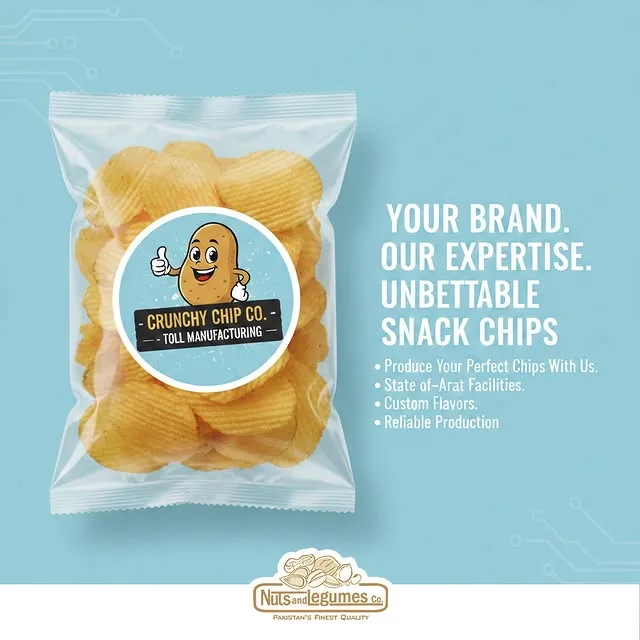
Brands can launch delicate, classic flat-cut slices that appeal to purists seeking a light, salty crunch. For heavier, more robust seasoning profiles—such as tangy sour cream, smoky barbecue, or fiery local masala—crinkle-cut options provide the necessary structural integrity and increased surface area to hold the spices. By utilizing the advanced machinery of a contract manufacturer, FMCG companies can rapidly introduce multi-SKU portfolios, continuously innovating their offerings to capture greater market share and build enduring consumer loyalty.
Contact Nuts and Legumes Co. to accelerate your brand's growth with premium contract manufacturing solutions.