
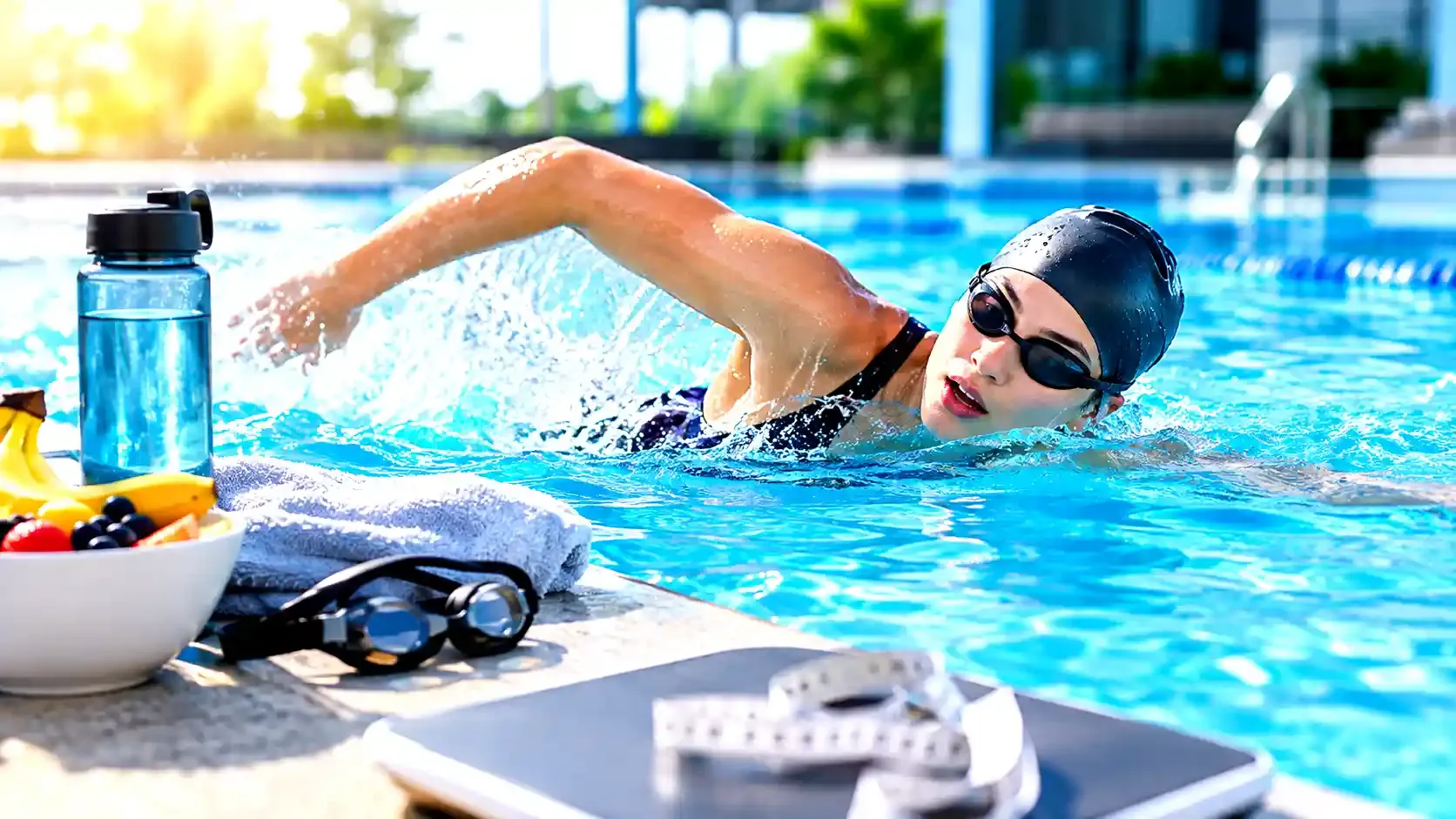
If you've been wondering whether swimming can genuinely help you shed a few kilos, the short answer is yes, it can. Swimming is a full-body workout that burns a meaningful number of calories, builds lean muscle, and puts far less strain on your joints than running or high-impact gym sessions. But like any form of exercise, how much weight you lose depends on how you swim, how often, and what you're eating alongside it.
This guide breaks down exactly how swimming supports weight loss, which strokes burn the most calories, how it compares to other popular workouts, and how to structure your sessions to see real results.
How Swimming Supports Weight Loss
Weight loss ultimately comes down to burning more calories than you consume. Swimming is particularly effective here because water offers roughly 12 times more resistance than air. Every stroke you take works your arms, legs, core, and back simultaneously, which means you're engaging far more muscle groups than you would during a typical land-based cardio session.
There's also a metabolic advantage. Because your body works to regulate its temperature in water, swimming can slightly increase calorie expenditure even at rest during the session. Combine that with the cardiovascular demand of sustained swimming, and you have an exercise that ticks both the fat-burning and muscle-toning boxes.
That said, swimming alone won't undo a poor diet. It's a powerful tool, not a magic fix, and it works best when paired with consistent effort and sensible eating habits.
How Many Calories Does Swimming Burn?
Calorie burn varies depending on your weight, swimming intensity, and the stroke you're using. As a general guide, for a person weighing around 70kg, swimming for 30 minutes might burn:
- Freestyle (moderate pace): 300–400 calories
- Butterfly: 400–450 calories
- Breaststroke: 250–300 calories
- Backstroke: 200–250 calories
- Treading water (moderate effort): 150–200 calories
These figures are estimates rather than exact science, since factors like technique, water temperature, and individual fitness levels all play a role. Still, they give you a useful benchmark for planning your workouts.
Which Swimming Stroke Burns the Most Fat?
Freestyle and butterfly tend to burn the most calories because they demand the most power and coordination. Butterfly, in particular, is intense and works nearly every major muscle group, but it's also technically demanding and not ideal for beginners.
Freestyle strikes a good balance. It's efficient, sustainable over longer distances, and easier to build up gradually as your fitness improves. Breaststroke and backstroke burn fewer calories per minute but are gentler on the body, making them a sensible starting point if you're new to swimming or returning after a long break.
The best stroke for weight loss is often the one you can maintain consistently and with good form, rather than the one that burns the most calories in theory.
Swimming Versus Other Forms of Exercise
It's natural to wonder how swimming stacks up against running, cycling, or the gym.
Running typically burns slightly more calories per minute than swimming at a similar intensity, but it places significant stress on knees, hips, and ankles. Swimming, by contrast, is low-impact, which makes it a strong option for people managing joint pain, carrying extra weight, or recovering from injury.
Cycling and swimming are fairly comparable in terms of calorie burn, though cycling can be easier to sustain at a higher intensity for longer periods on land.
Gym-based strength training builds muscle effectively but doesn't offer the same cardiovascular benefits swimming does within a single session. Many people find that combining swimming with occasional strength work gives them the best of both worlds: cardio fitness alongside muscle definition.
Benefits of Swimming Beyond the Scale
Weight loss is often the headline reason people take up swimming, but the benefits extend well beyond calorie burn.
Swimming improves cardiovascular health, strengthens the lungs, and builds endurance over time. It tones muscles across the entire body rather than isolating specific areas, which is why regular swimmers often develop a lean, functional physique. The low-impact nature of the sport also makes it accessible to people with arthritis, back problems, or those who are simply not ready for high-impact training.
There's a mental health component too. Many swimmers describe the rhythmic, repetitive nature of laps as meditative, and the endorphin release afterwards can genuinely lift your mood. For adults juggling busy schedules, that combination of physical and mental benefit is hard to overlook.
How to Swim for Weight Loss: A Practical Approach
Getting results from swimming isn't just about showing up. Structure matters.
Frequency: Aim for three to five sessions a week. Fewer than that, and progress tends to be slow; more than that without adequate recovery can lead to fatigue or overuse injuries.
Duration: Thirty to forty-five minutes per session is a solid starting point for most adults. Beginners might start with 20 minutes and build up gradually.
Intensity: Mixing steady, continuous swimming with interval-style sessions (short bursts of fast swimming followed by rest or slower recovery laps) tends to produce better results than swimming at the same pace every time. Interval training keeps your heart rate elevated and challenges your body to adapt.
Progression: As your fitness improves, increase either your distance, your pace, or the difficulty of your stroke technique. Progressive overload applies to swimming just as it does to weight training.
A simple weekly structure might look like two steady-pace sessions, one interval session, and one technique-focused session where you work on stroke efficiency rather than speed.
Common Mistakes That Slow Down Progress
A few habits quietly undermine swimming-based weight loss efforts.
Overestimating calorie burn and eating more to "reward" the workout is a common trap. Swimming builds an appetite, and it's easy to consume more calories than you actually burned. Inconsistent attendance is another issue; sporadic sessions rarely produce visible results. Some swimmers also stay in their comfort zone indefinitely, swimming at the same gentle pace week after week without ever challenging their body to adapt.
Technique matters too. Inefficient swimming burns fewer calories and increases the risk of shoulder or neck strain, so it's worth investing time in proper form, either through coaching or simply paying closer attention to your stroke.
Nutrition Tips to Support Your Swimming Routine
What you eat around your swim sessions can influence both performance and results. A light, carbohydrate-based snack an hour or so before swimming helps sustain energy without causing discomfort in the water. After your session, a combination of protein and carbohydrates supports muscle recovery and replenishes energy stores.
Staying hydrated is easy to overlook when you're submerged in water and not visibly sweating, but swimming is still a demanding cardiovascular activity, and adequate hydration remains important for performance and recovery.
Who Should Take Extra Care?
Swimming is generally safe for most adults, but a few groups should approach it thoughtfully. Anyone with asthma, heart conditions, or ear or sinus issues should speak with a doctor before starting an intensive swimming programme. Beginners should focus on building comfort and confidence in the water before pushing intensity, and anyone recovering from surgery or injury should get medical clearance first.
Final Thoughts
Swimming is one of the more complete forms of exercise available, offering calorie burn, muscle toning, and cardiovascular benefits with minimal strain on the joints. It won't work overnight, and results depend on consistency, intensity, and diet, but for adults looking for a sustainable way to lose weight and improve overall fitness, few activities offer this much value in a single workout.