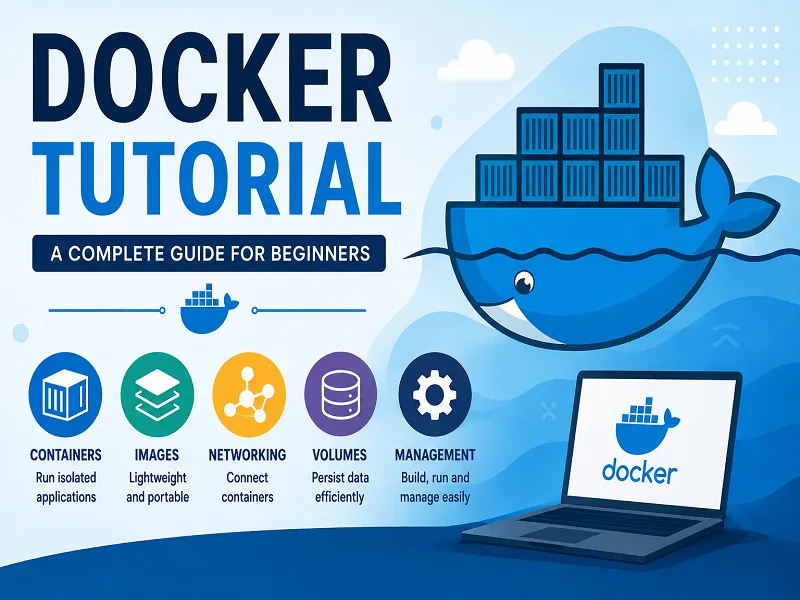
Docker is a popular platform that helps developers build, run, and manage applications in a consistent environment. It uses containers to package an application along with the required libraries and dependencies. This makes applications easier to move between different systems and helps reduce problems caused by differences in development environments.
Learning Docker is useful for students, beginners, developers, testers, and DevOps professionals. It provides a simple way to understand application containerization and modern software development practices. Docker is also widely used with cloud platforms and DevOps tools, making it an important technology for people who want to build a career in software development and automation.
A good Docker learning resource introduces the basic concepts before moving toward advanced topics. Beginners can learn about Docker architecture, containers, images, registries, volumes, networking, and container management. Understanding these concepts helps users know how Docker components work together and how applications can be managed inside containers.
Docker images are an important part of the platform. An image contains the information needed to create a container. Containers are lightweight and isolated environments where applications can run. Because containers share the host operating system resources, they can be more efficient than traditional virtual machines for many application scenarios.
Docker also provides useful features for managing application data. Volumes help store data separately from containers so important information can remain available when containers are changed or removed. Docker networking allows containers to communicate with each other and connect with external services when required.
Another important Docker concept is container deployment. Developers can package an application into a container and move it between development, testing, and production environments. This creates greater consistency throughout the software development lifecycle. It can also make application delivery faster and easier to manage.
Docker is closely connected with DevOps because it supports automation and continuous delivery practices. Teams can use Docker with various development and deployment tools to create reliable workflows. Containerization also makes it easier for teams to work with applications that need to run across different environments.
Docker Compose is another useful feature for applications that require multiple services. It helps users manage groups of related containers as a single application environment. This can simplify the management of applications that include databases, web services, and other supporting components.
For beginners, learning Docker step by step is the best approach. Start with basic concepts, understand how images and containers work, and then explore networking, volumes, Compose, and deployment. Practical learning can help users understand how Docker is used in real development environments.
As modern applications increasingly use cloud computing, microservices, and DevOps practices, Docker knowledge can provide valuable technical skills. A structured learning resource can help beginners understand these concepts without feeling overwhelmed.
If you want to explore Docker concepts in a simple and organized way, the Docker Tutorial can help you build a strong foundation and improve your understanding of containerization.