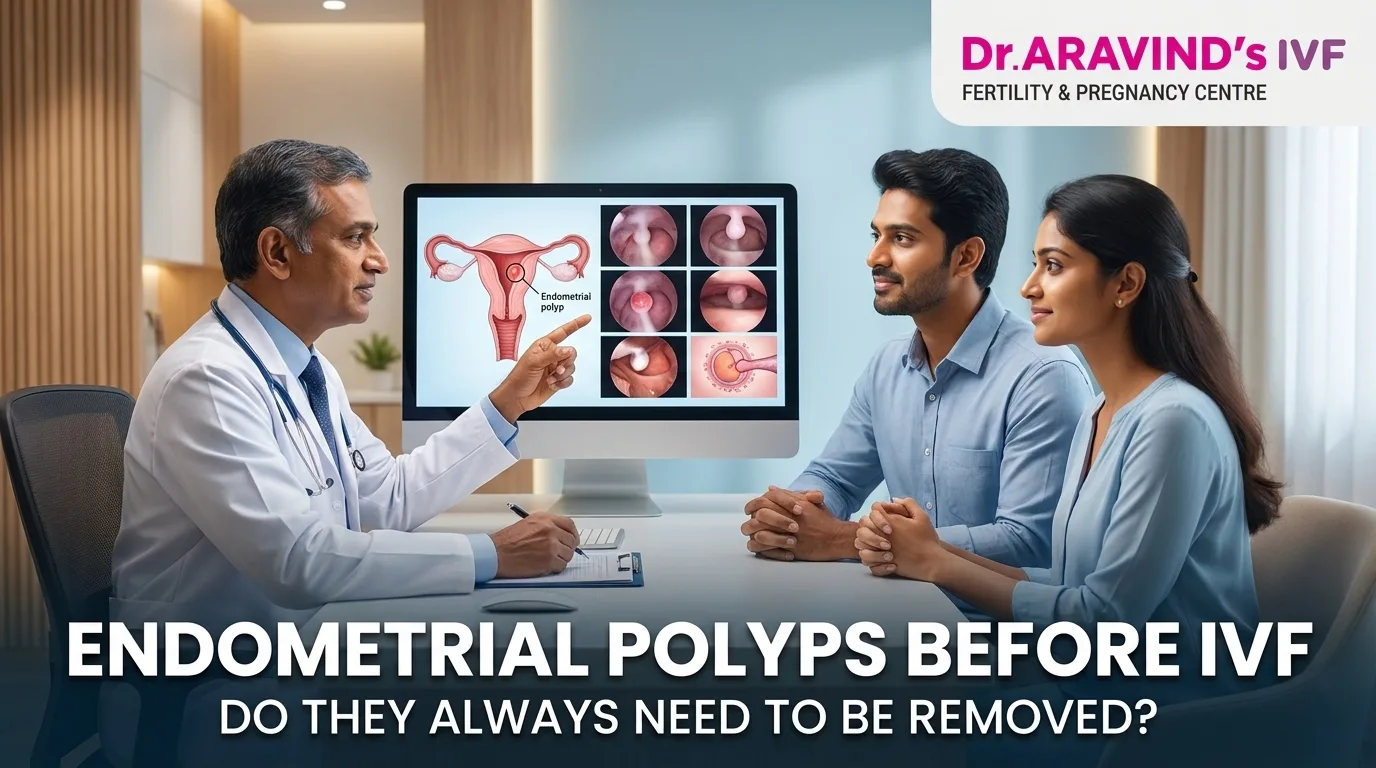
Preparing for IVF involves more than monitoring eggs and embryos. The condition of the uterus also plays an important role in achieving a successful pregnancy. One common question many couples ask is whether endometrial polyps should always be removed before IVF.
The answer is not always. The decision depends on the size, location, symptoms, and whether the polyp is likely to interfere with embryo implantation. If you're planning treatment at a trusted IVF centre in Trichy, your fertility specialist will evaluate these factors before recommending the next step.
What Are Endometrial Polyps?
Endometrial polyps are small growths that develop from the lining of the uterus (endometrium). Most are benign, but some may affect fertility by changing the environment inside the uterus.
Many women do not experience symptoms, while others may notice:
- Heavy or irregular menstrual bleeding
- Spotting between periods
- Bleeding after menopause
- Difficulty conceiving
- Recurrent pregnancy loss
Some polyps are discovered only during fertility investigations.
Can Endometrial Polyps Affect IVF?
Yes, they can in certain situations.
A polyp located near the area where an embryo is expected to implant may:
- Reduce available space for implantation
- Cause inflammation inside the uterus
- Affect blood flow to the endometrium
- Lower the chances of embryo implantation
However, not every polyp reduces IVF success. Small polyps that do not distort the uterine cavity may sometimes be safely monitored.
Do Polyps Always Need to Be Removed?
No.
Your fertility specialist will consider several factors before recommending removal.
Removal is more likely if:
- The polyp is large.
- It changes the shape of the uterine cavity.
- It causes abnormal bleeding.
- There have been repeated IVF failures.
- There is recurrent miscarriage.
- The appearance raises concern during imaging.
Small, symptom-free polyps may not always require immediate surgery, especially if they are unlikely to affect embryo transfer or implantation.
How Are Endometrial Polyps Diagnosed?
Accurate diagnosis is essential before planning IVF.
Your doctor may recommend:
- Transvaginal ultrasound
- Saline infusion sonography
- Hysteroscopy, which allows direct visualization of the uterine cavity
Hysteroscopy is considered one of the most reliable methods because it can both confirm the diagnosis and remove the polyp when necessary.
What Happens After Polyp Removal?
When removal is recommended, hysteroscopic polypectomy is usually a minimally invasive day-care procedure.
Following recovery, your fertility specialist will assess whether the uterus has healed appropriately before scheduling embryo transfer or IVF treatment.
The goal is to provide the best possible environment for implantation rather than simply removing every polyp.
Why Individual Assessment Matters
There is no universal rule that every endometrial polyp must be removed before IVF. Each patient has unique medical findings, reproductive history, and fertility goals.
At Dr.Aravind's IVF Fertility & Pregnancy Centre, specialists carefully evaluate the uterine cavity before starting treatment. As a trusted IVF centre in Trichy, the clinic uses advanced imaging and evidence-based guidelines to decide whether observation or hysteroscopic removal is the most appropriate approach.
This personalized decision-making helps avoid unnecessary procedures while ensuring the uterus is well prepared for embryo implantation.
Conclusion
Endometrial polyps do not automatically mean IVF will fail, and they do not always need to be removed. The decision depends on careful evaluation by an experienced fertility specialist.
If you are preparing for IVF or have concerns about uterine health, consulting Dr.Aravind's IVF Fertility & Pregnancy Centre can help you understand your options. Choosing an experienced top IVF centre in Trichy ensures that every stage of your fertility treatment is guided by accurate diagnosis, personalized care, and the latest reproductive medicine practices.
Frequently Asked Questions
Do all endometrial polyps need removal before IVF?
No. Small polyps that do not affect the uterine cavity may not require removal. Your fertility specialist will make a recommendation based on your individual case.
Can endometrial polyps reduce IVF success?
Some polyps may interfere with embryo implantation, particularly if they are large or located where implantation normally occurs.
Is hysteroscopy painful?
Hysteroscopy is usually a minimally invasive procedure, and most women recover quickly after treatment.
How soon can IVF begin after polyp removal?
The timing varies depending on healing and your treatment plan. Your fertility specialist will advise when it is safe to proceed.