Jaisalmer, known as the Golden City, is not just a destination for stunning architecture and desert landscapes. It's also the heart of Rajasthan’s vibrant folk traditions, especially its dance forms. These dances are more than just performances; they are a window into the culture, history, and spirit of the people who live in the Thar Desert. Anyone visiting a desert camp in sand dunes jaisalmer will witness how deeply dance is woven into the cultural experience of the region.
A Living Heritage in Motion
Dance in Jaisalmer is a form of storytelling. Passed down through generations, these performances capture everything from heroic tales and romantic legends to rituals of celebration. What sets the local traditions apart is the authenticity. These aren’t polished stage acts for tourists—they’re organic expressions of identity. When performed under the open desert sky, lit by fire torches or lanterns, the effect is magical.
The Ghoomar: Grace in Every Turn
One of the most recognized dances in Jaisalmer is the Ghoomar. Performed by women dressed in flowing ghagras (long skirts) and traditional jewelry, this dance is known for its elegant spins and rhythmic movements. Originating from the royal households of Rajasthan, Ghoomar has transcended its aristocratic roots and become a vital part of local festivities. Whether it’s a wedding celebration or a cultural event at a desert camp, Ghoomar performances are always met with awe.
Kalbelia: The Spirit of the Desert Snake Charmers
Kalbelia is performed by the Kalbelia tribe, traditionally known as snake charmers. This dance form mimics the movements of a serpent, with dancers displaying remarkable flexibility and balance. The costumes are usually black with vibrant embroidery, and the dance is accompanied by instruments like the pungi and dholak. Kalbelia has even gained international recognition for its uniqueness. It’s not uncommon to see this captivating performance during a Jeep safari in jaisalmer when camps host evening entertainment sessions post safari.
Bhavai: The Art of Balancing Act
Bhavai is a breathtaking dance where women balance multiple earthen pots on their heads while moving with incredible poise. It’s a symbol of endurance, grace, and strength—a reflection of Rajasthani women’s daily lives. What makes Bhavai even more mesmerizing is that dancers often perform on glass, swords, or even the rims of brass plates. It is less common than Ghoomar or Kalbelia but leaves a strong impression on those lucky enough to witness it.
Fire Dance: A Spectacle of Nerve and Flame
The Fire Dance is arguably one of the most dramatic folk performances from this region. Originating from the Banjara community, this dance involves performers walking barefoot over burning embers or swirling flaming sticks around their bodies. It’s not just an act of courage—it’s a ceremonial expression of faith and resilience. Often held during festival nights or special events, Fire Dance is a core highlight in the cultural line-up at many desert camps.
Dance as a Part of Desert Hospitality
What makes these dance traditions stand out isn’t just their artistry—it’s how they’re integrated into the local way of life. For many visitors, watching these performances under a starlit sky while dining on authentic Rajasthani cuisine is a memory that defines their trip. Traditional dances are central to the guest experience in places that offer a luxury AC Tent with Free Camel Safari, combining comfort with cultural immersion.
Instruments That Define the Rhythm
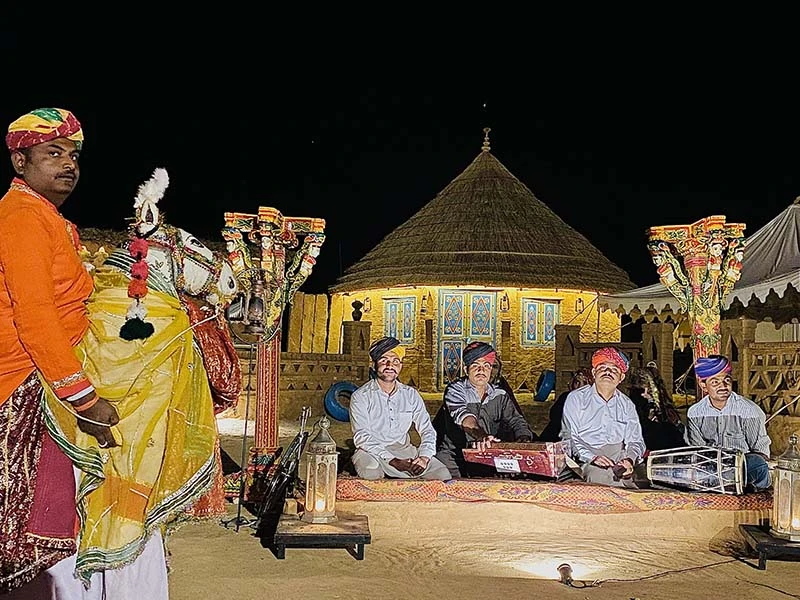
These dance traditions are not complete without the traditional instruments that accompany them. The dholak, khartal, morchang, and algoza bring a raw, earthy energy that modern sound systems simply cannot replicate. These instruments are played by skilled musicians who often come from families that have been practicing for generations. Their music isn't just a backdrop—it's a central character in the story being told through dance.
Community and Connection
In Jaisalmer, dance is not a performance meant to be passively watched; it’s an invitation to participate. Guests are often encouraged to join in the final moments of a Ghoomar circle or sway to the beat during a Kalbelia show. This breaking of the performer-audience boundary transforms a simple evening into a shared celebration. The emotional connection created through these traditions lingers long after the trip ends.
Dance as an Educational Tool
For younger generations growing up in Jaisalmer, these traditions are more than entertainment. Many desert camps and local cultural centers use dance to teach history, language, and values. Storylines in performances often carry moral lessons or commemorate significant historical events. This oral-kinetic transmission keeps the culture alive in a fast-changing world.
Final Thoughts
Experiencing Jaisalmer’s dance traditions offers more than a night of entertainment—it’s a journey into the soul of Rajasthan. These performances connect the past with the present, binding together history, community, and personal expression. Whether you’re staying in a luxury tent, exploring the sand dunes by jeep, or simply taking in the sunset over the Thar, the rhythm of Jaisalmer’s culture is always dancing in the air.