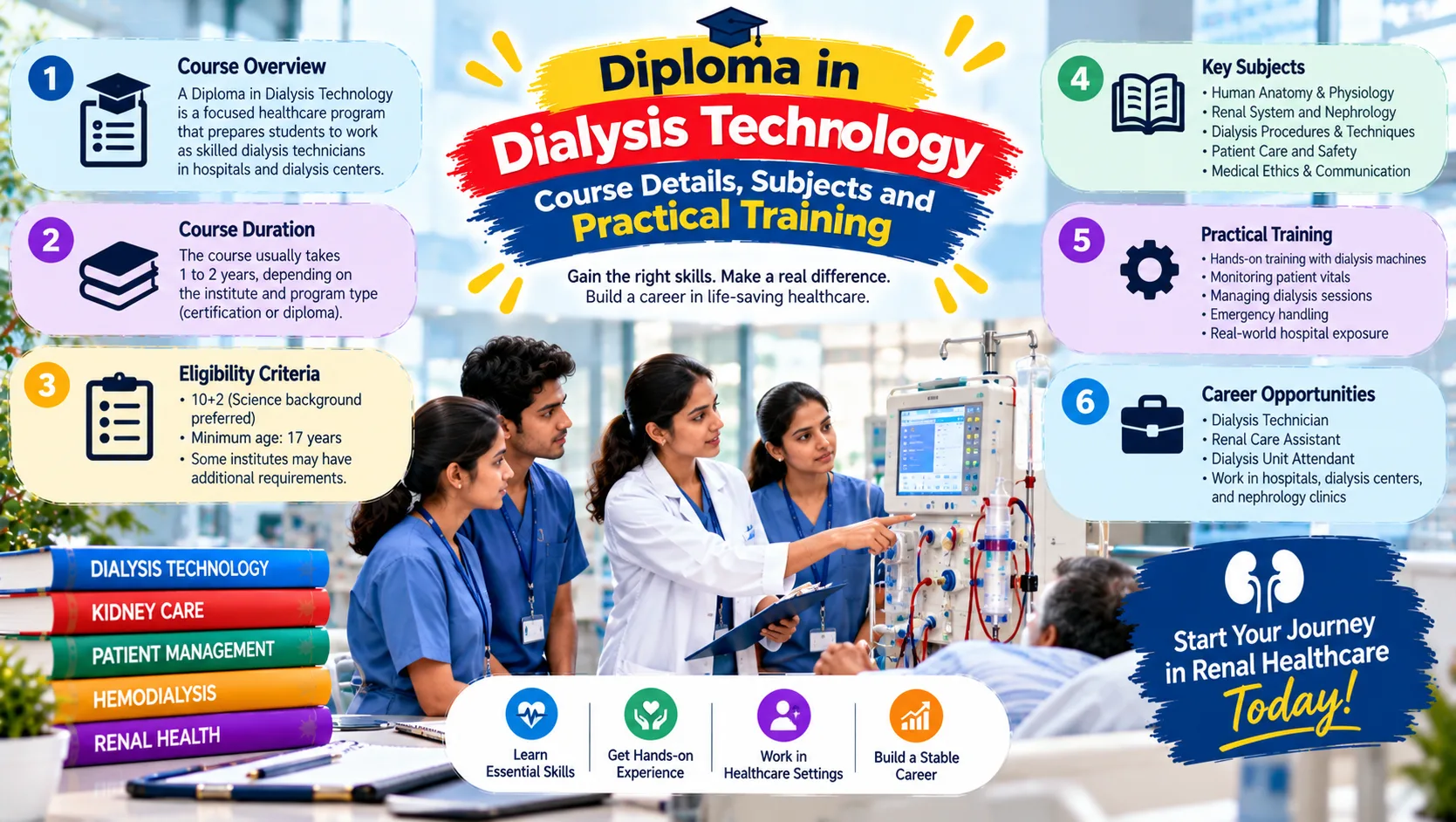
Healthcare depends on trained professionals who help medical teams deliver safe and effective patient care. Dialysis technology is one area of allied healthcare that focuses on supporting patients who need dialysis because their kidneys cannot adequately remove waste and excess fluid from the blood.
For students interested in technical healthcare work, a diploma programme may offer an introduction to dialysis procedures, equipment, patient monitoring and infection control. However, before choosing a course, it is important to understand the curriculum, eligibility requirements, practical training and qualification awarded.
What Is a Diploma in Dialysis Technology?
A diploma in dialysis technology is a vocational or allied healthcare programme designed to introduce students to the principles and procedures associated with dialysis care. Depending on the institution and programme structure, the course may combine classroom lessons, laboratory practice and supervised clinical exposure.
Students learn how dialysis works, why patients may require it and how trained staff support the treatment process. They also develop an understanding of patient safety, equipment preparation and the importance of following clinical instructions.
The exact course structure can vary between institutions. Therefore, students should always review the official syllabus and confirm the programme's applicable recognition or approval before admission.
Diploma in Dialysis Course Details
When reviewing diploma in dialysis course details, students should look beyond the course name. A useful comparison includes the following elements:
- Course duration: Check the official length of the programme and whether clinical training or an internship is included.
- Eligibility: Confirm the minimum educational qualification and any subject-specific requirements.
- Course syllabus: Review the theoretical subjects and practical components.
- Training facilities: Ask about laboratory equipment, demonstrations and supervised learning opportunities.
- Assessment methods: Understand the examination pattern, practical assessments and attendance requirements.
- Qualification awarded: Verify the exact certificate or diploma provided upon successful completion.
These details help students understand what they will learn and whether the programme suits their educational background and career plans.
Important Subjects Covered in Dialysis Technology
The subjects taught may differ by institution, but several areas are commonly relevant to dialysis education.
1. Human Anatomy and Physiology
Students develop a basic understanding of the human body, particularly the kidneys and urinary system. They learn how kidneys help regulate fluids, remove waste products and maintain the body's internal balance.
2. Fundamentals of Dialysis
This subject introduces the purpose and basic principles of dialysis. Students learn why the treatment may be needed and how it helps remove certain waste products and excess fluid from the blood.
3. Dialysis Equipment and Procedures
Learners become familiar with the equipment and supplies used in dialysis settings. Depending on the curriculum, training may cover machine components, preparation procedures, routine checks and safe equipment handling under supervision.
4. Infection Prevention and Patient Safety
Maintaining hygiene is essential in clinical environments. Students learn about hand hygiene, protective equipment, safe handling of clinical materials and procedures intended to reduce infection risks.
5. Patient Monitoring and Care
Dialysis care requires careful observation. Students learn the importance of following prescribed procedures, monitoring relevant patient information and promptly reporting unexpected changes to qualified healthcare professionals.
6. Basic Clinical Knowledge
The curriculum may also introduce medical terminology, communication skills, documentation and other foundational topics that support teamwork in healthcare settings.
Why Practical Training Is Important
Classroom learning helps students understand the theory behind dialysis, but practical education helps them connect that knowledge with real healthcare procedures.
Depending on the programme, practical sessions may include demonstrations, equipment familiarisation, simulated procedures and supervised clinical exposure. Students should understand that they must follow their training limits and the instructions of qualified healthcare professionals.
Before enrolling, ask the institution how practical sessions are organised, what facilities are available and whether clinical exposure forms part of the course. It is also helpful to understand how practical skills are assessed.
A programme that clearly explains its training structure gives students a better understanding of the learning experience they can expect.
Who Can Apply for a Dialysis Technology Programme?
Eligibility depends on the institution, course level and applicable regulations. Some programmes may accept students who have completed Class 12, while others may have different educational or subject requirements.
Students exploring a dialysis technician course after 12th should confirm the minimum qualification, required subjects and admission process directly with the institution. Do not assume that the eligibility criteria are identical across all diploma or certificate programmes.
It is equally important to check whether the qualification supports the roles you intend to pursue and whether employers require additional credentials or training.
Career Opportunities After the Course
Depending on the qualification, practical skills and employer requirements, graduates may explore suitable entry-level opportunities in hospitals, dialysis units, renal care centres and other healthcare facilities.
Dialysis technicians work as part of a healthcare team and must follow clinical protocols and safety procedures. Their responsibilities depend on their training, workplace policies and level of supervision.
Employment opportunities are not guaranteed by completing a course alone. Practical competence, communication, professional conduct and the requirements of individual employers can also influence recruitment.
How to Choose the Right Institution
Before admission, compare the syllabus, course duration, fees, training facilities and institutional credentials. Ask for written details about the qualification awarded and any clinical training requirements.
Scope College provides paramedical education options for students exploring healthcare-related career pathways. Visit scopecollege.co.in to explore available programmes and confirm current course-specific details directly with the institution.
Conclusion
A diploma in dialysis technology can introduce students to an important area of allied healthcare. Understanding the subjects, practical training, eligibility and qualification requirements helps students make a more informed decision.
Rather than selecting a programme based only on its name or duration, review the complete course structure and confirm that it aligns with your educational background and career goals.