Publishing has evolved significantly over the years, offering writers multiple ways to share their work with the world. The two main methods available today are digital publishing and traditional publishing. Each option comes with its own advantages and challenges, making it important for authors to understand their differences before deciding which path to take.
What is Digital Publishing?
Digital publishing refers to the process of distributing written content through online platforms, e-books, and other electronic formats. Unlike traditional publishing, which relies on printed materials, digital publishing allows authors to reach a global audience instantly. With the rise of e-books, online articles, and self-publishing platforms, this method has become increasingly popular among writers who want more control over their work.
One of the key benefits of digital publishing is accessibility. Authors can publish their work without waiting for approval from a publishing house, making it a faster and more flexible option. Additionally, digital content is easier to update, making it ideal for topics that require frequent revisions, such as technology and current affairs.
What is Traditional Publishing?
Traditional publishing is the process of releasing books, newspapers, and magazines in print form through established publishing houses. This method requires authors to submit their work to literary agents or publishers, who then decide whether to publish the material. If accepted, the publishing company handles editing, printing, and distribution.
One of the main reasons authors choose traditional publishing is credibility. Books released through well-known publishers are often regarded as more trustworthy and receive wider recognition. Additionally, traditional publishers offer professional editing and marketing support, which can be beneficial for new writers. However, this route can be time-consuming, as it involves multiple approval stages and a lengthy production process.
Comparing Digital and Traditional Publishing
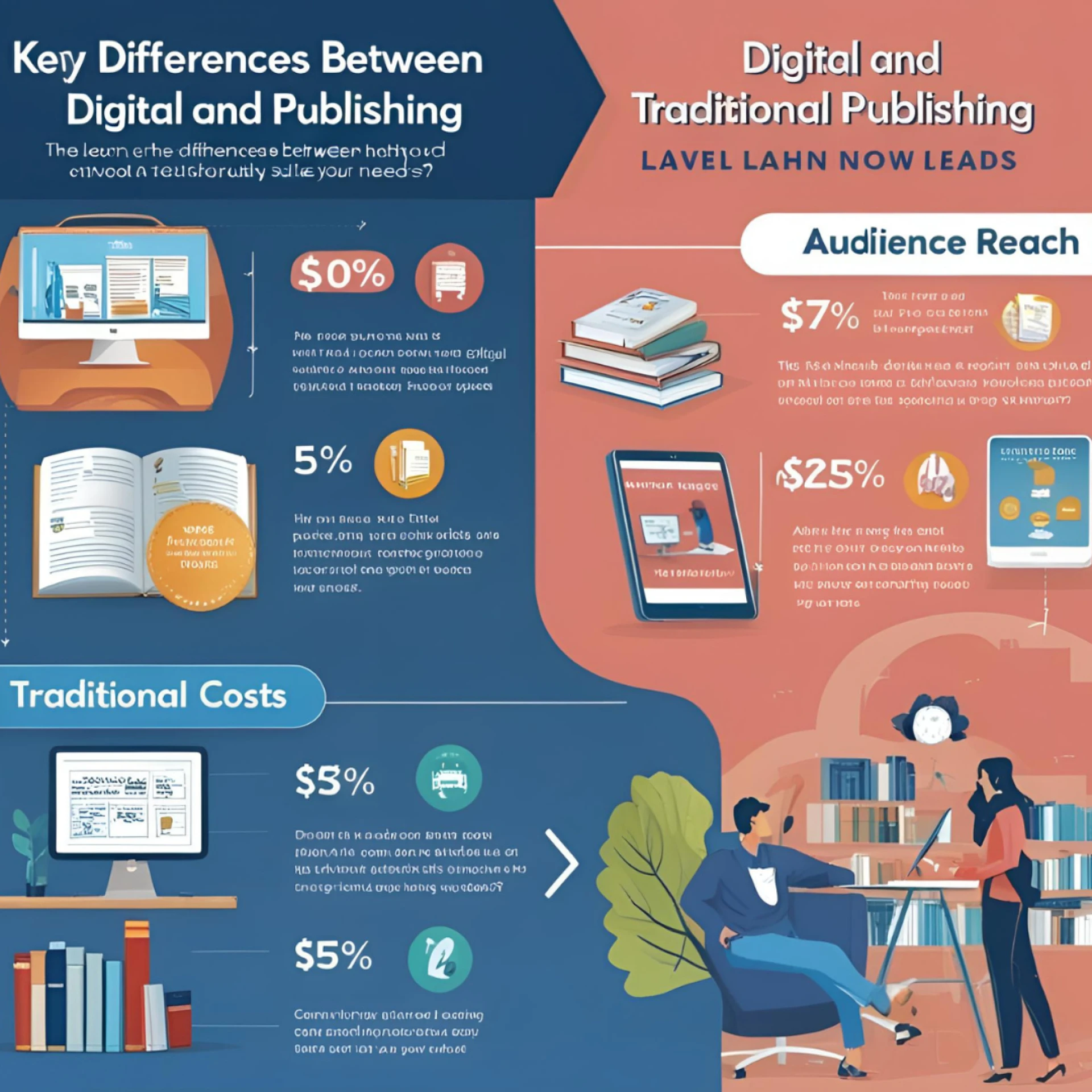
Both digital and traditional publishing have their own advantages and challenges, making the choice between them a matter of personal preference and goals. Here are some key differences to consider:
- Cost: Digital publishing is generally more affordable because there are no printing costs. Traditional publishing, on the other hand, involves expenses related to printing, distribution, and marketing.
- Speed: Digital publishing allows for instant distribution, whereas traditional publishing takes months or even years to complete.
- Control: Self-published authors in the digital space have full control over their content, pricing, and distribution. In traditional publishing, the publisher has the final say on most aspects of the book.
- Audience Reach: Digital publishing enables authors to reach readers worldwide with minimal effort. Traditional publishing focuses more on physical bookstores and local markets.
- Marketing Support: Traditional publishers often provide promotional support, while digital publishers usually need to handle their own marketing efforts.
Which Option is Better?
There is no single answer to whether digital or traditional publishing is better. It depends on an author's goals, resources, and preferred level of involvement. Writers who want a faster process with more control over their content might prefer digital publishing. Those who value professional editing, marketing assistance, and industry credibility may lean toward traditional publishing.
For new authors, digital publishing provides an opportunity to enter the market without the long wait times associated with traditional publishing. However, those aiming for recognition in literary circles may still consider the traditional route.
The Future of Publishing
With technology continuously changing how people consume content, digital publishing is expected to grow even further. However, traditional publishing remains relevant, especially for readers who enjoy physical books. Many authors choose a combination of both, releasing e-books while also pursuing traditional print options.
Understanding the differences between digital and traditional publishing can help authors make informed decisions about their work. Regardless of the choice, the most important thing is creating content that connects with readers.