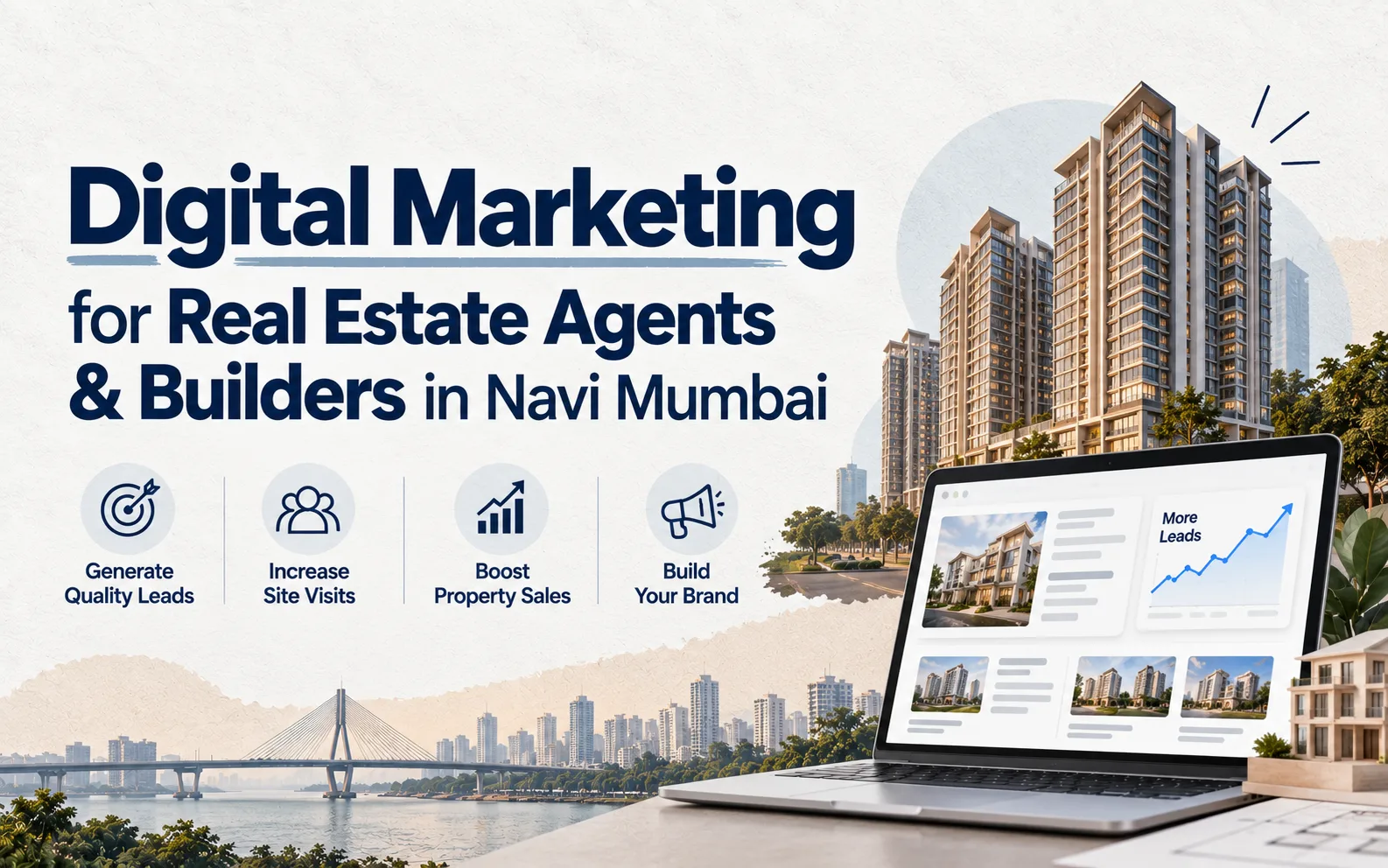
Real estate in Navi Mumbai moves fast. Kharghar, Panvel, Ulwe, and Taloja are seeing constant new project launches, and buyers today are researching everything online - comparing projects, checking reviews, watching walkthrough videos - long before they ever visit a site office. If your digital presence isn't built for that behavior, you're losing leads to a competitor whose website loaded faster or whose Instagram reel showed up first.
This post covers what actually works for real estate marketing in this specific market - not generic advice copied from a national real estate blog.
Why Real Estate Marketing in Navi Mumbai Is Different
Unlike a small retail business, real estate has a longer decision cycle, a much higher transaction value, and buyers who are actively comparing multiple projects at once. That changes the marketing approach in a few important ways: you need to capture interest early, nurture it over weeks or months, and be present across several channels at once - because a buyer researching a 2BHK in Kharghar today might not book a site visit for another six weeks.
Local SEO: Where Most Real Estate Businesses Underinvest
Searches like "2BHK flats in Kharghar" or "new residential projects Panvel" carry serious commercial intent - someone typing that is often close to a decision, not just browsing. Yet most real estate businesses in Navi Mumbai still rely almost entirely on portals like MagicBricks or 99acres, rather than building their own search visibility.
A well-optimized Google Business Profile for your sales office, project-specific landing pages with real details (not templated copy), and consistent NAP information across directories all help you show up directly in these high-intent searches - instead of paying a portal for every single lead.
Google Ads for Site Visits, Not Just Clicks
Performance marketing for real estate should be built around one clear goal: getting qualified people to book a site visit, not just clicking on an ad. That means:
Using location-specific keywords tied to actual project names and nearby landmarks ("2BHK near Kharghar railway station") rather than broad terms that attract unqualified clicks.
Sending traffic to a dedicated landing page for that specific project - with a simple form, a clear callback option, and real project photos - instead of a generic homepage that makes visitors hunt for information.
Retargeting people who visited your project page but didn't fill out a form. Real estate decisions take time, and a well-timed retargeting ad two weeks later, showing a limited-time offer or a new phase launch, often converts better than the first-touch ad ever could.
Instagram and YouTube: Where Buyers Actually Spend Time Researching
Project walkthrough videos consistently outperform static photos for real estate. A 60-90 second Instagram Reel or YouTube Short walking through a sample flat, showing the amenities, or giving a drone view of the project location gives potential buyers something a brochure never can - a real sense of the place.
Consistency matters more than production value here. A phone-shot weekly update on construction progress, amenities completion, or a quick Q&A answering common buyer questions builds far more trust over months than one expensive, polished video released once and never followed up.
WhatsApp: The Channel Buyers Actually Respond To
For real estate specifically, WhatsApp often outperforms email and even phone calls for follow-up. A buyer who filled out a form on your Google Ad is far more likely to respond to a friendly WhatsApp message with a floor plan PDF and a quick answer to their question than to an email that might sit unread for days. Building a simple, respectful WhatsApp follow-up sequence - never spammy, always useful - is one of the highest-return investments available to real estate businesses right now.
Reviews Matter More Than Most Builders Realize
Buyers researching a project will actively search for reviews of both the builder and the specific project, especially given how much money is involved. A steady stream of genuine reviews from past buyers - on Google, and ideally reinforced with short video testimonials - does more to build trust than almost any other marketing asset you can create. Ask satisfied buyers directly, right after possession or a positive interaction, rather than hoping reviews happen organically.
Content That Builds Long-Term Trust
Beyond direct sales content, a small amount of genuinely useful content builds long-term SEO value and trust: a guide to home loan processes for first-time buyers, an explainer on RERA registration and why it matters, or a comparison of amenities across different budget ranges. This kind of content attracts buyers earlier in their research - before they've picked a specific project - and positions your brand as helpful rather than purely sales-focused.
Bringing It Together
Real estate marketing in Navi Mumbai works best as a connected system, not a single channel: local SEO and Google Ads bring in qualified interest, project-specific landing pages and video content build understanding and trust, WhatsApp follow-up keeps the conversation warm over the weeks it takes to decide, and reviews reinforce credibility for the next buyer researching the same project.
Builders and agents who treat these as separate, disconnected efforts tend to see inconsistent results. Those who connect them into one steady process - even a simple one - tend to see a real, compounding improvement in both lead quality and site-visit conversion over time.