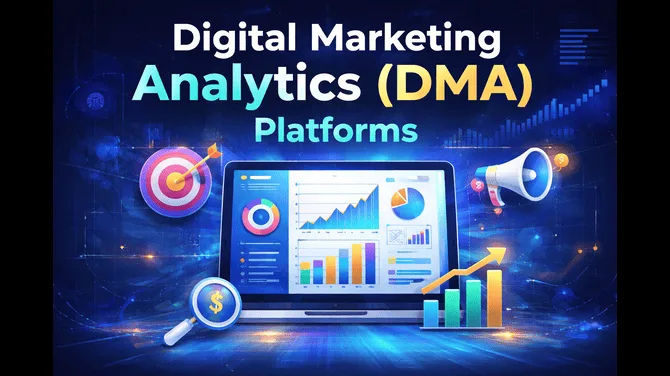
Digital Marketing Analytics (DMA) platforms have become essential for organizations looking to strengthen their digital presence, optimize marketing campaigns, and achieve measurable business growth. As businesses increasingly rely on digital channels to engage customers, the ability to collect, analyze, and interpret marketing data has become a critical component of successful marketing strategies. DMA platforms help organizations transform complex datasets into actionable insights, enabling informed decisions and improved marketing performance.
Click here for more information : https://qksgroup.com/market-research/market-forecast-digital-marketing-analytics-dma-platforms-2026-2030-worldwide-2194
Evolution of Digital Marketing Analytics
Digital marketing analytics has evolved significantly from basic website tracking tools to comprehensive platforms that analyze performance across multiple digital channels. Initially, businesses primarily monitored website traffic, page views, bounce rates, and conversion metrics to understand online audience behavior. These insights helped marketers evaluate website effectiveness and identify opportunities to improve user engagement.
The growing popularity of social media introduced new analytics requirements, including engagement rates, impressions, shares, comments, and audience reach. As email marketing, search engine optimization (SEO), paid advertising, and mobile marketing expanded, organizations needed solutions capable of consolidating information from multiple sources. This evolution led to the development of advanced DMA platforms that provide a more comprehensive understanding of marketing performance and customer interactions.
Key Capabilities of Modern DMA Platforms
Modern Digital Marketing Analytics platforms offer a broad range of capabilities designed to improve campaign effectiveness and support data-driven decision-making. Data integration enables businesses to consolidate information from websites, social media, advertising platforms, email campaigns, and other digital touchpoints. Cross-channel analytics provides a unified view of marketing performance, helping organizations identify trends and evaluate the effectiveness of different channels.
Predictive analytics allows marketers to forecast campaign outcomes, identify potential customer conversion opportunities, and anticipate changing audience preferences. Attribution modeling helps determine how different marketing interactions contribute to conversions, while customer segmentation enables businesses to develop targeted campaigns based on customer behavior, interests, and engagement patterns.
The Role of AI in Digital Marketing Analytics
Artificial intelligence (AI) and machine learning are transforming how organizations analyze digital marketing data. These technologies can identify patterns, automate repetitive analytical tasks, and generate insights that help marketers improve campaign targeting and resource allocation. AI-powered analytics can also support customer behavior prediction, personalized recommendations, and automated campaign optimization.
By incorporating intelligent analytics capabilities, DMA platforms enable businesses to respond more effectively to changing customer expectations and emerging market opportunities. These advancements are increasing the value of analytics in marketing planning and execution.
Benefits of Digital Marketing Analytics Platforms
Digital Marketing Analytics platforms offer several advantages for organizations seeking to improve marketing efficiency and business outcomes. They help businesses measure campaign effectiveness, understand customer journeys, and identify the channels that generate the greatest engagement and conversions. By analyzing performance data, organizations can allocate marketing budgets more effectively and improve return on investment (ROI).
Click here for market share report : https://qksgroup.com/market-research/market-share-digital-marketing-analytics-dma-platforms-2025-worldwide-2390
These platforms also support personalized customer experiences by providing insights into audience preferences and behavior. Improved data visibility enables marketing teams to identify emerging trends, optimize customer acquisition strategies, and make decisions based on measurable results rather than assumptions.
Emerging Trends and Future Market Outlook
The Digital Marketing Analytics market is expected to continue evolving as organizations invest in AI-driven insights, integrated marketing technologies, real-time analytics, and omnichannel customer engagement. The increasing demand for personalized marketing and measurable campaign outcomes is encouraging businesses to adopt more sophisticated analytical solutions.
Data privacy, governance, and secure information management are also becoming important considerations as organizations collect and process information across multiple digital channels. Consequently, businesses are seeking platforms that balance analytical capabilities with data protection and regulatory requirements.
In the coming years, the integration of AI, predictive modeling, and advanced customer analytics is expected to further enhance the effectiveness of DMA platforms. Organizations that successfully incorporate these technologies into their marketing strategies will be better positioned to improve campaign performance, strengthen customer relationships, and achieve sustainable growth.
Conclusion
Digital Marketing Analytics (DMA) Platforms have evolved from simple website analytics tools into sophisticated digital marketing intelligence solutions that empower organizations to make smarter, faster, and more profitable decisions. By integrating data across multiple channels and leveraging AI, predictive analytics, customer segmentation, and real-time reporting, these platforms provide a comprehensive understanding of marketing performance.
Organizations that embrace modern DMA platforms are better equipped to optimize campaigns, personalize customer experiences, improve ROI, and stay ahead in an increasingly competitive digital marketplace. As technology continues to evolve, DMA platforms will play an even greater role in shaping the future of data-driven marketing and sustainable business growth.