A procedure describes how work should go. A failure scenario describes how it can go wrong. Safety engineers have long found the second to be the better design input.
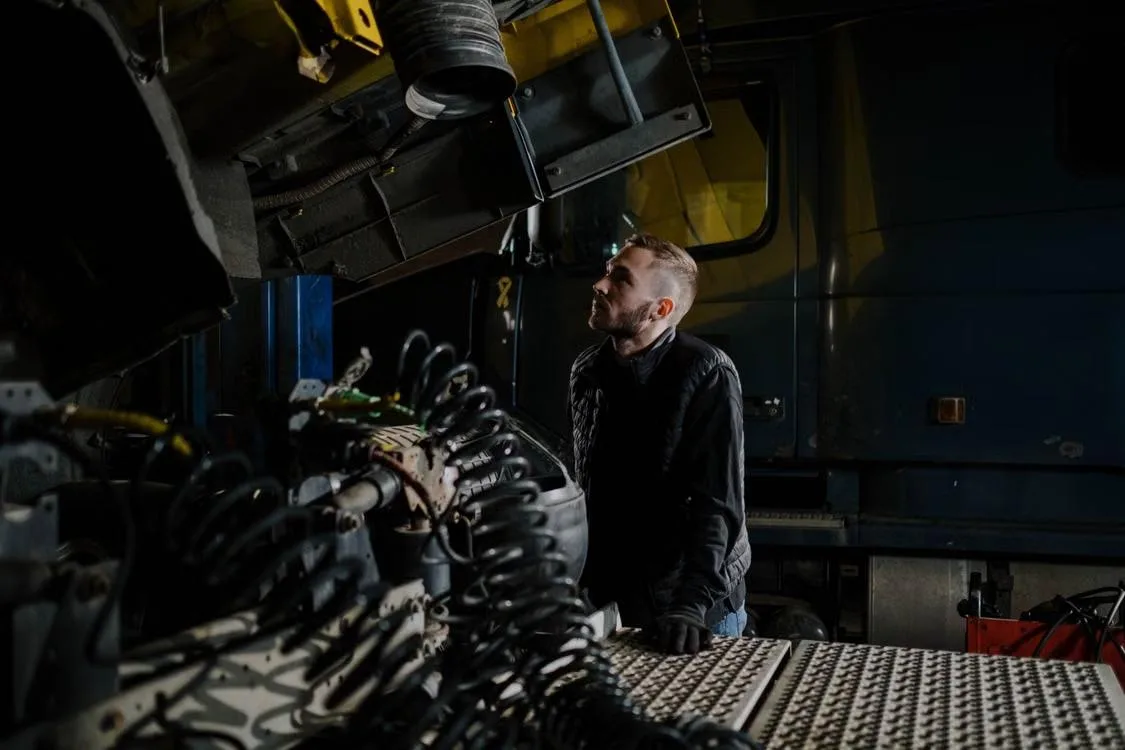
Heavy-duty maintenance proves the point. A raised dump bed holds thousands of pounds above a technician, and the shop around it is rarely ideal.
This article looks at dump truck repair safety through a systems lens: start with what realistically fails, then build safeguards that hold up anyway. The goal is not to blame technicians for human behavior. It is to design a system where ordinary human behavior still ends safely.
Procedures Describe the Ideal, Not the Day
Written procedures assume a clear head, the right tool, and enough time. Real shifts add interruptions, missing equipment, and pressure to finish.
That gap is where systems fail. Maintenance varies by technician, truck, bay, and hour. A safeguard that only works under ideal conditions is a plan, not a protection.
NIOSH’s Prevention through Design initiative calls designing out hazards the most reliable and effective form of prevention. For maintenance teams, that means building protection into the equipment rather than hoping every step is remembered.
That shift matters most for maintenance, where technicians work beneath the equipment they service.
Four Failure Scenarios Worth Designing Around
· Equipment misuse: When purpose-built support is out of reach, the nearest object gets pressed into service. Wooden blocks and pipes were never engineered for a raised bed. A true dump truck safety brace is.
· Unexpected component movement: Raised beds are often held by hydraulic pressure, and that pressure can be released. In a California FACE case, a mechanic raised a roll-off truck’s bed without jack stands or blocking, then disconnected a hydraulic line beneath it. Nothing else was holding the bed.
· The quick-job shortcut: In a Washington State case summarized by NIOSH, two workers skipped the truck’s installed safety pole for an adjustment expected to take about a minute. The raised bed came down.
· Maintenance variability: Different technicians, truck configurations, and frame widths change how a safeguard gets used.
Each scenario leads to the same lesson. Protection cannot depend on a perfect decision at the worst possible moment. A safeguard has to work when someone is tired, rushed, or distracted, because those are the moments when failure scenarios become real.
Turning Scenarios into Design Requirements
Good requirements come straight from the failure scenarios:
· Purpose-built: Made for the single job of holding a raised dump bed.
· Independent of hydraulics: A physical support that is separate from the hydraulic system.
· Frame-matched: Sized for the trucks actually in the shop.
· Quick to install: Simple enough that a quick job has no excuse to skip it.
Equipment that meets all four does not ask technicians to be perfect. It gives them a safer default.
The last requirement deserves attention. A safeguard that takes effort to set up competes with the pressure to finish. A safeguard that goes on quickly wins that contest more often.
Engineered Mechanical Protection in Practice
BedLock Safety Products, LLC builds truck repair safety equipment around requirements like these. BedLock systems hold a raised dump bed upright so technicians can clean, repair, and maintain the truck. They are made for repair-shop use, not for cargo hauling or on-road use.
Design details the company describes include:
· Two chains and hooks with a double key slot retention plate, which gives more ways to secure the unit to the frame and keeps a key slot on the outside
· Frame sizes from 4½" up to 8" across the BL-450A/B, BL-600A/B, BL-700B, and BL-800B
· Two top options on the BL-450A/B: an “A” top, or a flat “B” top for wider dump box frames
· A made-to-order notched version, the BLN-450A/B, for trucks with limited frame access
· High-grade steel with a corrosion-resistant finish
· Installation with standard shop tools
Used as dump truck safety stands, these units give technicians physical support that does not depend on a workaround. That reduces exposure to movement-related hazards. No single piece of equipment removes every risk, so it works best inside a program with inspection and training. It also needs to be matched to the right frame, which is why a recommendation from the manufacturer is worth getting before anything is installed.
Putting It to Work
Shops can apply a systems approach right away:
· Map your scenarios: List how raised-bed work actually goes wrong at your location.
· Inventory your frames: Match equipment to the trucks you service.
· Keep support at the bay: Make the safeguard the easiest option.
· Inspect on schedule: Check chains, hooks, and locking mechanisms for wear or damage.
Together, these steps make dump body safety a built-in feature of the shop rather than a reminder on the wall. When the safeguard is physical and always within reach, safe practice stops depending on memory and becomes part of how the work is done.
Talk With a Dump Truck Safety Equipment Manufacturer
Shops that want to build raised-bed work around realistic failure scenarios can contact BedLock Safety Products, LLC, a dump truck safety equipment manufacturer in Springfield, Illinois, for a recommendation on the BedLock system for their frames and a firm freight quote. The team takes custom order requests when a standard size does not fit.
About the Author
Evan C. is a freelance writer who covers industrial maintenance, systems engineering, and workplace safety for trade publications and business blogs. He focuses on how equipment design and realistic planning can reduce risk in heavy-duty repair environments.