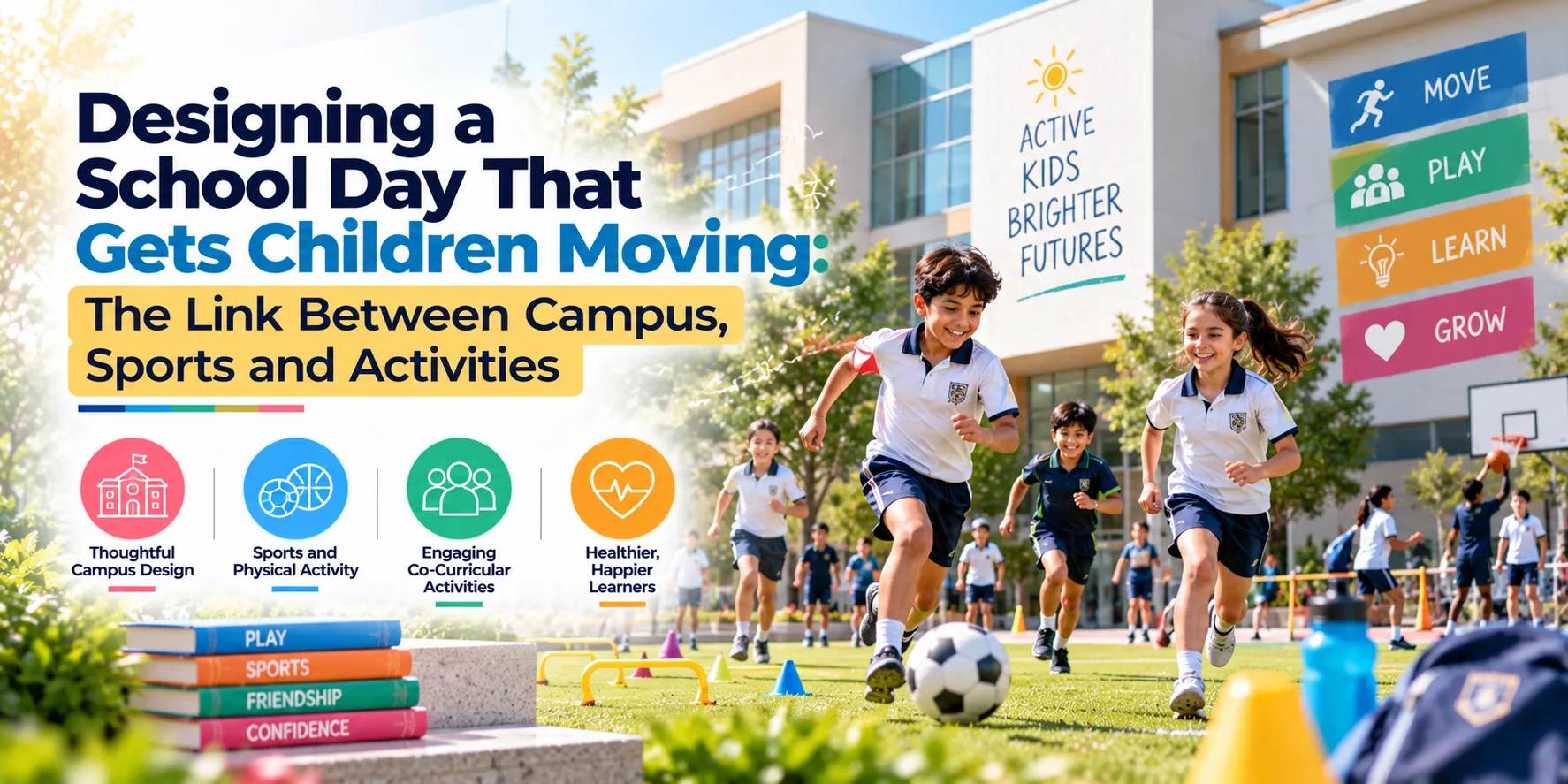
A child's school day involves much more than sitting in a classroom. Students walk between lessons, play during breaks, participate in physical education, explore interests and interact with classmates in shared spaces. The way a school day is organised can influence how easily children take part in these experiences.
Parents looking for a Modern School Campus in Faridabad may naturally consider classrooms, laboratories, libraries and technology. These facilities matter, but it is also worth asking whether the campus and daily timetable encourage movement, recreation, teamwork and participation.
A well-planned school experience does not treat sports and activities as unrelated extras. It gives students opportunities to use their bodies, explore interests and learn different skills alongside academic work.
Why Movement Belongs in the School Day
Children need opportunities to move, and physical activity can be part of a varied and balanced school routine. Movement gives students a break from prolonged sitting and creates opportunities to practise coordination, teamwork and persistence.
Not every child will become a competitive athlete, and school sports should not be designed only for students who already perform well. Games, movement exercises, recreational play and introductory sports can help more children participate comfortably.
For some students, a physical activity session may be the part of the day in which they discover a new interest or feel more confident. Others may prefer creative clubs, music, drama or practical activities. A balanced programme makes room for different strengths rather than treating one type of achievement as more valuable than all others.
Campus Design Can Make Participation Easier
The physical environment influences how students use their school day. Accessible activity spaces, suitable sports facilities, clear walkways and well-organised shared areas can make participation easier.
A school campus may include classrooms, indoor activity areas, outdoor play spaces, a library and specialised rooms. However, the presence of a facility alone does not tell parents how effectively students use it.
During a school visit, families can ask whether activity spaces are regularly included in the timetable, how students access them and whether facilities are suitable for different age groups. They can also ask how the school manages supervision, equipment and safety.
A Modern School Campus in Faridabad should be evaluated not only by how impressive it looks but also by how well it supports everyday learning and student participation.
Sports Teach Skills That Extend Beyond the Playing Field
Sports can provide opportunities to practise skills that are useful in many parts of life.
Team games require students to communicate, coordinate their actions and recognise that each player contributes differently. Individual activities can help students set goals, monitor progress and learn how to respond when improvement takes time.
Sport also creates opportunities to experience both success and disappointment. A team may lose a match despite preparing carefully. An individual may need several attempts to master a movement. These experiences can lead to useful conversations about effort, preparation, respect and improvement.
Adults should avoid suggesting that winning is the only meaningful outcome. Students benefit when they understand the value of fair play, safe participation, consistent practice and supporting teammates.
These lessons are most constructive when coaches and teachers set clear expectations and respond to mistakes in a supportive way.
Extracurricular Activities Give Different Interests a Place
Sports are important, but they are only one part of a broad activity programme. Students may enjoy art, music, theatre, reading clubs, environmental activities, public speaking, design or practical science.
Such opportunities allow children to explore interests that may not receive as much attention during conventional lessons. They can also meet classmates who share similar interests and practise skills in a less examination-focused setting.
Parents researching a Best CBSE School with Extracurricular Activities should therefore look at the variety and accessibility of the programme. Are activities available to students with different experience levels? Can beginners participate? Are children given time to practise and improve? Does the school encourage exploration before expecting students to specialise?
A strong programme should not make children feel that they must excel in every activity. The aim is to help them discover interests, develop skills and participate meaningfully.
Balance Activity With Academic Responsibilities
A full school day needs thoughtful planning. If students have too many scheduled activities, they may struggle to find time for homework, rest, family life and independent interests.
The solution is not to remove activities altogether. Instead, schools and families can help children maintain a manageable routine.
Parents can ask their child which activities they enjoy most and whether the schedule feels comfortable. A student who wants to join several clubs may need help prioritising. Another child may need encouragement to try an activity without being pushed into an intensive commitment.
Schools can also make participation more inclusive by offering varied levels of involvement. Not every student needs to train for competitions or perform at public events to benefit from an activity.
What Parents Should Ask About Sports and Facilities
Families searching for the best sports academics in Delhi NCR should examine the actual student experience rather than relying only on photographs or promotional descriptions.
Useful questions include:
- Which sports and physical activities are currently available?
- How often do students participate during a normal week?
- Are activities organised according to age and ability?
- What supervision and safety procedures are followed?
- Can beginners participate, or are activities mainly intended for experienced students?
- How does the school balance practice, competitions and academic responsibilities?
- What other clubs or creative activities can students explore?
Parents should also observe whether activity spaces appear organised and maintained, and whether the school's arrangements support students with different needs.
These questions provide a more practical picture of how sports and facilities fit into everyday school life.
How Schools Can Make Activities More Inclusive
Some students are naturally confident in group activities, while others may hesitate because they fear making mistakes or being compared with classmates. An inclusive programme offers different ways to participate and recognises effort as well as performance.
Teachers can introduce activities gradually, explain rules clearly and encourage students to support one another. Equipment and tasks can be adapted where appropriate so more children have opportunities to join.
Schools should also take students' feedback seriously. If an activity is consistently difficult to access or a space is not working well for its intended purpose, reviewing the arrangements can help improve participation.
Grand Columbus International School is one option parents may consider when researching schools in Faridabad. Families should check the school's current sports offerings, extracurricular programme, campus facilities and safety arrangements directly rather than assuming that every option is available.
Conclusion
The school environment influences how children learn, move, socialise and discover their interests. Suitable facilities can support these experiences, but their real value depends on how they are used throughout the school day.
For parents, the most useful approach is to look at the connection between campus design, sports, extracurricular activities and academic routines. A well-balanced environment gives students opportunities to learn in different ways without making them feel that they must excel at everything.
When children can explore interests, practise skills, cooperate with others and remain engaged in their academic learning, school becomes a richer experience than lessons and examinations alone.