A Designer Kurta Pajama Set stands out when the fabric, fit, color, and craftsmanship work together as one cohesive outfit rather than separate pieces thrown on together. The "coordinated" part is what separates a designer set from a regular kurta pajama — matching thread work, proportional silhouettes, and fabric that drapes the same way on both the kurta and the pajama. Below, we break down exactly what to look for, so your next Men's Kurta Pajama purchase feels intentional, not accidental.
Whether you're shopping for a wedding, a festive occasion, or a comfortable daily ethnic staple, understanding these details helps you buy smarter and dress sharper.
What Fabric Should You Choose for a Designer Kurta Pajama Set?
Cotton, linen, and silk-blends are the three most common fabrics for a Designer Kurta Pajama Set, and each suits a different climate and occasion. Cotton breathes well and works for daily or summer wear. Linen offers a relaxed, textured look ideal for daytime festive events. Silk-blends carry a richer sheen suited to weddings and evening functions. The right fabric choice affects comfort, drape, and how well the embroidery or print sits on the garment.
Cotton vs Linen vs Silk-Blend — Which Fabric Suits Which Occasion?
FabricBest ForComfort LevelOccasion FitCottonDaily wear, summerHigh breathabilityCasual, office festiveLinenDaytime eventsModerate, texturedSemi-formal, brunch functionsSilk-BlendEvening functionsWarm, less breathableWeddings, receptionsCotton remains the most reliable choice for Indian weather, while silk-blends elevate the outfit for evening or ceremonial settings.
How Do You Pick the Right Fit for Men's Kurta Pajama?
The right fit depends on body type and the level of formality you need. A slim-fit kurta pajama suits younger, leaner frames and photographs well for functions. A regular or straight-cut fit offers more room and works better for elder family members or all-day comfort during long ceremonies. Always check shoulder width and kurta length (ideally mid-thigh to knee-length) before finalizing size.
Slim Fit vs Regular Fit vs Straight Cut: Which One Is Right for You?
Slim fit hugs the body and suits formal, photo-heavy events like sangeet or reception. Regular fit balances comfort and structure, making it the safest choice for most buyers. Straight-cut kurtas fall loosely from the shoulder, offering maximum ease for older users or all-day wear during pujas and family functions. Choosing between them comes down to comfort priority versus a tailored silhouette.
Which Occasions Call for a Designer Kurta Pajama Set?
Weddings, festivals like Diwali or Eid, and casual family gatherings each call for a different style of Designer Kurta Pajama Set. Wedding wear typically features heavier embroidery, silk-blend fabric, and richer colors like maroon, gold, or navy. Festive daywear leans toward cotton or linen with lighter thread work. Casual sets use plain or subtly printed cotton for comfort during everyday ethnic dressing, such as pujas or informal get-togethers.
Wedding vs Festive vs Casual: How Do the Styling Needs Differ?
- Wedding: Heavier embroidery, silk-blends, bold colors, matching Nehru jacket optional
- Festive (Diwali/Eid): Cotton-silk mix, moderate embellishment, pastel or jewel tones
- Casual daywear: Plain cotton, minimal detailing, breathable and easy to maintain
Matching the fabric weight and embellishment level to the occasion prevents the outfit from feeling overdressed or underdressed.
What Colors and Patterns Work Best for a Coordinated Ethnic Look?
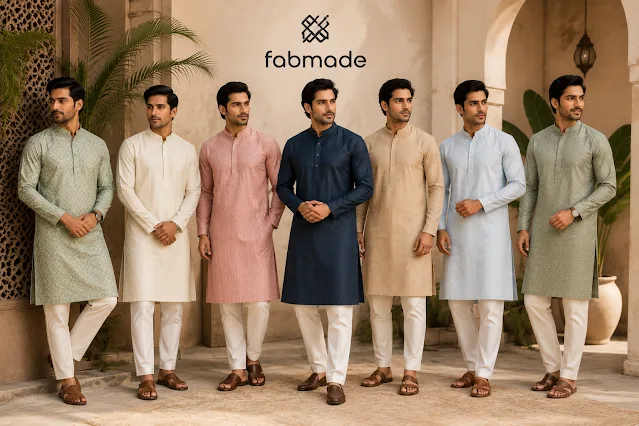
Solid colors like maroon, navy, mustard, and off-white remain the most versatile choices for a Designer Kurta Pajama Set, since they photograph well and pair easily with accessories. Printed sets add personality for daytime festive wear, while embroidered sets — especially with thread work on the collar and placket — suit evening and wedding functions. Choosing a color that complements your skin tone matters more than following seasonal trends.
Solid vs Printed vs Embroidered: Which Pattern Suits Which Event?
Solid kurta pajamas work for almost any occasion and are the easiest to accessorize. Printed sets (florals, geometric, block prints) suit relaxed festive or daytime events. Embroidered sets, with zari or thread work along the neckline and cuffs, are best reserved for weddings and formal evening functions where more visual detail is expected.
How Should You Style a Men's Kurta Pajama Set with Accessories?
A well-chosen Nehru jacket, mojaris (traditional footwear), and a simple stole can elevate any Men's Kurta Pajama without overcomplicating the look. Keep jewelry minimal — a single brooch or pocket square works better than layering multiple accessories. For weddings, a contrasting jacket adds depth; for festive daywear, skip the jacket and let the kurta's fabric and color do the work.
Designer Kurta Pajama Set vs Regular Kurta Pajama: What's the Difference?
The core difference lies in tailoring precision, fabric quality, and finishing details. A regular kurta pajama is mass-produced with basic stitching and standard sizing, while a designer set involves better fabric sourcing, coordinated embroidery between the kurta and pajama, and refined finishing like piped seams or mother-of-pearl buttons.
FeatureRegular Kurta PajamaDesigner Kurta Pajama SetFabric qualityBasic cotton blendPremium cotton, linen, or silk-blendStitchingStandard machine stitchReinforced, finished seamsEmbellishmentMinimal or noneCoordinated embroidery/printFit customizationLimited sizesRange of tailored fitsOccasion suitabilityEveryday wearWeddings, festivals, formal eventsIf you're dressing for a one-time formal event, the added detailing of a designer set is usually worth the difference; for daily rotation, a regular set is more practical.
How Much Should You Budget for a Good Quality Kurta Pajama for Men?
Prices for a kurta pajama for men typically range from budget cotton sets to premium silk-blend designer pieces, depending on fabric, embroidery, and brand positioning. Entry-level cotton sets are the most affordable and best for everyday or first-time ethnic wear buyers. Mid-range sets with light embroidery suit festive use, while premium silk-blend sets with detailed handwork are priced higher and are meant for weddings or once-a-year occasions. Setting a budget based on how often you'll wear the outfit helps avoid overspending on pieces that sit unused in the wardrobe.
How Do You Care for and Maintain a Kurta Pajama Set?
Most cotton and linen kurta pajama sets can be machine-washed on a gentle cycle, while silk-blend and heavily embroidered sets should be dry-cleaned to protect the threadwork and prevent color bleeding. Always check the care label before the first wash, since fabric composition affects shrinkage and colorfastness. The Bureau of Indian Standards maintains published specifications for handloom cotton fabrics covering weave, yarn count, and finish, which is useful background if you want to understand what "quality cotton" actually means at a technical level — see the Bureau of Indian Standards' textile specifications for reference.
Washing and Storage Tips That Protect Embroidery and Color
Turn embroidered kurtas inside out before washing, avoid direct sunlight while drying to prevent fading, and store folded (not hung) to protect delicate threadwork from stretching. Use a fabric-safe iron setting, and steam rather than press directly over embroidered sections.
Where Can You Buy a Reliable Designer Kurta Pajama Set Online?
When buying a Designer Kurta Pajama Set online, prioritize brands that specify fabric composition, provide clear size charts, and show close-up images of embroidery or print detailing before you commit. Ethnic wear brands like fabmade offer coordinated kurta pajama sets across cotton, linen, and festive fabric options, which is useful if you're comparing ready-to-wear designs against custom tailoring. Whichever brand you choose, cross-check return policies and fabric details, since ethnic wear fit can vary more than western wear across brands.
Frequently Asked Questions
Is a Designer Kurta Pajama Set suitable for everyday wear?
Lighter cotton designer sets with minimal embroidery work fine for regular or festive daywear, while heavily embellished silk-blend sets are better reserved for weddings and formal events.
What length should a men's kurta be?
A kurta typically falls between mid-thigh and just above the knee; anything longer starts to resemble a sherwani-style silhouette, and shorter lengths look more casual.
Can I wear sneakers with a kurta pajama?
Yes, for casual or semi-formal settings, minimalist sneakers work well; however, traditional footwear like mojaris or juttis suits weddings and formal ethnic functions better.
How is a kurta pajama different from a kurta churidar?
A pajama is a straight-cut, looser-fitting bottom, while a churidar is fitted and gathers at the ankle; pajamas are generally more comfortable for all-day wear.
Final Thoughts
A Designer Kurta Pajama Set earns its name through coordination — fabric, fit, color, and embellishment level all working toward one occasion-appropriate look. Whether you're buying a kurta pajama for men for a wedding, festival, or daily ethnic rotation, matching the outfit's formality to the event, checking fabric quality, and getting the fit right will always outperform chasing trends. Brands such as fabmade and others in the space make this easier by offering pre-coordinated sets, but the fundamentals above apply no matter where you shop.