
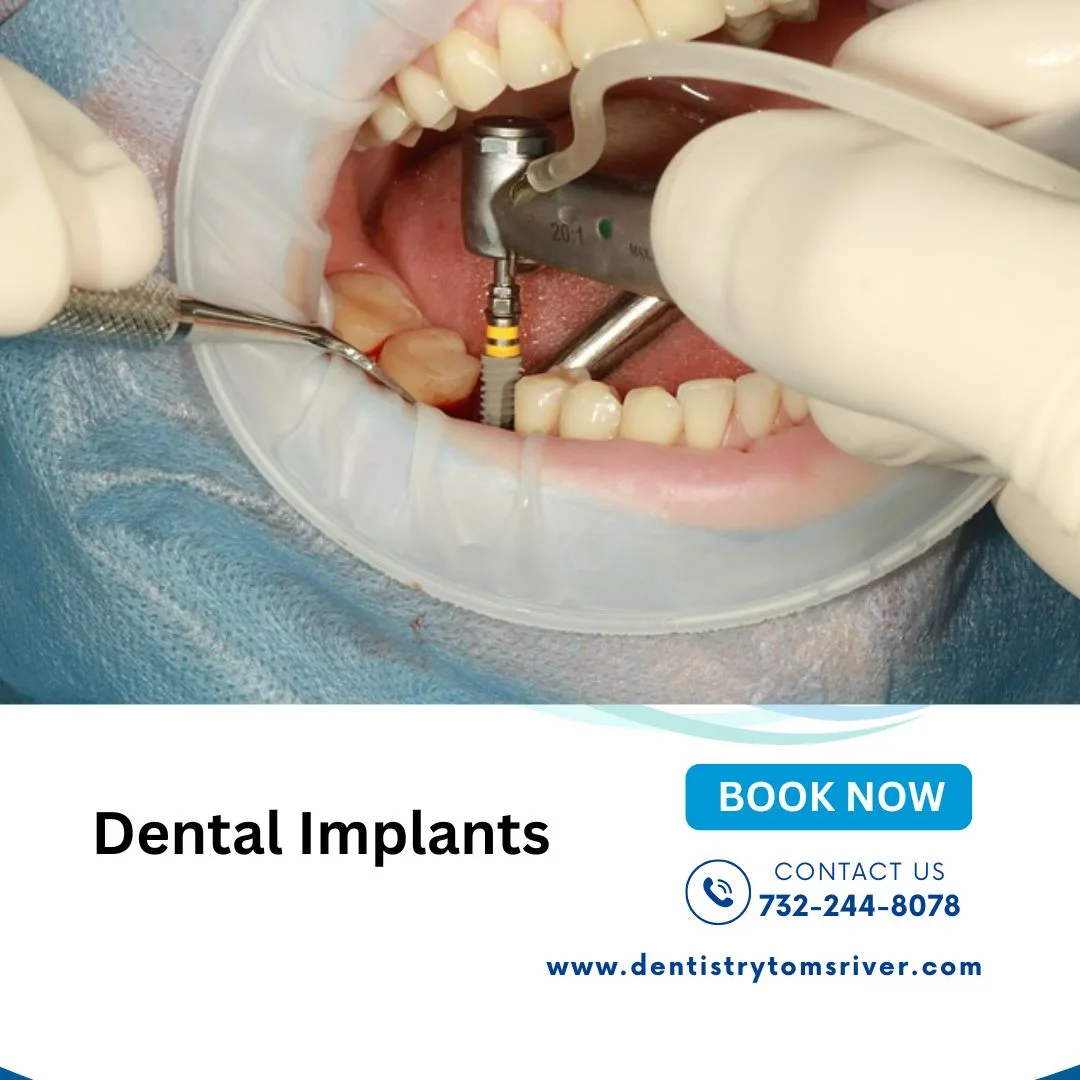
Replacing a missing tooth can help restore your ability to chew, speak, and smile comfortably. Two common tooth replacement options are dental implants and dental bridges. Although both can replace missing teeth, they differ in how they are supported, how they are placed, how they affect neighboring teeth, treatment time, maintenance, and long-term considerations. Understanding the difference between dental implants vs. bridges can help patients have a more informed discussion with their dentist about which option may be appropriate for their individual needs.
What Is a Dental Implant?
A dental implant is a tooth replacement system that uses a small implant post placed into the jawbone to provide support for a dental restoration. After the implant has had time to integrate with the surrounding bone, an abutment and crown or other restoration can be attached.
Because an implant is independently supported by the jawbone, it generally does not require neighboring teeth to serve as anchors. Dental implants can be used to replace a single missing tooth, multiple missing teeth, or support certain types of full-arch restorations.
What Is a Dental Bridge?
A dental bridge replaces a missing tooth or teeth with an artificial tooth held in place by supporting teeth or other structures. In a traditional bridge, the artificial tooth is connected to dental crowns that fit over prepared neighboring teeth.
A bridge can provide a relatively quick way to restore a missing tooth without surgically placing an implant into the jawbone. However, traditional bridges require preparation of the supporting teeth, and cleaning around and underneath the restoration requires careful attention.
Dental Implants vs. Bridges: Key Differences
FeatureDental ImplantTraditional Dental BridgeSupportSupported by an implant post placed in the jawboneTypically supported by neighboring teethEffect on neighboring teethGenerally does not require reducing healthy adjacent teethSupporting teeth usually require preparationTooth root replacementReplaces the root portion of the missing toothDoes not replace the missing tooth rootJawboneCan help preserve bone around the missing-tooth areaDoes not provide the same root-level stimulationTreatment timeUsually requires a longer treatment period because healing and integration are neededOften completed more quicklySurgeryRequires surgical implant placementTraditional bridge placement does not require implant surgeryInitial costGenerally has a higher initial costGenerally has a lower initial costCleaningRequires regular brushing, flossing, and cleaning around the implant and restorationRequires careful cleaning around and beneath the bridgeLong-term considerationsCan provide a long-term tooth replacement option with proper careMay require repair or replacement over timeBest optionDepends on bone, gum health, surrounding teeth, health, and treatment goalsDepends on supporting teeth, oral health, treatment goals, and other factorsWhich Is Better: Dental Implants or Bridges?
There is no single answer that applies to every patient. Dental implants may be appropriate when a patient wants an independently supported replacement and has suitable bone and oral health for implant treatment.
A traditional dental bridge may be appropriate when a faster, non-surgical replacement is preferred or when the neighboring teeth are already suitable for crowns. A bridge can also be considered when implant treatment is not appropriate or when factors such as treatment time, bone availability, or individual preferences influence the decision.
Dental Implants and Bridges: What Should You Consider?
Several factors should be evaluated before choosing between an implant and a bridge.
Condition of Neighboring Teeth
If the teeth next to the missing tooth are healthy, an implant may allow them to remain independent. If neighboring teeth already have extensive damage or require crowns, a traditional bridge may sometimes be a practical option.
Jawbone and Gum Health
Dental implants require adequate bone support and healthy surrounding tissues. If bone has been lost after tooth extraction, additional treatment may sometimes be necessary before an implant can be placed.
Treatment Timeline
Patients who want their missing tooth replaced relatively quickly may prefer a bridge in appropriate circumstances. Implant treatment generally takes longer because the implant needs time to heal and integrate with the jawbone before the final restoration is completed.
Maintenance
Both options require good oral hygiene and routine dental care. With an implant, patients need to clean around the implant and restoration carefully. A traditional bridge also requires attention to the area underneath and around the artificial tooth to help maintain healthy supporting tissues.
Long-Term Goals
Your dentist may consider your age, oral health, bite, number of missing teeth, bone condition, lifestyle, and expectations when discussing long-term tooth replacement. The goal is not simply to replace the visible tooth but to select an option that supports function and oral health as appropriately as possible.
Can a Dental Bridge Be Replaced With a Dental Implant?
In some situations, a patient who currently has a bridge may later be evaluated for implant treatment. However, this is not always straightforward. The existing bridge may need to be removed, and the condition of the supporting teeth and jawbone must be assessed. Previous tooth loss and bone changes can also affect future implant treatment.
A dentist can determine whether an implant is feasible after examining the area and reviewing appropriate dental imaging.
Which Tooth Replacement Option Is Right for You?
Choosing between dental implants vs. bridges should be based on an individual dental evaluation rather than cost or appearance alone. A dentist can assess the missing-tooth area, neighboring teeth, gum health, jawbone, bite, and overall treatment goals before recommending an appropriate option.
Both dental implants and bridges can restore missing teeth, but they involve different procedures and considerations. Understanding these differences allows patients to ask better questions and make a more informed decision with their dental professional.
Conclusion
Dental implants and bridges are established options for replacing missing teeth, but neither is universally better for every patient. Dental implants are independently supported by the jawbone and generally do not rely on neighboring teeth, while traditional dental bridges use supporting teeth to hold an artificial tooth in place. The choice depends on factors such as oral health, bone availability, the condition of surrounding teeth, treatment timeline, maintenance, budget, and personal preferences.
If you are considering replacing a missing tooth, a professional dental evaluation can help you understand which tooth replacement options may be suitable for your specific situation.