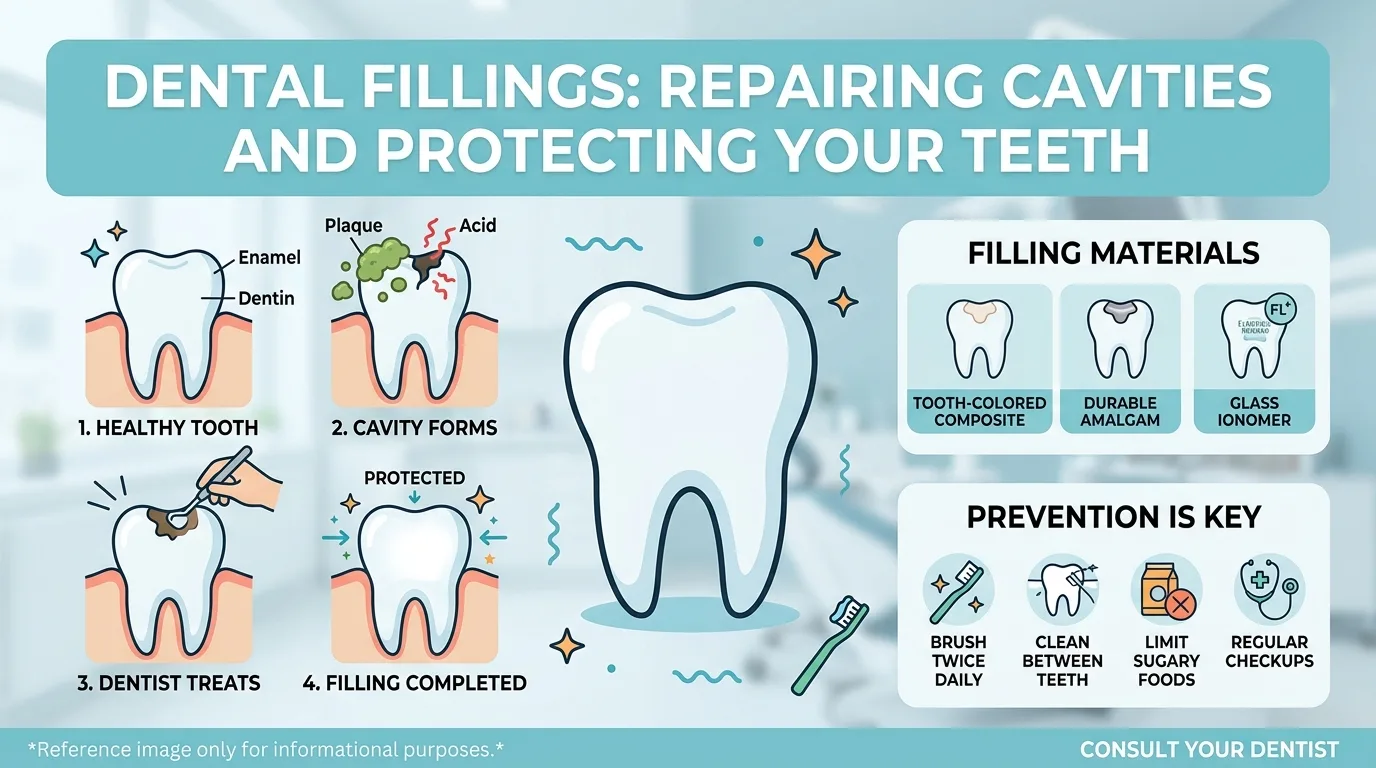
Tooth decay is one of the most common dental problems, and it can develop when plaque bacteria produce acids that gradually damage tooth enamel. If decay is not treated, it may spread deeper into the tooth and lead to sensitivity, pain, or infection. Dental fillings help repair teeth affected by cavities, restore their normal function, and prevent further damage to the treated area.
What Causes Cavities?
Cavities develop when bacteria in dental plaque feed on sugars and produce acids that weaken the tooth's protective enamel. Frequent consumption of sugary foods and drinks, inadequate oral hygiene, and insufficient fluoride exposure can increase the risk of tooth decay. Dry mouth may also contribute because saliva helps neutralize acids and protect the teeth.
In the early stages, enamel damage may not cause noticeable symptoms. As decay progresses, a person may experience sensitivity to sweet, hot, or cold foods, visible spots on the teeth, or discomfort while chewing. Regular dental checkups can help identify decay before it becomes more extensive.
How Do Dental Fillings Work?
A dental filling restores a tooth after the dentist removes the decayed portion. The area is cleaned, and a suitable restorative material is placed to fill the space and rebuild the tooth's shape. This helps restore normal chewing function and protects the remaining tooth structure.
The procedure often takes a single appointment, depending on the size and location of the cavity. Some patients may receive local anesthesia to make treatment more comfortable. The dentist determines the most appropriate approach based on the extent of decay and the patient's individual needs.
Types of Dental Filling Materials
Several materials can be used to restore a tooth. Composite resin fillings are tooth-colored and can blend with the natural appearance of the smile. Amalgam fillings are made from a metal alloy and have traditionally been used for their durability, particularly in certain back teeth. Other restorative materials, including glass ionomer, may be appropriate in specific clinical situations.
Each material has advantages and limitations involving strength, appearance, cost, and placement requirements. A dentist can explain the available options and recommend a material based on the tooth's location, the size of the cavity, and the patient's oral health.
What Happens If a Cavity Is Left Untreated?
Ignoring tooth decay can allow the damaged area to grow. A small cavity may eventually affect more of the tooth, making restoration more complex. If decay reaches the inner pulp, which contains nerves and blood vessels, the tooth may develop severe pain or infection and require additional treatment, such as root canal therapy or a crown.
Prompt treatment can help preserve natural tooth structure and reduce the likelihood of complications. Anyone experiencing persistent tooth pain, swelling, or increasing sensitivity should arrange a dental evaluation rather than relying on temporary relief alone.
How to Protect Your Teeth After a Filling
After receiving a filling, follow the dentist's instructions regarding eating, brushing, and any temporary sensitivity. Some sensitivity may occur after treatment, but severe, persistent, or worsening discomfort should be evaluated by a dental professional.
Maintaining good oral hygiene is essential for preventing new cavities. Brush twice daily with fluoride toothpaste, clean between your teeth every day, limit frequent sugary snacks and drinks, and attend regular dental checkups. Even restored teeth can develop decay around the edges of a filling if plaque accumulates.
For more information about repairing cavities and restoring damaged teeth, explore available dental fillings treatment options.
Why Early Dental Care Matters
Dental fillings are an effective way to treat many cavities while preserving as much natural tooth structure as possible. Early diagnosis and appropriate treatment can help prevent decay from progressing and support comfortable chewing and long-term oral health.
Rather than waiting for a cavity to become painful, schedule regular dental examinations and seek advice whenever you notice changes in your teeth. Consistent preventive care, combined with timely restorative treatment, can help keep your smile healthy for years to come.