Campbelltown has grown significantly over the past decade. With that growth has come more choice more dental practices, more service offerings, and more variation in the quality of care available across the region. For residents who want more than just a convenient location, navigating those choices thoughtfully makes a real difference to long-term oral health outcomes.
This guide covers everything Campbelltown residents need to know about dental care in the area from understanding what services a full-service practice should offer, to knowing what questions to ask, what to expect at different stages of treatment, and how to make dental care a sustainable part of your household's health routine.
Why Campbelltown Residents Have Specific Dental Needs
The Macarthur region is one of the fastest-growing areas in New South Wales. Campbelltown's population includes a broad mix of young families, long-established households, older residents, and a significant number of people who have recently moved into new developments across the corridor. Each of these groups has distinct oral health priorities.
Young families need a practice that handles children's dentistry confidently one that knows how to manage a nervous five-year-old as effectively as it manages an adult with a complex restorative case. Older residents are more likely to be managing existing restorative work, gum health concerns, and the oral health effects of medications. New residents are starting from scratch in finding a practice they can trust, often without any existing relationship to transfer records from.
A dental practice that serves the full Campbelltown community well needs the scope, experience, and infrastructure to handle all of these presentations not just straightforward check-ups.
What a Full-Service Campbelltown Dental Practice Should Offer
Not every practice in the area offers the same range of treatment. Before registering with any practice, it is worth confirming the scope of services available. A genuinely comprehensive dental clinic should offer the following across a single location:
Preventive dentistry the foundation of long-term oral health. This includes regular examinations, periodontal assessments, oral cancer screening, digital X-rays, and professional scale and clean. Modern practices now offer advanced cleaning technologies such as Guided Biofilm Therapy (GBT), which is significantly more thorough than traditional polishing methods.
Restorative dentistry fillings, crowns, bridges, inlays, onlays, and dental implants. A practice that handles all restorative work in-house, rather than referring patients out for crown fabrication or implant placement, provides better continuity of care and often faster turnaround.
Cosmetic dentistry teeth whitening, composite veneers, porcelain veneers, and smile design. While cosmetic work is elective, having a clinician who understands both the aesthetic and functional dimensions of a smile produces consistently better outcomes than one who treats them separately.
Orthodontics including clear aligner treatment such as Invisalign. Adult orthodontics has grown significantly in uptake across Campbelltown in recent years, driven largely by the discretion and convenience of removable aligner systems.
Emergency dental care same-day availability for existing patients experiencing acute pain, broken teeth, lost restorations, or dental trauma. This is a capability that separates practices committed to their patient base from those who prioritise schedule management over clinical need.
Sedation dentistry oral sedation and intravenous (IV) sedation for patients with significant dental anxiety. Dental avoidance is one of the most common drivers of deteriorating oral health in adults, and practices that can offer IV sedation remove the barrier that has kept many patients out of the chair for years.
Accreditation: Why It Matters More Than Most Patients Know
Accreditation is one of the most objective measures of quality available to dental patients, yet it is rarely the first thing people check. In Australia, the two most significant accreditation benchmarks are ADA (Australian Dental Association) membership and QIP (Quality Innovation Performance) accreditation.
ADA membership confirms a dentist is registered and adheres to the professional ethical standards set by the peak dental body in Australia. QIP accreditation goes further it is an independent, evidence-based assessment of a practice's systems, protocols, infection control, patient safety procedures, and governance. It requires ongoing review to maintain and is not held by all practices.
When choosing between dental clinics in Campbelltown, confirming whether a practice holds QIP accreditation is a fast, reliable way to separate those who have submitted to independent quality review from those who have not.
Understanding the Cost of Dental Care in Campbelltown
Dental treatment costs in Australia are not regulated practices set their own fees, and there can be meaningful variation between clinics for equivalent procedures. Understanding what drives cost, and what to look for in terms of fee transparency, helps patients make decisions they are comfortable with rather than surprised by.
Private health insurance provides partial rebates for many dental procedures. On-the-spot HICAPS claiming where the fund rebate is processed immediately at the time of the appointment is standard at most established practices. Confirm your fund's rebate schedule for the procedures most relevant to your needs before booking, as coverage varies significantly between funds and policy tiers.
Payment plans are available at many Campbelltown practices for larger treatment costs. Options like interest-free instalment plans allow restorative and cosmetic treatment to be spread over a payment period that suits the household budget, making it possible to proceed with treatment that might otherwise be deferred.
Bulk billing for children is available through the government's Child Dental Benefits Schedule (CDBS), which provides up to $1,095 over two consecutive calendar years for eligible children aged 2 to 17. This covers basic services including examinations, X-rays, scale and cleans, fissure sealants, and fillings. Not all practices accept CDBS confirming this at the time of booking avoids unexpected out-of-pocket costs for families.
The Oral Health Risks Specific to the Macarthur Region
Campbelltown's demographic profile creates some specific oral health risk patterns that a good local clinician will understand and account for:
Dietary patterns. The growth of fast food and convenience food consumption across the broader Macarthur region a pattern seen in most expanding suburban corridors contributes to elevated sugar intake across all age groups. Repeated acid exposure from soft drinks, sports drinks, and high-sugar snacks is the primary driver of early decay in children and teenagers across the area.
Stress and work pressure. Campbelltown is home to a significant working population that commutes to Sydney and manages the physical and financial pressures of a rapidly growing suburb. Stress is a well-documented contributor to bruxism (teeth grinding), gum disease, and irregular attendance at dental appointments. Patients who grind teeth are at elevated risk of cracking, wear, and jaw joint problems.
Medication-related dry mouth. An ageing population and the prevalence of medications for blood pressure, depression, and chronic pain across the Macarthur demographic means dry mouth is increasingly common. Reduced saliva a frequent side effect of many medications removes the mouth's primary defence against decay and significantly raises risk.
Children's Dental Care in Campbelltown: Getting the Foundation Right
For families, the approach taken to children's dental care in the early years has consequences that extend decades. The key principles are straightforward but frequently underestimated:
First appointment by age two. The earlier a child has a positive experience in a dental chair, the less likely they are to develop dental anxiety as an adult. A first appointment at age two involves little more than a familiarisation visit but it establishes the relationship and begins the monitoring of erupting teeth.
Fissure sealants at age six and twelve. When the first and second permanent molars erupt, their deep chewing surfaces are highly susceptible to decay. Fissure sealants a thin, non-invasive protective coating are one of the most cost-effective preventive interventions in dentistry and can be applied in a single appointment.
Mouthguards for sport. Dental trauma accounts for a significant proportion of emergency dental presentations in children. A custom-fitted mouthguard made from an impression taken at the dental practice offers substantially better protection than a standard boil-and-bite guard purchased from a sports store.
Emergency Dental Care: What to Do and Who to Call
Dental emergencies in Campbelltown happen at inconvenient times. Knowing what to do before you can be seen makes a meaningful difference to outcomes particularly in the case of knocked-out or broken teeth.
Knocked-out permanent tooth: Handle only by the crown, not the root. Rinse gently if dirty. Replace in the socket if possible, or store in milk or saliva. Call your dental practice immediately time is critical. Reimplantation success drops significantly after 60 minutes.
Broken tooth: Rinse with warm water. Apply a cold compress to reduce swelling. If a piece of the tooth is recoverable, keep it and bring it to the appointment. Contact your practice for a same-day assessment.
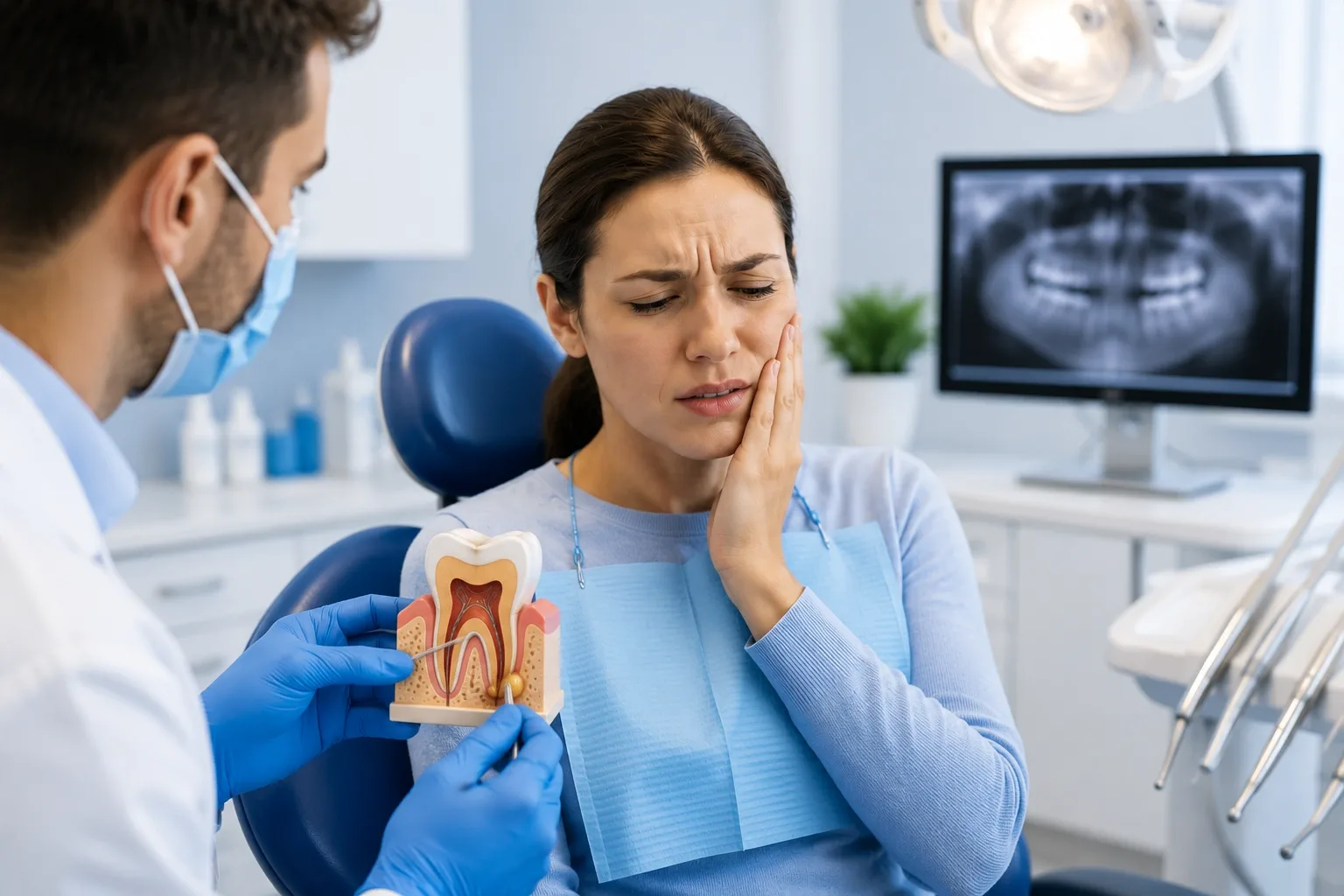
Severe toothache or swelling: Do not apply aspirin directly to the gum this causes chemical burns to the soft tissue. Paracetamol or ibuprofen taken as directed provides temporary relief. Swelling involving the cheek, jaw, or neck warrants urgent assessment spreading dental infection can become a serious medical emergency if untreated.
Lost filling or crown: The tooth is now unprotected. Temporary dental cement, available from pharmacies, can protect the site until a proper appointment is possible. Avoid chewing on the affected side.
Bradbury Dental Surgery keeps same-day emergency appointments available for registered patients throughout the week. The practice is led by Dr Gurinder Matharu (Dr Shelly), who brings over 15 years of clinical experience, supported by a team of experienced clinicians across general, restorative, and sedation dentistry.
Why Continuity of Care Matters More Than Convenience
One of the most consistent patterns in dental outcomes research is the advantage of long-term patient-dentist relationships over episodic care. A clinician who has followed a patient's oral health across five or ten years who knows their decay history, their gum baseline, the restorations they carry, and the health factors that affect their risk profile makes consistently better clinical decisions than one meeting a patient for the first time.
This is the case for choosing a dental practice in Campbelltown that can serve your family's needs across all life stages not just for a single procedure or while another practice has a long wait. The practice you register with today becomes, over years, a clinician who understands your oral health history as well as any other healthcare provider you see. That relationship is genuinely valuable, and it begins with a single appointment.
Bradbury Dental Surgery has been providing comprehensive dental care to patients across Campbelltown and the wider Macarthur region for over 30 years. The practice is ADA accredited, QIP accredited, and operates from Suite 6/67 Jacaranda Avenue, Bradbury easily accessible from across the Campbelltown area. Services span preventive, restorative, cosmetic, orthodontic, emergency, and sedation dentistry, with on-site HICAPS claiming and flexible payment options.
Making Dental Care a Non-Negotiable Part of Your Health Routine
Oral health is not separate from general health it is integral to it. The evidence connecting periodontal disease to cardiovascular disease, diabetes management, respiratory health, and pregnancy outcomes is substantial and growing. A mouth that is regularly monitored, professionally maintained, and treated promptly when problems arise is not a cosmetic concern it is a clinical one.
The practical barrier for most Campbelltown residents is not motivation it is inertia. Not having an established dental home, having deferred care for a period that became years, or avoiding treatment out of anxiety are the most common patterns seen in patients who present with significant problems that could have been intercepted much earlier.
The most useful thing any Campbelltown resident can do for their long-term oral health is book a comprehensive new patient examination with a practice they intend to stay with and then attend the recall appointments that follow. That rhythm, maintained consistently, is what produces the outcomes that make dentistry genuinely preventive rather than reactively expensive.