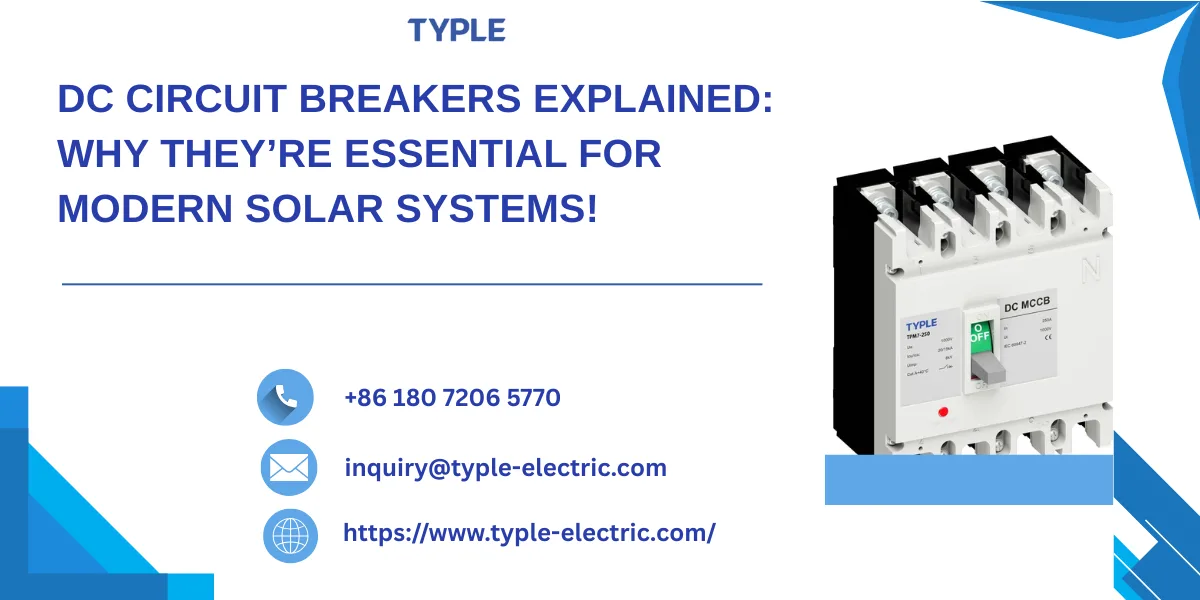
As the world moves rapidly toward embracing renewable energy, solar power has established itself as the frontrunner for clean, reliable, and sustainable electricity generation. However, while solar energy is celebrated for its efficiency and sustainability, ensuring its safe and effective harnessing is not just about high-quality panels and advanced inverters. Behind every secure and high-performing solar power system lies a network of protective devices—and among these, DC Circuit Breakers stand out as particularly crucial.
1. What Are DC Circuit Breakers?
DC Circuit Breakers are specialized protective electrical devices designed to interrupt and safely isolate direct current (DC) circuits when a fault, overload, or short-circuit condition is detected. While AC (alternating current) and DC (direct current) electrical systems both require protection, DC circuits pose unique challenges due to their continuous, unidirectional flow—making arc suppression and rapid circuit separation more demanding.
Modern solar photovoltaic (PV) installations, whether on-grid or off-grid, generate and distribute significant amounts of DC electricity. From your solar panels to the inverter, every connection in the DC circuit needs to be safeguarded. DC Circuit Breakers furnish this protection, ensuring any anomalies are safely contained and resolved before risking equipment damage or personal injury.
2. The Role of DC Circuit Breakers in Solar Systems
In a typical residential or commercial solar setup, the solar panels generate DC electricity. This electricity travels through wiring, combiners, and disconnects before reaching an inverter, where it is converted to usable AC for the grid or building loads. During this journey, any flaw—be it a wiring short, insulation breakdown, or component failure—can cause excessive current to flow.
DC Circuit Breakers serve as a critical “gatekeeper,” instantly opening the circuit if the current exceeds safe thresholds. Without these breakers, a single fault can cause overheating, destructive arcs, fires, inverter damage, or even catastrophic failures that put lives and property in jeopardy.
Moreover, code-compliant solar installations (per IEC, NEC, UL, or GB standards) increasingly require DC-specific circuit protection. As solar arrays become bigger and more powerful, the absence of appropriate breakers can result in inspection failures and void insurance or warranty coverage.
3. DC vs. AC: The Fundamental Differences
You might ask: Can’t any standard circuit breaker handle this job? The answer is a resounding no.
The key differences between DC Circuit Breakers and AC Circuit Breakers revolve around the nature of current flow and the difficulty of quenching electrical arcs.
Current Flow:
- AC cycles back and forth, crossing zero volts 50-60 times per second (50Hz/60Hz), which naturally helps extinguish arcs inside breakers.
- DC flows continuously in one direction, with no natural voltage zero-crossing. Arcs in DC persist and burn hotter, requiring enhanced arc-chute designs.
Voltage Ratings:
Circuit breakers are designed with maximum voltage capabilities. A breaker’s DC and AC voltage ratings are not interchangeable and using the wrong type can lead to failure.
Internal Mechanism:
DC breakers utilize robust arc-quenching technologies—like magnetic blowouts, extra-long arc chutes, or gas chambers—to break DC circuits safely.
Polarity:
Many DC breakers require correct polarity orientation for optimal operation and safety.
Never substitute an AC-only breaker for DC circuits, especially in solar installations. Such errors are among the most common—and dangerous—mistakes encountered in the field.
4. How DC Circuit Breakers Work
While the underlying technology varies by design and manufacturer, the basic operation of a DC Circuit Breaker follows this process:
i) Current Monitoring:
The breaker continuously monitors the flow of current through the protected wire.
ii) Trip Mechanism:
If the current goes above the breaker’s rated limit—due to a short-circuit, equipment fault, or overload—a bimetallic strip or electromagnetic coil is activated.
iii) Arc Quenching:
As the breaker opens, an arc forms between the contacts. Inside a DC Circuit Breaker, advanced arc chutes, blow-out magnets, or insulating gas rapidly extend and cool this arc, extinguishing it safely.
iv) Circuit Isolation:
The circuit is now open, stopping all current flow and alerting users to the need for inspection or repair.
v) Manual or Automatic Reset:
Some breakers can be manually reset after clearing the fault, others may need replacement, especially in industrial or high-amp applications.
DC Circuit Breakers for solar projects are usually DIN-rail mounted, with ratings that match the system’s voltage and expected maximum current.
5. Key Benefits of Using DC Circuit Breakers in Solar Installations
a. Fire Prevention
Solar arrays can generate large continuous DC currents. A fault without proper breaker protection may result in explosive arcs and fires—particularly where panels, wires, and insulation are exposed to heat or the elements.
b. Equipment Protection
Sensitive components (inverters, charge controllers, batteries) are highly vulnerable to overcurrent damage. A robust DC Circuit Breaker ensures upstream faults don’t cascade into total system loss.
c. Enhanced Safety for Personnel
DC currents cause severe, hard-to-extinguish arcs, which are a real hazard for electricians and maintenance workers. Fast-acting breakers reduce the time high current is present, minimizing risk.
d. Safe Maintenance and Troubleshooting
DC Circuit Breakers allow for safe, convenient isolation of circuits during servicing, upgrades, or inspections—without having to unwire connections or risk electric shocks.
e. Regulation Compliance
Global standards (UL 489B, IEC 60947-2, NEC 690) increasingly mandate DC-specific overcurrent protection in solar applications. Using certified DC Circuit Breakers ensures passable inspections and eligibility for rebates or warranties.
6. Types of DC Circuit Breakers for Solar Applications
The range of DC Circuit Breakers available for solar systems has expanded rapidly, with options suited for every scale and budget.
a. Single-Pole and Multi-Pole DC Breakers
- Single-Pole: Protects one conductor—often used for small off-grid or single-string systems.
- Double-Pole: Simultaneously disconnects both positive and negative lines—recommended for most rooftop and commercial solar arrays.
- Quadruple-Pole: Used in specialized applications with more complex wiring schemes.
b. Panel-Mounted vs. DIN Rail-Mounted
- DIN Rail-Mounted (most common): Fits inside standard combiner boxes and enclosures, easy to replace and inspect.
- Panel-Mounted: Built for larger, centralized protection panels or integrated into industrial switchboards.
c. Rated Voltage and Current
- Low Voltage (up to 250V DC): Suitable for many string-level or residential arrays.
- High Voltage (600V-1500V DC): Necessary for commercial or utility-scale installations.
d. With or Without Remote Tripping
- Standard Manual Reset: Requires manual switching after a trip.
- Remote Tripping Models: Allow for off-site monitoring, fault alerts, and automated shutoff for large or unmanned solar facilities.
At Wenzhou Typle New Energy Technology Co., Ltd., our product portfolio includes all these variants—engineered for reliability in even the most demanding climates.
7. How to Choose the Right DC Circuit Breaker for Your System
When selecting DC Circuit Breakers for your solar PV system, consider the following critical factors:
a. System Voltage
Always choose a breaker rated at or above the maximum open-circuit voltage of your array under the coldest expected conditions (since PV voltage increases in cold).
b. System Amperage
Breaker amperage must exceed the maximum expected current, including potential surges (typically 1.25x the short-circuit current of the panels for code compliance).
c. Breaking Capacity (kA)
Select a breaker with enough breaking capacity to safely interrupt fault currents generated by large arrays.
d. Environmental Protection
Install breakers in enclosures suited to your installation—outdoor, UV-resistant, or watertight for exposed settings.
e. Approval/Certification
Look for UL, IEC, TUV, or equivalent marks ensuring the breaker is tested and approved for DC solar use.
f. Additional Features
Do you require remote tripping, auxiliary indicators, lockout/tagout capability for safety, or clear status flags? These features can greatly enhance system management.
If in doubt, consult with Wenzhou Typle’s technical team—we help architects, installers, and project managers across the globe balance cost, safety, and performance.
Also Read : DC Circuit Breakers: Why They’re Essential for Modern Solar Systems!
8. Installation Best Practices & Maintenance
a. Correct Polarity Matters
Most DC Circuit Breakers require precise wiring: positive and negative connections to designated terminals. Mistakes here can void warranties or leave the system unprotected.
b. Suitable Enclosure
Housings should match your breaker’s IP or NEMA rating, especially for rooftop or outdoor systems.
c. Proper Sizing and Labelling
Overcrowding or using undersized boxes is a leading cause of maintenance woes. Always label circuits and keep spare units and documentation available.
d. Regular Inspection
Schedule visual and thermal inspections at least annually. Look for discoloration, rust, or tripped units, and confirm tightness on all terminals.
e. Professional Commissioning
Have a qualified electrician confirm breaker function during system startup—and document tripping performance for future reference.
Why DC Circuit Breakers Are Non-Negotiable for Solar – and Why to Choose Wenzhou Typle
DC Circuit Breakers are the unsung heroes of every safe, compliant, and robust modern solar photovoltaic system. From preventing catastrophic fires to ensuring operational uptime and regulatory approval, their value is both immediate and long-term. As solar energy systems continue to evolve in power, sophistication, and deployment environments, so too must the quality and reliability of their protective devices evolve.
Frequently Asked Questions (FAQ)
Q1: What is the main difference between a DC and AC circuit breaker?
A: DC Circuit Breakers are specially designed to suppress persistent DC arcs, which are more difficult to extinguish than the alternating arcs in AC circuits. DC breakers use specialized arc chutes, magnetic blowouts, and higher voltage ratings.
Q2: Why can’t I use an AC breaker for my solar DC system?
A: Using an AC breaker on DC can lead to dangerous arcing, which may not be stopped by the breaker, resulting in fire, equipment damage, or personal injury.
Q3: Do all solar systems need DC Circuit Breakers?
A: Yes. Any solar PV system with DC wiring (which is almost all) requires proper DC-rated overcurrent protection for code compliance and safety.
Q4: How often should I check or replace my DC Circuit Breakers?
A: Conduct annual inspections for visible wear or heat damage. Breakers should last many years under normal use but must be replaced if they open under fault conditions or show flaws.
Q5: What certifications should I look for?
A: IEC 60947-2, UL 489B, GB/T 14048.2, or TUV marks for assurance of DC arc-interruption capability and electrical safety.
Q6: Can DC Circuit Breakers be installed outdoors?
A: Yes—but ensure both the breaker and its enclosure are rated for outdoor exposure (IP65 or NEMA 4X or better).
Q7: Are remote control DC Circuit Breakers worth it?
A: For large, commercial, or remote installations, remote monitoring and control are a smart investment and greatly reduce downtime.
Q8: What size DC Circuit Breaker do I need for my solar array?
A: Select a breaker rated at 125% of the array’s maximum short-circuit current and at least the system’s open-circuit voltage.
Q9: Can DC Circuit Breakers be reset after tripping?
A: Many can be manually reset after faults. Always investigate and fix the problem before resetting.
Q10: Where can I buy certified DC Circuit Breakers for my next project?
A: Wenzhou Typle New Energy Technology Co., Ltd. offers a full range of certified, reliable DC Circuit Breakers for every solar application.