
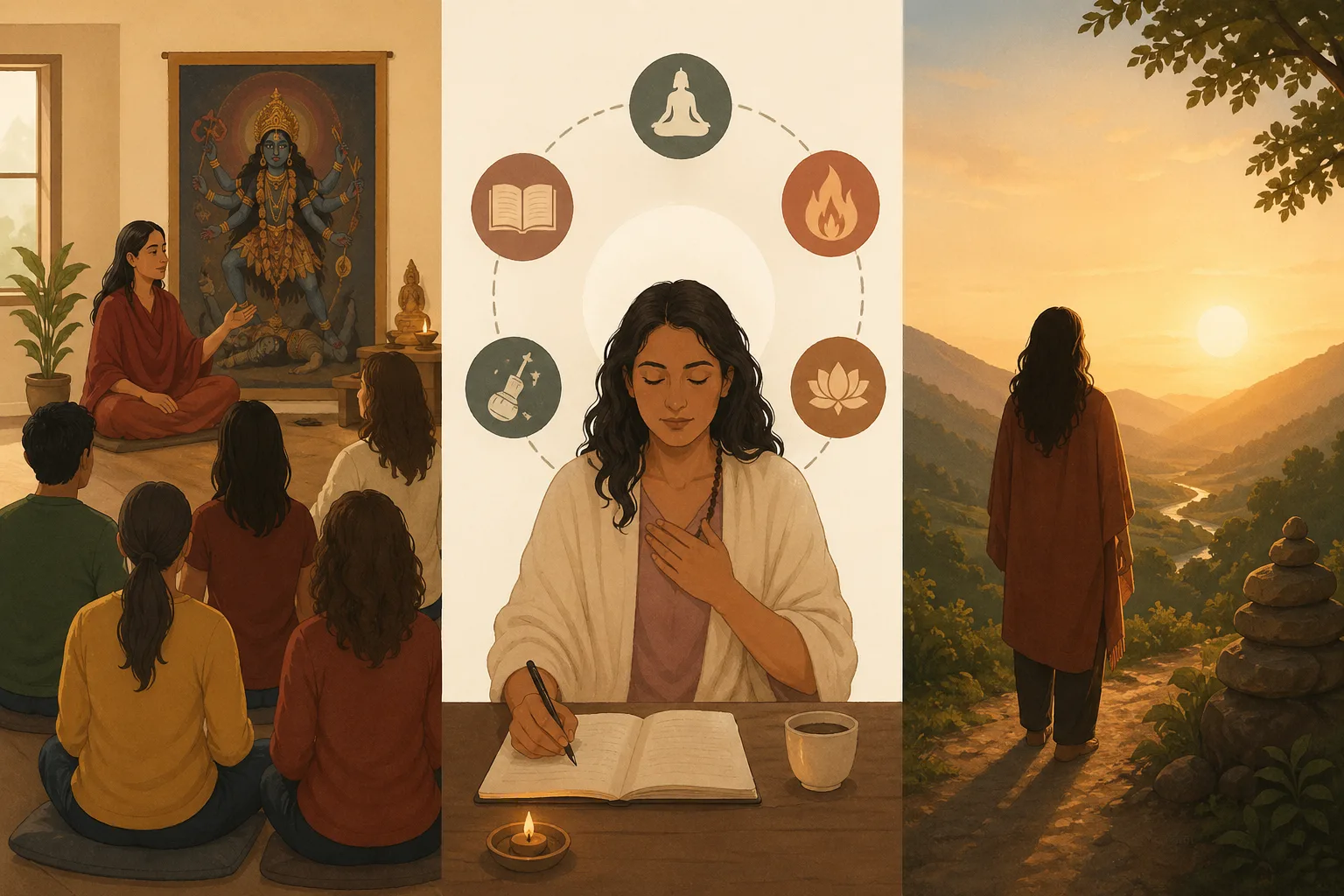
The Das Mahavidya are ten forms of the Divine Mother in the Shakta Tantric tradition. Each form represents a specific aspect of cosmic power, consciousness, and liberation. Together they form a complete map of the feminine divine.
These ten forms are not separate goddesses. They are ten faces of one supreme Shakti, each revealing a different truth about reality, liberation, and the nature of existence.
The 10 Mahavidya Names
The Dasha Mahavidya names in traditional order are:
- Kali — the power of time and transformation
- Tara — the guide through darkness and liberation
- Shodashi (Tripura Sundari) — the beauty of all three worlds, supreme consciousness
- Bhuvaneshwari — the mother of space, mistress of the universe
- Bhairavi — the fierce energy of dissolution
- Chhinnamasta — self-sacrifice and awakening of kundalini
- Dhumavati — the widow goddess, the power of void and loss
- Bagalamukhi (Baglamukhi Mata) — the paralyzer of enemies, power of stillness
- Matangi — the goddess of inner knowing and outcast wisdom
- Kamala — the lotus goddess, abundance and grace
Each of the 10 Mahavidyas has her own beej mantra, yantra, stotra, and sadhana path.
Das Mahavidya Beej Mantras
Each Mahavidya carries a seed syllable — a beej mantra — that encodes her essence. These are not words to be repeated casually. They are energetic keys.
- Kali: Kreem
- Tara: Hreem (or Straum)
- Shodashi: Shreem Hreem Kleem
- Bhuvaneshwari: Hreem
- Bhairavi: Hsaim Hleem Hskraim
- Chhinnamasta: Shreem Hreem Aim Vajravairochaniyei
- Dhumavati: Dhum Dhum Dhumavati Swaha
- Bagalamukhi: Om Hleem Bagalamukhi
- Matangi: Om Hreem Kleem Hum Matangiyei
- Kamala: Aim Hreem Shreem Kleem Sauh
Correct pronunciation, initiation, and preparation are essential before working with these mantras.
Dasa Maha Vidya Upasana: The Path of Practice
Dasa Maha Vidya upasana is not a casual practice. It is a serious spiritual path requiring correct initiation, proper understanding of each form, and structured sadhana under an experienced teacher.
The complete procedure of Mahavidya sadhana includes:
- Understanding the nature and mythology of each Mahavidya
- Receiving the correct mantra and its proper pronunciation
- Learning the yantra, mudra, and ritual framework for each form
- Building a consistent daily practice with protection and grounding
- Understanding the energetic effects at each stage of development
Attempting Mahavidya sadhana without guidance is not recommended. Some forms carry intense energetic signatures that require proper preparation to work with safely.
Frequently Asked Questions
1. What is the difference between Das Mahavidya and Navdurga?
Navdurga are nine warrior forms worshipped during Navaratri. The Das Mahavidya are ten Tantric forms with distinct sadhana paths, beej mantras, and levels of practice. They belong to a deeper esoteric tradition.
2. Can anyone learn Mahavidya sadhana?
Anyone with sincere devotion and proper guidance can approach this path. However, some forms of Mahavidya sadhana are advanced practices. Starting with foundational understanding is essential before deeper initiation.
3. Is there a book on Das Mahavidya for beginners?
Several texts cover the Das Mahavidya in detail. However, authentic transmission from a realized teacher is considered more important than book learning in this tradition. Books offer context; a teacher offers direct transmission.
4. What is the significance of Tara Sadhana and Bhuvaneshwari Sadhana?
Maa Tara is approached for liberation, protection, and guiding the soul through difficult transitions. Bhuvaneshwari Sadhana connects the practitioner with the spaciousness of pure consciousness and dissolves limitation. Both are profound practices with specific initiation requirements.
5. What is special about Kamala Mahavidya?
Kamala is the Tantric form of Lakshmi. Unlike the popular devotional form, Kamala Mahavidya connects the seeker with divine grace at the level of consciousness itself. Her sadhana brings abundance, clarity, and alignment with dharma.
6. For serious seekers ready to enter the tradition of the Das Mahavidya with proper guidance, structured initiation, and a safe container for this powerful practice, Dr. Manmit Kumarr offers an authentic Dasha Mahavidya workshop rooted in deep personal practice and transmission.