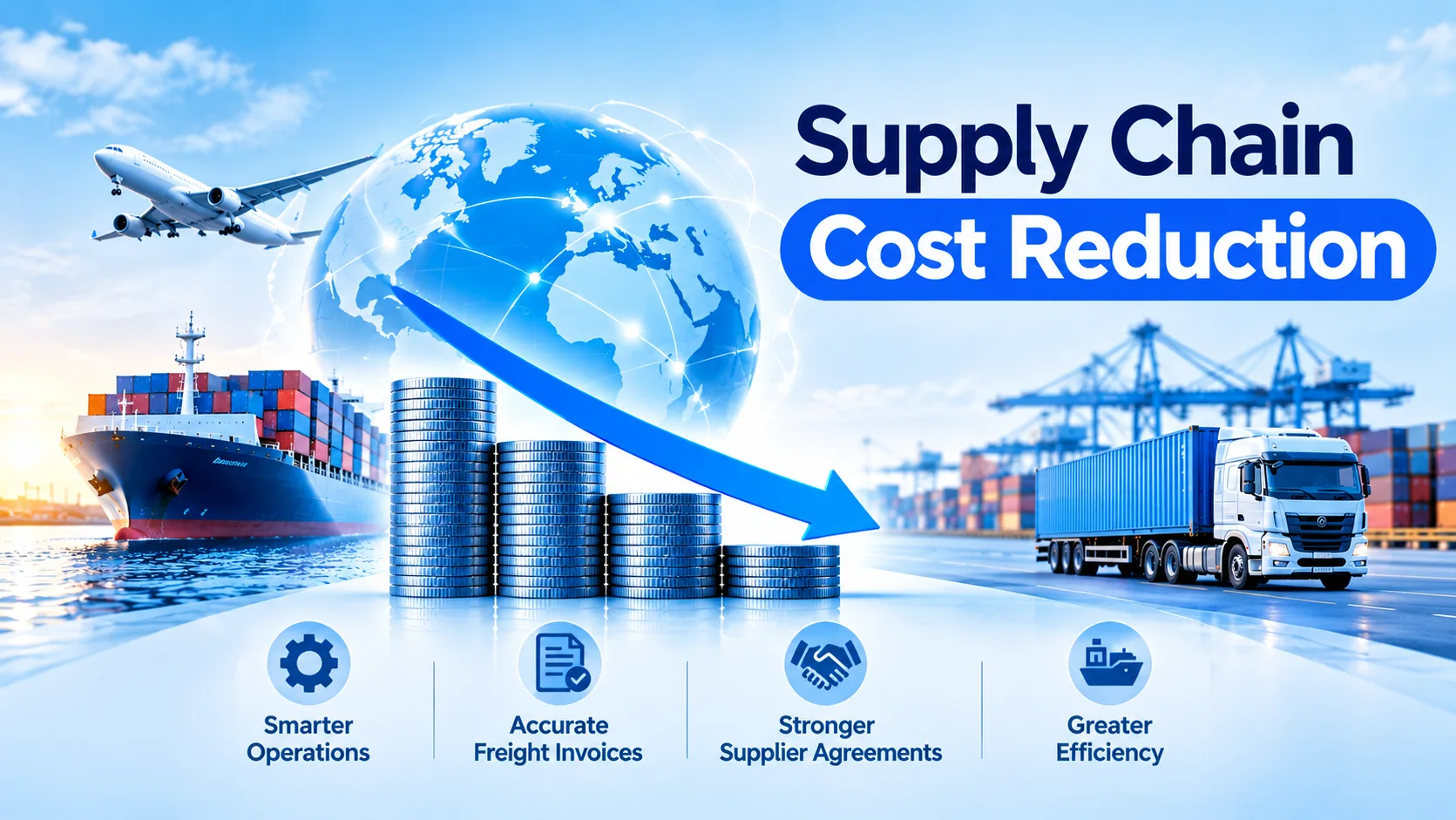
Supply chain cost reduction starts with one clear move: stop paying freight invoices on trust and start verifying every charge against contracted rates, then fix the operational habits that create avoidable charges in the first place. Companies that combine invoice verification with smarter carrier, routing, and packaging decisions typically recover money they did not know they were losing, often within the first quarter.
Why Does Logistics Spend Keep Climbing?
Freight is rarely a single cost. It is a stack of base rates, fuel surcharges, accessorial fees, detention, redelivery, and reclassification charges, each one a place where small errors hide. A mid-sized distributor shipping 4,000 parcels and 600 LTL loads a month can easily process thousands of line items. Even a small error rate on that volume adds up to a meaningful annual leak.
Carriers also update rate tables, fuel indexes, and surcharge rules throughout the year. If nobody compares invoices to the current agreement, outdated or incorrect rates quietly become the new normal.
How to Reduce Freight Costs Without Hurting Service
Many teams assume that lowering freight spend means accepting slower deliveries. In practice, the biggest savings come from removing waste rather than cutting service. Here is where to look first.
Start with shipment data. Pull twelve months of invoices and group them by lane, carrier, and service level. You will often find that expedited shipping is used for orders that did not need it, or that two carriers serve the same lane at very different prices.
Next, review your freight classification. A pallet of goods declared at the wrong class can cost far more than it should. One anonymized electronics distributor discovered that a product family had been classified two classes too high for over a year. Correcting the class on future shipments and claiming adjustments on eligible past invoices reduced its LTL spend on that lane noticeably.
Finally, tighten packaging and consolidation. If a shipment cube is oversized by even a few inches, dimensional weight pricing may charge you for space you are not using. Consolidating three partial pallets bound for the same region into one full load often costs less than shipping them separately.
How to Reduce Freight Cost Through Better Carrier Management
Carrier relationships need regular attention. Run a formal review every six months. Compare each carrier's on-time performance, claims ratio, and effective cost per shipment, not just the quoted base rate. Effective cost matters because accessorial charges can turn a cheap quote into an expensive reality.
Practical calculation: if you ship 500 LTL loads a month at an average of 420 dollars, your monthly spend is 210,000 dollars. A reduction of just 12 dollars per load through corrected rates and fewer accessorials saves 6,000 dollars a month, or 72,000 dollars a year, without changing a single carrier.
What Is the Freight Audit Process?
The freight audit process is a structured check of carrier invoices before payment. It confirms that what you were billed matches what was agreed and what was actually shipped.
A solid process follows five stages. First, collect invoices and match them to bills of lading and proof of delivery. Second, compare billed rates to contract rates and tariffs. Third, validate accessorial charges such as liftgate, residential delivery, and detention against supporting documents. Fourth, flag duplicates, incorrect weights, and misapplied fuel surcharges. Fifth, file disputes with carriers, track credits, and feed the findings back into carrier negotiations.
The last stage is the one most teams skip. Audit findings are valuable intelligence. If the same carrier repeatedly overcharges on one lane, that pattern belongs in your next contract discussion.
How Much Can Freight Audit Savings Reach?
Freight audit savings depend on invoice volume, contract complexity, and how long invoices have gone unchecked. Companies with complex multi-carrier networks usually find more errors than those with a single carrier and simple pricing.
Consider an anonymized food packaging manufacturer that audited six months of historic invoices. The review found duplicate billings, fuel surcharges applied above the agreed index, and detention fees with no supporting timestamps. The recovered credits funded the next quarter of transportation improvements. The lesson is that audit savings are not one-time windfalls. Ongoing auditing prevents the same errors from recurring.
Build a Cost Reduction Habit, Not a One-Time Project
Lasting results come from rhythm. Review lane performance monthly, audit invoices before payment, reassess carriers twice a year, and track cost per shipment as a standing metric. Assign an owner for each task so nothing depends on goodwill.
Take the Next Step with nVision Global
If your logistics bills feel higher than they should, the fastest way to find out is to look at your invoices with fresh eyes. nVision Global helps businesses uncover hidden freight errors, strengthen carrier accountability, and turn logistics data into confident savings decisions. Contact nVision Global today to request a freight spend review and see how much you could recover before your next invoice cycle closes.
Frequently Asked Questions
- What is the quickest way to start supply chain cost reduction?
Begin by auditing your last twelve months of freight invoices. This reveals overcharges, duplicate bills, and pricing gaps that can be corrected immediately. - How often should a freight audit be performed?
Ideally, on every invoice before payment. If that is not possible, run audits monthly so disputes stay within carrier claim windows. - Does a freight audit hurt carrier relationships?
No. Most carriers expect accuracy checks. Clear documentation and consistent disputes usually build more transparent, professional relationships.