Custom Sportswear Manufacturing: From Design Concept to Finished Product
Creating a successful sportswear product starts with an idea, but turning that idea into a finished garment requires careful planning, suitable materials, skilled production, and consistent quality control. Whether you are launching a new fitness brand, creating team uniforms, developing private-label apparel, or expanding an existing clothing collection, understanding the manufacturing process can help you make better decisions.
A professional custom sportswear manufacturer works with brands through different stages, from the first design concept to the final production order. Each stage has a purpose, and small decisions made early in the process can affect the appearance, comfort, durability, and cost of the finished product.
1. Starting With the Sportswear Design Concept
Every custom sportswear project begins with an idea. This could be a simple sketch, an existing garment reference, a digital design, or a complete technical specification.
At this stage, a brand usually decides what type of product it wants to develop. Examples include:
- Custom gym shirts
- Performance T-shirts
- Training shorts
- Compression wear
- Tracksuits
- Team uniforms
- Leggings
- Hoodies
- Joggers
- Fitness sets
The manufacturer needs enough information to understand the intended product. Important details can include garment style, fit, fabric preferences, colors, branding requirements, size range, and expected order quantity.
For brands that need several products, organizing these details into a clear collection plan can make the manufacturing process easier.
2. Choosing the Right Fabric
Fabric selection is one of the most important parts of sportswear manufacturing. A fabric that looks good may not necessarily provide the performance characteristics required for a particular activity.
Sportswear may need properties such as:
- Breathability
- Moisture management
- Stretch
- Lightweight construction
- Durability
- Comfort
- Shape retention
- Easy care
For example, running apparel may require lightweight and breathable fabric, while compression garments need materials with suitable stretch and recovery.
The right fabric also depends on the product's intended use. A gym T-shirt, football jersey, cycling garment, and workwear product may all require different material characteristics.
Brands developing several categories can explore specialized manufacturing options through Habit Fit Sports' services.
3. Creating the Technical Specifications
Once the basic concept and fabric direction are established, the product specifications need to become more precise.
A technical specification can include measurements, stitching details, fabric composition, color references, logo placement, labels, trims, pockets, zippers, and other construction requirements.
For example, a brand creating custom training shorts may need to specify:
- Waistband construction
- Inseam length
- Pocket position
- Drawstring type
- Logo placement
- Fabric weight
- Stitching requirements
- Size measurements
Clear specifications reduce misunderstandings between the brand and manufacturer. They also help maintain consistency when the same product is manufactured again.
4. Developing the First Sample
Before bulk production begins, a sample is normally developed so the brand can review the physical product.
The sample allows the buyer to examine things that are difficult to judge from a digital design alone. This includes the actual fabric feel, garment fit, stitching, color appearance, printing quality, and overall construction.
A sample review may identify changes such as:
- Adjusting the length
- Changing the fit
- Moving a logo
- Modifying the neckline
- Changing fabric
- Improving stitching
- Adjusting measurements
This stage is particularly important for new brands because it provides an opportunity to make changes before committing to a larger production quantity.
5. Choosing the Right Customization Method
Sportswear can be customized using different decoration and branding techniques. The appropriate method depends on the fabric, design, quantity, and desired appearance.
Common options include sublimation, embroidery, screen printing, and DTF printing.
Sublimation
Sublimation is commonly used for detailed and colorful sportswear designs. The design becomes part of the fabric rather than sitting as a traditional surface print.
It can be useful for products such as jerseys, teamwear, and performance garments where all-over graphics are required.
Embroidery
Embroidery creates a stitched logo or design and can provide a more structured appearance. It is often used for logos on jackets, polo shirts, caps, workwear, and selected sportswear products.
Screen Printing
Screen printing can be suitable for bold graphics and designs, particularly when the same artwork needs to be produced across multiple garments.
DTF Printing
Direct-to-film printing can be useful for detailed graphics and smaller or more flexible customization requirements. The final choice depends on the garment and artwork.
Understanding these options helps brands choose a decoration method that matches the product instead of simply selecting the most familiar technique.
6. Branding and Private-Label Details
Custom sportswear is often about more than adding a logo. Brands may want their products to have a consistent identity throughout the garment.
Depending on the project, customization can include:
- Woven labels
- Printed neck labels
- Care labels
- Hang tags
- Custom packaging
- Brand logos
- Size labels
- Custom colors
- Special trims
These details can make the finished product feel more aligned with the brand.
For businesses developing a complete clothing line, private-label manufacturing can also help create products that are presented under the brand's own identity.
7. Production Planning
After the sample and specifications are approved, the manufacturer can prepare for bulk production.
Production planning may involve arranging fabric, trims, labels, printing or embroidery requirements, cutting, stitching, finishing, and packaging.
The production quantity also matters. A small startup order may have different requirements from a large wholesale order.
Brands should discuss important details with the manufacturer before production begins, including:
- Order quantity
- Size breakdown
- Color options
- Delivery requirements
- Packaging
- Branding
- Approved sample
- Production specifications
Clear communication at this stage helps reduce avoidable production problems.
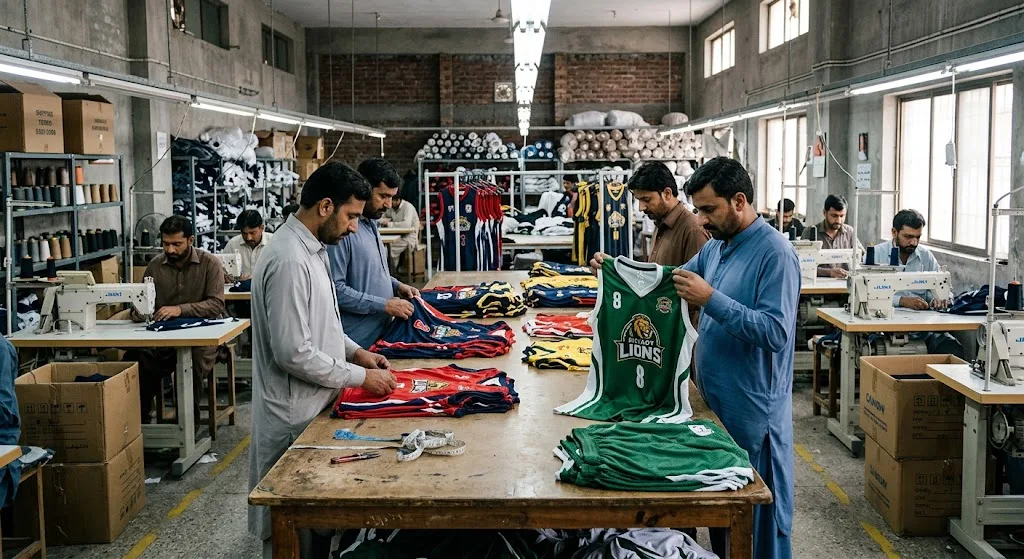
8. Fabric Cutting and Garment Construction
Once materials are ready, the manufacturing process moves into cutting and garment construction.
Fabric is prepared according to the required patterns and measurements. The individual pieces are then assembled through stitching and other construction processes.
Different garments require different construction techniques. For example, sportswear may use specialized seams and stitching designed to support movement and repeated use.
The quality of stitching matters because sportswear is often subjected to stretching, washing, friction, and regular physical activity.
9. Quality Control During Production
Quality control should not be treated as something that happens only at the end of manufacturing.
Different production stages can be checked to identify problems early. Depending on the product, manufacturers may review fabric quality, measurements, stitching, printing, embroidery, color consistency, and finishing.
A finished garment may be checked for issues such as:
- Loose threads
- Uneven stitching
- Incorrect measurements
- Printing defects
- Embroidery problems
- Fabric damage
- Incorrect labels
- Color inconsistencies
Consistent quality control becomes especially important when a brand orders the same product repeatedly because customers expect future batches to maintain the same standards.
10. Final Finishing and Packaging
After the main production process is completed, garments go through finishing procedures. This may include thread trimming, pressing, inspection, labeling, folding, and packaging.
Packaging requirements vary between brands. Some businesses use simple bulk packaging for wholesale distribution, while consumer-facing brands may require individual packaging with branded labels and tags.
Good finishing helps ensure that products are ready for the next stage, whether that means shipment to a distributor, retail store, team, or directly to customers.
11. From Finished Product to International Shipment
For brands working with an overseas manufacturer, logistics become another important part of the process.
The manufacturer and buyer may need to coordinate:
- Final quantity
- Carton details
- Packaging
- Shipping method
- Delivery address
- Required documentation
- Production completion date
Planning logistics early can help brands avoid unnecessary delays after production is finished.
12. Why the Manufacturing Partner Matters
A sportswear manufacturer is more than a production facility. The right manufacturing partner can help a brand understand materials, production methods, customization options, and practical limitations.
This becomes particularly important when a company is developing its first collection.
A new brand may have a strong creative idea but limited manufacturing experience. Working with an experienced manufacturer can help turn that idea into specifications that can actually be produced.
For brands interested in specialized streetwear products, a dedicated streetwear manufacturer can support the development of garments with different styling and branding requirements.
Similarly, businesses focused on performance clothing can explore sportswear manufacturing for products designed around active use.
13. Custom Sportswear for Growing Brands
A custom sportswear project does not always begin with a large collection. Many brands start with a small number of products, test customer demand, and gradually expand.
For example, a new fitness brand might begin with:
- One performance T-shirt
- One pair of training shorts
- One hoodie
- One pair of joggers
After testing the collection, the brand can introduce additional products based on customer demand.
This approach can make it easier to manage product development, inventory, branding, and future production.
14. Wholesale and Larger Production Requirements
Established brands may require larger quantities across several styles and sizes. In these cases, production planning becomes even more important.
Wholesale buyers should prepare their specifications before contacting a manufacturer. Having clear information about quantities, colors, sizes, artwork, fabric requirements, and packaging can make discussions more productive.
Businesses looking for bulk activewear can also explore wholesale activewear manufacturing when planning larger collections.
The same principle applies to businesses that require uniforms or durable clothing for employees. A specialized workwear manufacturer can be considered when the product needs to meet different requirements from normal sportswear.
15. What Brands Should Prepare Before Contacting a Manufacturer
Being prepared can make the first conversation with a manufacturer much easier.
Before requesting a quotation, a brand should ideally have:
- Product ideas
- Reference images or sketches
- Logo files
- Preferred colors
- Estimated order quantity
- Size requirements
- Fabric preferences
- Customization requirements
- Packaging expectations
- Target delivery date
You do not necessarily need a perfect technical package before contacting a manufacturer. However, the more information you can provide, the easier it becomes to understand what needs to be produced.
16. The Complete Journey in Simple Terms
The custom sportswear manufacturing process can be summarized as:
Idea → Product Design → Fabric Selection → Technical Specifications → Sample → Revisions → Approval → Bulk Production → Quality Control → Finishing → Packaging → Shipment
Each stage contributes to the final product.
Skipping important steps can create problems later. For example, approving bulk production before properly checking a sample could result in large quantities of garments requiring expensive changes or rework.
Conclusion
Custom sportswear manufacturing turns a clothing idea into a physical product through a series of planned steps. From selecting the right fabric and developing a sample to choosing customization methods, managing production, checking quality, and preparing the final shipment, every stage has a role to play.
For startups, fitness brands, sports teams, retailers, and established apparel businesses, understanding this process makes it easier to communicate with a manufacturing partner and prepare for production.
Habit Fit Sports works with businesses looking to develop custom apparel and sportswear products from concept through manufacturing. You can learn more about the company and its manufacturing options at Habit Fit Sports.