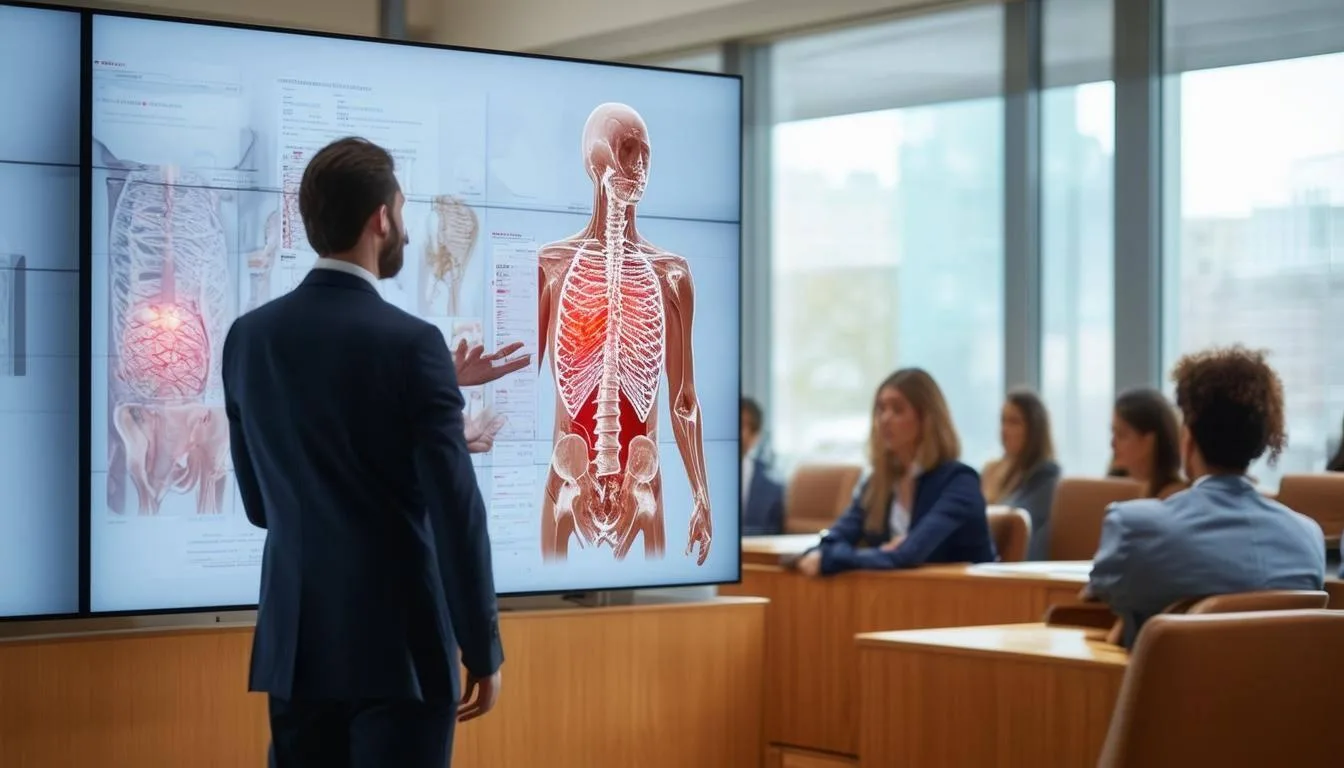
Medical information is often difficult to explain using text alone. Custom medical illustrations provide clear, accurate visuals that help patients, healthcare professionals, attorneys, and educators understand complex anatomy, diseases, injuries, and surgical procedures. Whether used in hospitals, medical publications, courtroom presentations, or educational materials, medical illustration services transform technical information into engaging visuals. A skilled medical illustrator combines scientific accuracy with artistic expertise to create illustrations that communicate clearly. Trial Graphics 360 offers customized medical visualization solutions designed to support healthcare, legal, and educational professionals with precise and evidence-based illustrations.

What Are Custom Medical Illustrations?
Custom medical illustrations are scientifically accurate visual representations of the human body, diseases, medical procedures, injuries, and healthcare concepts. Unlike stock images, these illustrations are created specifically for a client's unique needs and are based on medical research, imaging, and expert consultation.
They help explain subjects that may be difficult to understand through written descriptions alone.
Custom illustrations are commonly used in:
- Medical textbooks
- Patient education
- Courtroom presentations
- Scientific journals
- Pharmaceutical marketing
- Surgical planning
- Healthcare websites
- Medical training
- Clinical research
- Insurance and legal cases
Why Medical Illustration Services Matter
Healthcare professionals often communicate highly technical information to audiences with different levels of medical knowledge. Visual content improves understanding and helps reduce confusion.
Professional medical illustration services make complicated information easier to understand by presenting it in a logical and visually engaging way.
Research has shown that people process visual information much faster than text, making illustrations an effective communication tool in medicine and healthcare education.
What Does a Medical Illustrator Do?
A medical illustrator combines knowledge of anatomy, physiology, pathology, and medical science with advanced artistic and digital design skills.
Their responsibilities include creating illustrations for:
Human Anatomy
Detailed drawings of muscles, bones, nerves, blood vessels, and organs.
Surgical Procedures
Step-by-step visual explanations of operations and treatments.
Disease Progression
Illustrating how medical conditions develop and affect the body.
Medical Devices
Showing implants, prosthetics, and healthcare equipment.
Injury Visualization
Explaining fractures, burns, brain injuries, and orthopedic trauma.
Unlike traditional artists, medical illustrators work closely with physicians, surgeons, researchers, and legal professionals to ensure scientific accuracy.
Benefits of Custom Medical Illustrations
Improve Patient Understanding
Patients often better understand their diagnosis and treatment when medical concepts are explained visually.
Support Healthcare Education
Medical schools use illustrations to teach anatomy and clinical procedures.
Enhance Legal Presentations
Medical illustrations simplify expert testimony during litigation.
Increase Engagement
Visual content captures attention more effectively than long blocks of technical text.
Improve Professional Communication
Doctors, researchers, and educators can explain complex topics more efficiently.
Medical Illustration Services for Healthcare
Hospitals and healthcare organizations regularly use medical illustration services for educational and clinical purposes.
Applications include:
Patient Education Materials
Helping patients understand their medical conditions.
Hospital Brochures
Explaining treatments and procedures.
Medical Training
Supporting education for students and healthcare professionals.
Research Publications
Enhancing scientific papers and presentations.
Public Health Campaigns
Communicating disease prevention and wellness information.
Medical Illustration Services for Legal Cases
Medical visuals are equally important in legal proceedings.
Attorneys frequently use illustrations in cases involving:
- Personal injury
- Medical malpractice
- Wrongful death
- Product liability
- Workers' compensation
- Surgical negligence
- Birth injuries
Illustrations help juries understand injuries, anatomy, and treatment without requiring advanced medical knowledge.
How Custom Medical Illustrations Are Created
Professional medical illustrations follow a structured production process.
Step 1: Consultation
The illustrator reviews project goals, audience, and medical requirements.
Step 2: Research
Medical records, imaging studies, anatomical references, and expert input are collected.
Step 3: Sketch Development
Initial layouts establish composition and scientific accuracy.
Step 4: Digital Illustration
Detailed artwork is created using professional illustration software.
Step 5: Expert Review
Healthcare professionals verify anatomical accuracy before final approval.
Types of Medical Illustration Services
Professional studios offer a wide range of visualization solutions.
Anatomical Illustrations
Detailed representations of body systems.
Surgical Illustrations
Showing operative techniques and procedures.
Pathology Illustrations
Explaining diseases and abnormal conditions.
Orthopedic Illustrations
Visualizing fractures, joint injuries, and musculoskeletal disorders.
Neurology Illustrations
Explaining brain, spinal cord, and nerve conditions.
Cardiology Illustrations
Showing heart anatomy and cardiovascular diseases.
Oncology Illustrations
Demonstrating tumor development and cancer treatments.
Pediatric Medical Illustrations
Designed specifically for children's healthcare education.
Medical Illustrator Canada: Growing Demand
The demand for a skilled medical illustrator Canada continues to grow as healthcare organizations increasingly rely on digital education and visualization.
Canadian healthcare providers, research institutions, pharmaceutical companies, and legal professionals use medical illustrations for:
- Patient communication
- Medical conferences
- Academic publishing
- Healthcare marketing
- Legal documentation
- Online learning
Professional medical illustrators in Canada often collaborate with multidisciplinary teams to produce evidence-based educational materials.
Why Visual Communication Improves Learning
Studies in educational psychology consistently show that combining visuals with written information improves learning and information retention.
Medical illustrations help audiences:
- Understand anatomy faster
- Remember medical concepts longer
- Interpret complex procedures more easily
- Reduce misunderstanding during patient consultations
This makes illustrations valuable across healthcare, education, and legal environments.
Real-World Example
Consider a medical malpractice case involving shoulder surgery.
Medical records contain hundreds of pages describing:
- Torn rotator cuff
- Surgical repair
- Nerve injury
- Rehabilitation process
Rather than relying solely on written reports, attorneys present custom medical illustrations showing:
- Shoulder anatomy
- Damaged tendons
- Surgical procedure
- Nerve location
- Permanent injury
These visuals allow jurors to quickly understand complex medical evidence.
Choosing Professional Medical Illustration Services
Selecting an experienced provider is essential.

Look for professionals who offer:
Scientific Accuracy
Illustrations should be reviewed by medical experts.
Custom Artwork
Every project should be created specifically for the client.
High-Resolution Graphics
Professional-quality visuals suitable for print and digital use.
Industry Experience
Experience in healthcare and legal visualization improves quality.
Clear Communication
Illustrations should simplify—not complicate—the information.
Why Professionals Choose Trial Graphics 360
Trial Graphics 360 provides customized medical visualization solutions for attorneys, physicians, hospitals, educators, and researchers.
Their services include:
- Custom medical illustrations
- Medical illustration services
- Professional medical illustrator support
- Surgical illustrations
- Anatomical diagrams
- Orthopedic injury illustrations
- Brain injury visualizations
- Courtroom demonstrative exhibits
- Educational medical graphics
By combining scientific precision with advanced digital illustration techniques, Trial Graphics 360 creates visuals that help audiences clearly understand complex medical information while maintaining anatomical accuracy.
Future Trends in Medical Illustration
Medical visualization continues to evolve with new technologies.
Emerging trends include:
- 3D anatomical modeling
- Interactive medical graphics
- Virtual reality education
- Artificial intelligence-assisted illustration
- Augmented reality anatomy
- High-resolution digital publishing
- Personalized patient education
These innovations are expanding how medical information is communicated across healthcare and legal industries.
Best Practices for Custom Medical Illustrations
To achieve the best results:
- Base artwork on verified medical evidence.
- Collaborate with physicians and specialists.
- Maintain anatomical accuracy.
- Design illustrations for the intended audience.
- Update visuals when new medical information becomes available.
Following these practices ensures illustrations remain reliable, informative, and visually effective.
Conclusion
Modern healthcare and legal communication depend on clear, accurate visuals. Custom medical illustrations, professional medical illustration services, and the expertise of a skilled medical illustrator help simplify complex anatomy, diseases, surgical procedures, and injuries for diverse audiences. Whether supporting patient education, scientific research, or courtroom presentations, these visuals improve understanding and communication. Organizations seeking a trusted medical illustrator Canada or comprehensive visualization partner can benefit from evidence-based solutions designed to communicate medical information with clarity. Trial Graphics 360 delivers customized illustrations that combine medical accuracy, visual excellence, and professional expertise for healthcare and legal professionals alike.
Frequently Asked Questions (FAQs)
What are custom medical illustrations?
Custom medical illustrations are scientifically accurate visual representations created specifically for a client's healthcare, legal, educational, or research needs.
What does a medical illustrator do?
A medical illustrator combines medical knowledge with artistic skills to create anatomical, surgical, pathological, and educational illustrations that accurately explain complex medical concepts.
Who uses medical illustration services?
Hospitals, physicians, universities, pharmaceutical companies, legal professionals, medical publishers, and research organizations commonly use medical illustration services.
Why are medical illustrations important in legal cases?
Medical illustrations help explain injuries, anatomy, and treatment in a clear visual format, making complex evidence easier for judges and juries to understand.
Are custom medical illustrations better than stock images?
Yes. Custom illustrations are tailored to the specific medical condition, procedure, or legal case, ensuring greater accuracy and relevance.
Why is there demand for a medical illustrator in Canada?
Canada's growing healthcare, biotechnology, academic, and legal sectors increasingly rely on professional medical illustrations for education, research, patient communication, and litigation support.