Running a business often feels like spinning multiple plates at once. Customers expect quick responses. Teams need clarity. Managers want visibility. Data pours in from emails, calls, websites, and sales tools. At the beginning, it’s manageable. But as the business grows, things start slipping. Follow-ups are delayed. Customers feel ignored. Teams repeat work because information isn’t shared properly.
Many businesses try to fix this by implementing standard CRM software. At first, it feels like progress. Contacts are stored, pipelines look organized, and automation promises relief. But over time, limitations become obvious. The system doesn’t fully reflect how teams actually work. People skip steps to save time. Data becomes incomplete. The CRM turns into a chore instead of a support system.
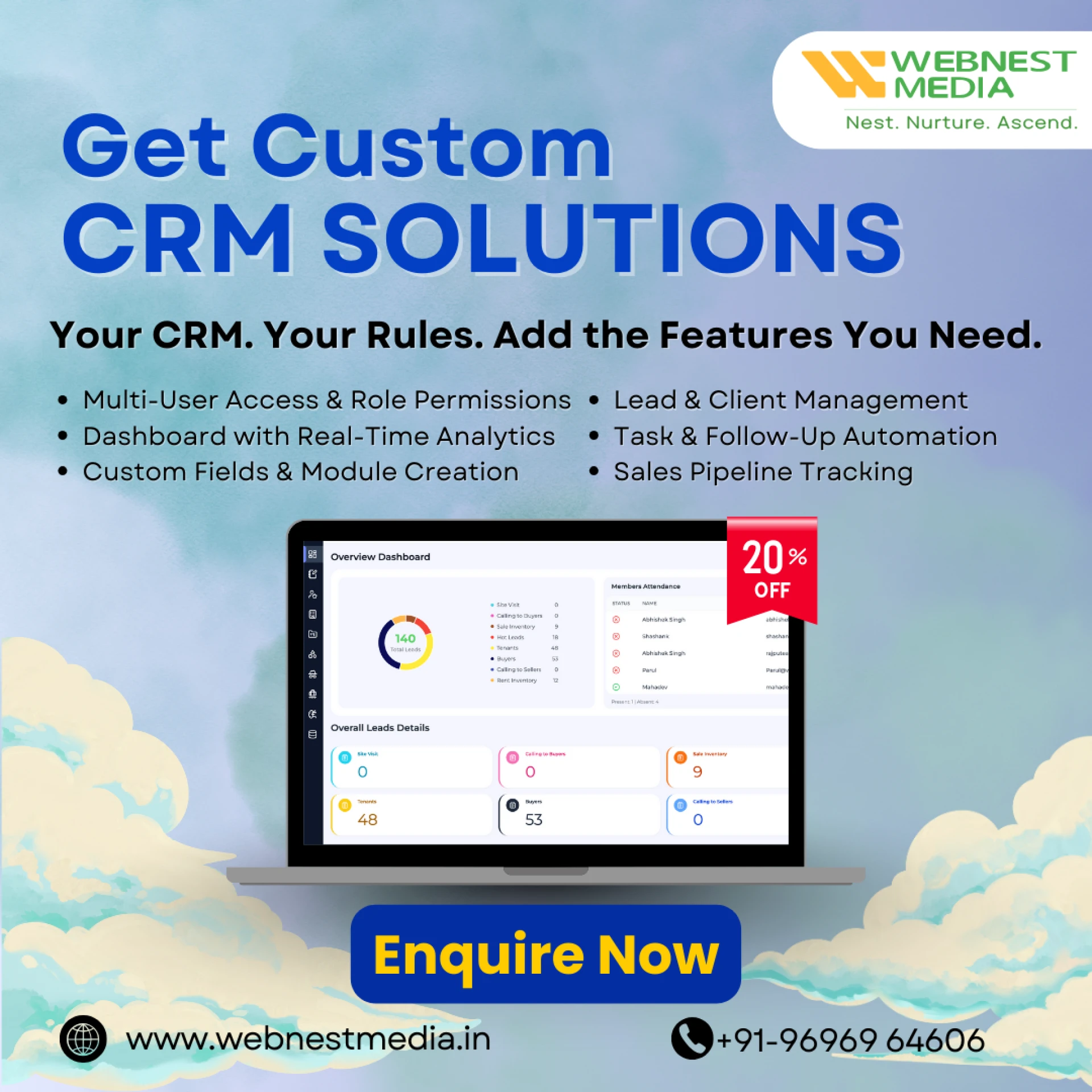
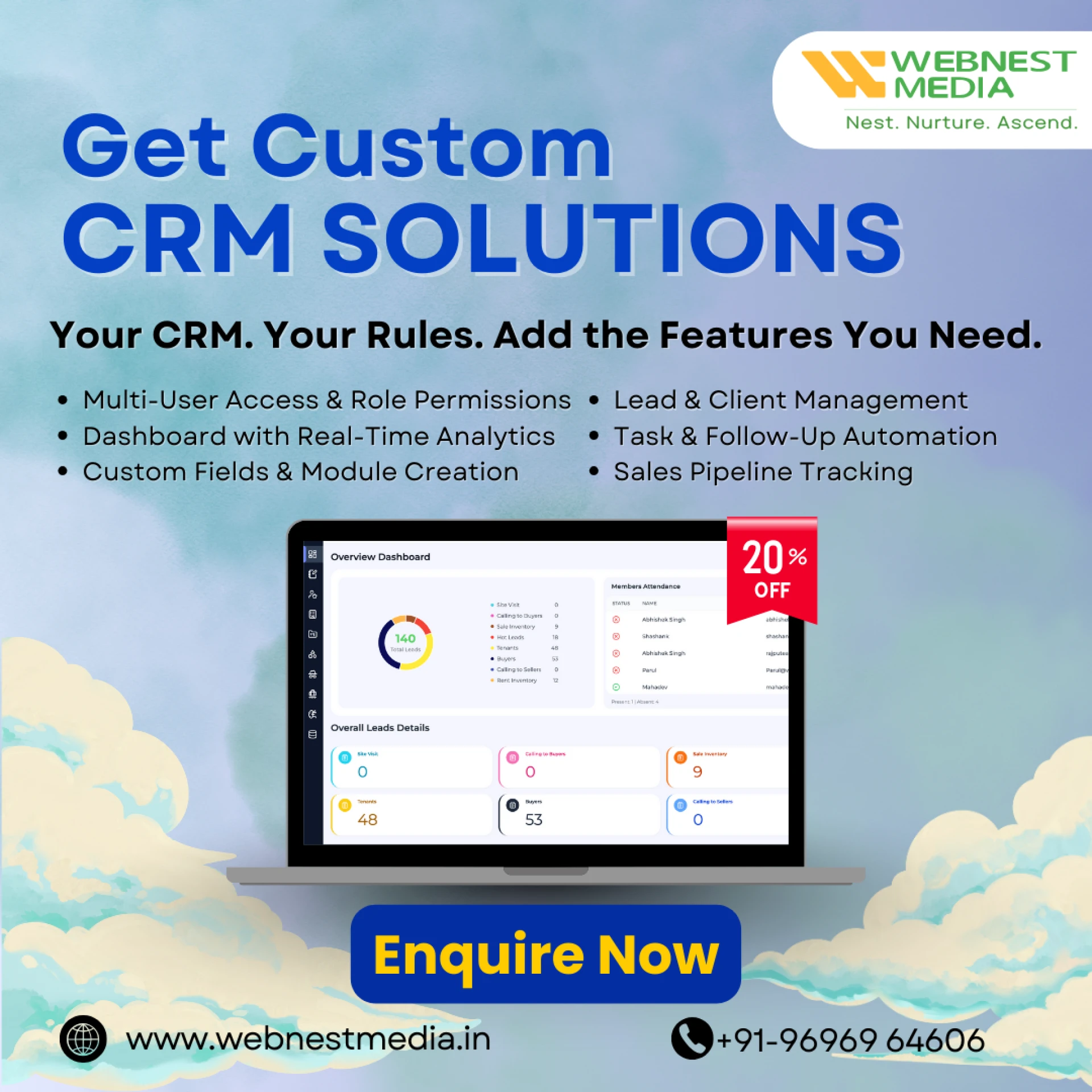
This is where Custom CRM Development Services bring a meaningful shift. A custom CRM doesn’t force your business to adapt to software. It adapts to your business. It understands your workflows, respects your processes, and grows alongside your goals. When built properly, it quietly strengthens operations instead of demanding constant attention.
The Deeper Purpose of Custom CRM Development Services
1. Turning business know-how into repeatable systems
Every organization relies on experience—what works, what doesn’t, and what needs special handling. A custom CRM captures this institutional knowledge and converts it into structured workflows that teams can follow consistently, even as the organization grows.
2. Making work feel lighter instead of heavier
When systems match natural work habits, teams don’t feel burdened by technology. A custom CRM reduces unnecessary steps, removes guesswork, and helps people focus on outcomes rather than processes.
3. Creating stability in a changing environment
Markets shift, customer expectations evolve, and internal structures change. A custom CRM is built to adapt, providing stability without locking the business into rigid patterns.
Why Off-the-Shelf CRM Software Often Slows Progress
1. Designed for averages, not realities
Generic CRMs are built to serve many industries at once. Real businesses operate with unique approval paths, exceptions, and dependencies that those systems struggle to handle.
2. Low adoption quietly weakens results
When users don’t feel comfortable with a CRM, they stop using it consistently. Incomplete data follows, making insights unreliable and decisions harder.
3. Growing dependence on disconnected tools
When one system can’t do everything, more tools are added. Customer data spreads across platforms, increasing complexity and reducing clarity.
Centralizing Customer Relationships Through Custom CRM
1. One living customer record
Every interaction—emails, calls, meetings, notes, documents, and transactions—lives in a single, evolving timeline. Teams no longer need to hunt for context or ask customers to repeat themselves.
2. More confident, relevant conversations
With full visibility into past interactions, teams communicate with purpose and accuracy. Customers feel understood rather than processed.
3. Stronger data consistency across teams
Centralization eliminates duplicate records, outdated details, and conflicting information, improving trust in the system.
Streamlining Internal Operations with Custom CRM Development Services
1. Automation that mirrors real work patterns
Routine tasks such as follow-ups, reminders, and internal notifications are automated in ways that reflect how work actually happens, not how templates assume it should.
2. Clear responsibility at every step
Each stage in a workflow has defined ownership, reducing confusion and ensuring tasks move forward smoothly.
3. Faster execution with fewer interruptions
With better visibility and reduced manual work, teams act quickly and confidently.
Sales Enablement Through Custom CRM
1. Lead qualification grounded in real intent
Custom scoring models help sales teams focus on prospects who show genuine readiness to engage, improving efficiency and morale.
2. Pipelines that show the truth
Sales stages reflect actual progress, making it easier to spot stalled deals and take action early.
3. Reliable follow-ups without mental overload
Automated tasks ensure prospects are contacted on time, even during busy periods.
Enhancing Customer Experience Using Custom CRM
1. Consistency across every interaction
Customers receive the same level of service whether they speak to sales, support, or operations.
2. Personalization without extra effort
Custom data fields allow teams to tailor communication naturally, even as customer volume grows.
3. Proactive relationship management
Activity tracking highlights potential risks early, allowing teams to address concerns before they escalate.
Custom CRM Development Services for Scaling Organizations
1. Systems designed to grow smoothly
The CRM supports more users, more data, and more complexity without slowing down or breaking workflows.
2. Simple onboarding for new teams
As organizations expand, new employees integrate easily into existing processes.
3. Flexibility for evolving strategies
New services, markets, or customer segments can be added without rebuilding the system.
Strengthening Collaboration Across Departments
1. Shared access to accurate information
Teams work from the same real-time data, reducing misunderstandings and repeated communication.
2. Clear accountability for actions
Defined ownership ensures tasks don’t stall due to confusion.
3. Reduced internal friction
Automation replaces unnecessary coordination, helping teams stay focused.
Strategic Decision-Making with Custom CRM
1. Real-time operational visibility
Leadership gains immediate insight into performance, pipeline health, and team activity.
2. Smarter forecasting and planning
Reliable data supports better budgeting, staffing, and growth decisions.
3. Alignment with long-term objectives
The CRM supports strategy, not just daily task tracking.
Security and Control in Custom CRM Development Services
1. Full ownership of customer and business data
Organizations decide where data is stored and who can access it.
2. Role-based access protection
Sensitive information remains visible only to authorized users.
3. Compliance embedded into workflows
Security and regulatory requirements are built directly into system logic.
Measuring the Long-Term Impact of Custom CRM
1. Higher productivity across teams
Automation reduces administrative work and frees time for meaningful tasks.
2. Stronger customer retention and loyalty
Consistent, informed engagement builds trust over time.
3. Predictable and controlled growth
Standardized workflows make expansion manageable instead of chaotic.
FAQs
What are Custom CRM Development Services?
They involve creating CRM systems tailored to a business’s workflows, goals, and operational structure.
Can a custom CRM replace multiple tools?
Yes, it often consolidates sales, support, and customer management into one system.
Is a custom CRM suitable for growing businesses?
Absolutely, especially for organizations planning structured growth.
Can workflows evolve after implementation?
Yes, workflows can change as business needs evolve.
How secure is a custom CRM?
Security is designed around business requirements and industry standards.
Conclusion
A CRM should strengthen a business, not slow it down. When systems are built around real workflows, teams work with clarity, customers feel valued, and growth becomes sustainable instead of stressful.
Choosing Custom CRM Development Services with WebNest Media means investing in a solution built around your people, your processes, and your future. It’s not just software—it’s a smarter foundation for long-term success.