Custom Coils Manufacturers and Suppliers for HVAC and Refrigeration Equipment
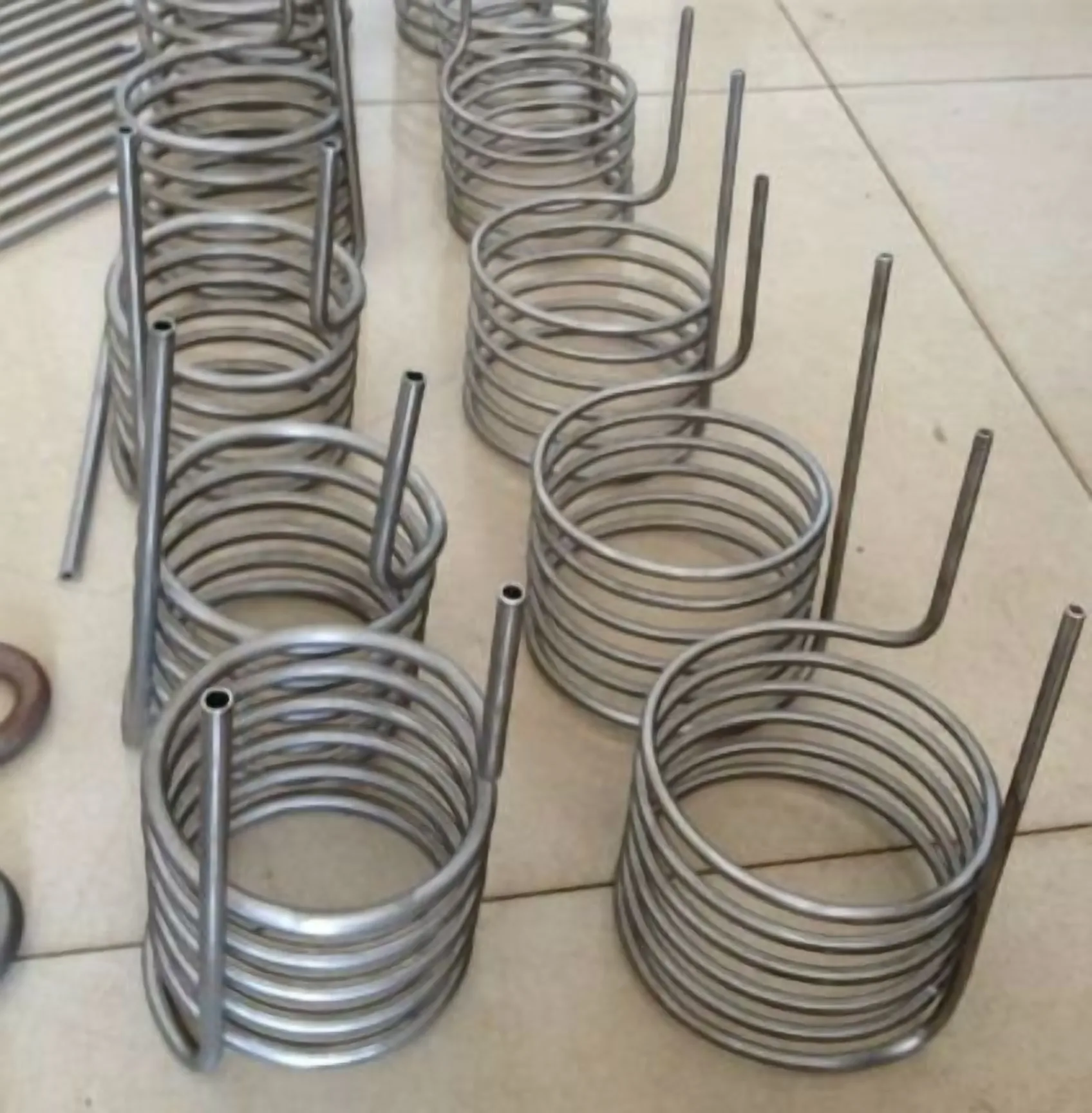
Custom Coils are engineered heat-transfer components designed to meet specific thermal, mechanical, and operational requirements across refrigeration, air conditioning, industrial processing, and commercial equipment. Unlike standard coils manufactured to fixed dimensions, these assemblies are developed around particular operating conditions, fluid characteristics, available installation space, and required heat-transfer capacity. Their design involves coordinated decisions regarding tube materials, fin geometry, circuit arrangements, pressure requirements, and manufacturing methods.

The growing use of application-specific heat exchangers has increased the importance of engineering-driven coil production. Custom Coils Manufacturers work with different configurations to achieve the required balance between thermal efficiency, pressure drop, structural integrity, and service life. The design may involve copper tubes with aluminium fins, specialised tube arrangements, or alternative materials selected according to the working fluid and environmental conditions. These considerations make custom-engineered coils relevant to equipment manufacturers, industrial facilities, refrigeration systems, and specialised process applications.
Engineering Principles Behind Custom Coil Design
The performance of a coil depends on heat transfer between two fluids separated by a conductive surface. In conventional finned-tube coils, one fluid generally flows through the tubes while another passes over the external fin surfaces. Heat moves through the tube wall and fins, allowing energy to transfer between the two streams.
Custom Coils Manufacturers in India generally develop coil configurations according to equipment dimensions and specified operating conditions. Design calculations consider the heat-transfer area, fluid velocity, tube diameter, fin spacing, number of rows, and circuit arrangement. These parameters influence both the thermal output and the energy required to circulate air and fluid through the assembly.
A suitable design must also account for condensate drainage, vibration, corrosion exposure, maintenance access, and the operating environment. These factors are particularly important in industrial systems where equipment operates continuously or under varying thermal loads.
Material Selection and Heat-Transfer Characteristics
Material selection directly affects thermal conductivity, corrosion resistance, pressure containment, fabrication compatibility, and expected operating life. The combination of tube, fin, header, and casing materials is therefore determined by the specific application rather than by a single universal material preference.
Copper and Copper-Alloy Tubes
Copper tubes may have smooth internal surfaces or internally grooved configurations. Grooved tubes can enhance refrigerant-side heat transfer in suitable designs, although their use depends on the refrigerant, operating conditions, and manufacturing requirements.
ASTM B75 and ASTM B280 are relevant specifications for particular seamless copper tube applications. The appropriate specification depends on the intended service and tube requirements. Copper grade, tube dimensions, wall thickness, and joining methods must be compatible with the coil's design conditions.
Aluminium Fins and Structural Materials
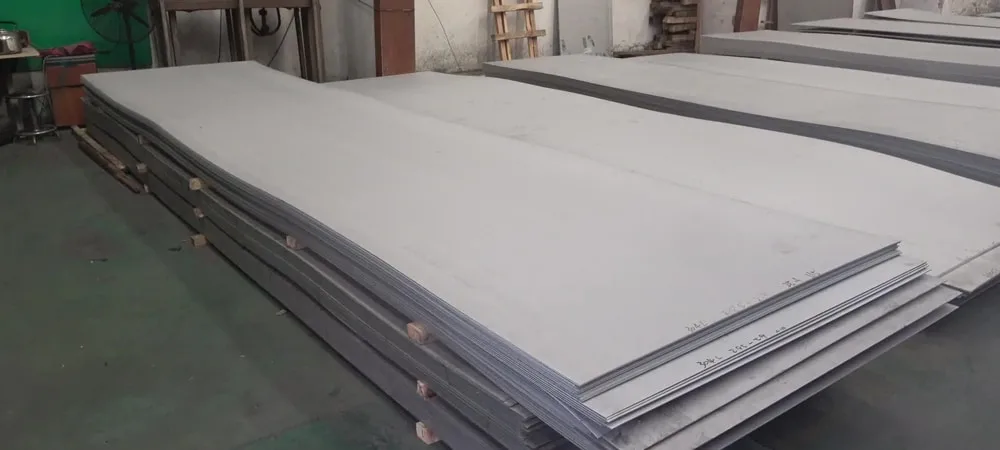
Aluminium alloys covered by specifications such as ASTM B209 or ASTM B221 may be relevant, depending on the product form. Stainless steel may be considered for selected structural or corrosive-service requirements, while other materials can be specified where operating conditions justify their use.
Custom Coils Suppliers need to maintain material conformity throughout procurement and production, particularly when different metals are combined within one assembly. Dissimilar-metal contact, moisture exposure, and chemical contamination can contribute to galvanic corrosion if material compatibility is not properly addressed.
Coil Configurations for Different Operating Requirements
Cooling coils are used to reduce air or process-fluid temperatures. Chilled-water and glycol-based coils are commonly integrated into air-handling units and industrial cooling systems. Their design must accommodate the required cooling capacity, water flow, air pressure drop, and condensate removal.
Evaporator coils absorb heat as refrigerant evaporates within the tube circuit. Their performance depends on refrigerant distribution, evaporation temperature, circuit arrangement, and heat-transfer surface. Applications include cold storage, commercial refrigeration, and industrial cooling equipment.
Condenser coils reject heat from refrigerant or another working fluid to air or water. They require suitable heat-transfer area, fluid distribution, pressure containment, and thermal performance under the expected ambient conditions.
Custom Coils Manufacturers develop these configurations according to the functional requirements of the equipment. The selection of tube rows, fin density, connections, and internal circuits must be consistent with the expected duty and installation limitations.
Thermal and Hydraulic Design Considerations
A coil's thermal capacity is closely connected to its heat-transfer area and the temperature difference between the fluids. However, increasing surface area alone does not necessarily produce an efficient design. Excessive fin density can increase airflow resistance, while unsuitable tube circuitry can create high fluid pressure drops or uneven flow distribution.
The main engineering parameters include:
- Heat-transfer capacity and required outlet temperatures.
- Tube diameter, wall thickness, and internal surface geometry.
- Number of tube rows and circuit arrangement.
- Fin spacing, fin profile, and effective surface area.
- Air velocity, fluid velocity, and allowable pressure drop.
- Operating pressure, temperature, and fluid compatibility.
In refrigerant-based systems, the circuit arrangement must also accommodate phase changes and refrigerant distribution. For liquid-based systems, water quality, glycol concentration, and flow characteristics are important considerations.
Custom Coils Suppliers in India may receive requirements based on existing equipment drawings or new system designs. In either case, accurate operating data is essential to avoid oversizing, undersizing, excessive energy consumption, or inadequate thermal performance.
Manufacturing Processes and Dimensional Control
Tube preparation generally includes cutting, bending, and forming to achieve the specified circuit geometry. Fin production involves forming sheets into the required profiles and maintaining consistent spacing. Tubes are then assembled with the fin structure using an appropriate mechanical expansion or other approved assembly process to establish effective thermal contact.
Where brazing is required, joint preparation, material compatibility, filler-metal selection, and heating control are important for achieving reliable connections. Headers, manifolds, connection pipes, support frames, and mounting components are assembled according to the approved drawings.
Custom Coils Manufacturers in India must also consider handling and storage during production. Fins can be easily deformed, and exposed connections can be damaged or contaminated. Proper protection helps preserve the finished coil's geometry and cleanliness before installation.
International Standards and Technical Compliance
Custom Coils do not fall under one universal manufacturing standard. The applicable requirements depend on the coil's materials, pressure-containing elements, equipment classification, and intended application.
ASTM specifications can establish requirements for raw materials and particular product forms. ASTM B75 and ASTM B280 are relevant to designated seamless copper tubing applications, while ASTM B209 and ASTM B221 address specified aluminium product forms.
ASME requirements may apply where a coil forms part of equipment covered by a relevant pressure-vessel or pressure-piping code. The applicability of a particular code depends on the equipment design and governing jurisdiction. EN, DIN, JIS, and BS specifications may also be relevant to material supply or project-specific requirements when explicitly identified in the technical documentation.
For Custom Coils Exporters, clear identification of material specifications, dimensional requirements, inspection criteria, and applicable regulatory obligations is particularly important. International projects may involve different measurement systems, material designation conventions, pressure requirements, and documentation practices.
Quality Inspection and Performance Verification
Inspection procedures should be established according to the risks associated with the coil's intended service. Dimensional and visual inspections verify conformity with approved drawings, while pressure and leak tests assess the integrity of sealed fluid circuits.
Thermal performance testing may measure heat-transfer capacity, fluid flow, inlet and outlet temperatures, and pressure drop under defined conditions. Such testing is especially relevant when performance guarantees or project-specific acceptance criteria apply.
Quality records may include material certificates, inspection reports, pressure-test records, dimensional inspection results, and approved drawings. Traceability supports identification of the materials and manufacturing processes used in the finished assembly.
Custom Coils Suppliers and Custom Coils Exporters should ensure that the supplied documentation matches the actual product configuration and agreed purchase specification. This is important for installation, commissioning, maintenance, and future replacement.
Industrial Applications and Specialised Requirements
In commercial air conditioning, coils are incorporated into air-handling units, ventilation systems, and packaged equipment. Their design is influenced by airflow, cooling or heating capacity, installation space, humidity, and condensate drainage.
Industrial manufacturing facilities may use process coils for cooling machinery, controlling production temperatures, and managing heat loads. Depending on the application, these assemblies may require specialised materials, higher mechanical strength, corrosion resistance, or specific cleaning arrangements.
Pharmaceutical and laboratory environments may require coils that are compatible with controlled air-handling systems and defined environmental conditions. Material selection, cleanability, condensate management, and access for maintenance must be evaluated according to the actual process requirements.
Custom Coils Manufacturers, Custom Coils Suppliers, and Custom Coils Exporters support these applications through product configurations matched to equipment dimensions, operating parameters, and project-specific documentation.
Procurement, Export, and Technical Documentation
Procurement of custom-engineered coils requires more detailed information than purchasing standard catalogue components. A technical enquiry should define the required heat-transfer duty, working fluid, operating temperature, pressure, flow rate, airflow, physical dimensions, material specifications, and connection details.
Custom Coils Manufacturers in India may supply assemblies for domestic industrial equipment as well as international projects. Custom Coils Suppliers in India coordinate technical and commercial requirements, while Custom Coils Exporters in India may also need to address export packaging, transport protection, shipping documentation, and destination-specific compliance.
For international orders, packaging should protect the fins, tube connections, and other exposed components from deformation, moisture, and contamination. Clear identification and appropriate documentation can help prevent installation delays and facilitate inspection at the receiving facility.
Engineering Reliability Through Application-Specific Design
The performance of Custom Coils depends on the compatibility of their thermal design, material selection, manufacturing processes, and operating environment. Tube and fin geometry, circuit arrangement, pressure containment, and quality verification must work together to meet the intended duty.
For engineers, equipment manufacturers, and industrial procurement teams, a well-defined technical specification is central to achieving consistent results. Custom Coils Manufacturers, Custom Coils Suppliers, and Custom Coils Exporters contribute to the supply process by maintaining conformity with approved requirements and providing the necessary technical documentation. Ultimately, the suitability of a coil is established by its ability to deliver the specified heat-transfer performance, maintain mechanical integrity, and operate reliably within the system for which it was engineered.
Contact Us
Parmar Techno Centre, Phase II, Gala No. 36, Pelhar Village, Nr Vasai Phata, Vasai (E), 401208
+91-9820511832
+91-9833471118