Introduction
In today's digital world, businesses need innovative technology solutions to stay competitive, improve productivity, and deliver better customer experiences. A custom application can help businesses automate processes, manage operations, improve communication, and provide services more efficiently.
Unlike ready-made applications, custom applications are developed around a company's specific requirements, workflows, and business objectives. They offer greater flexibility and allow businesses to build features that match their unique needs.
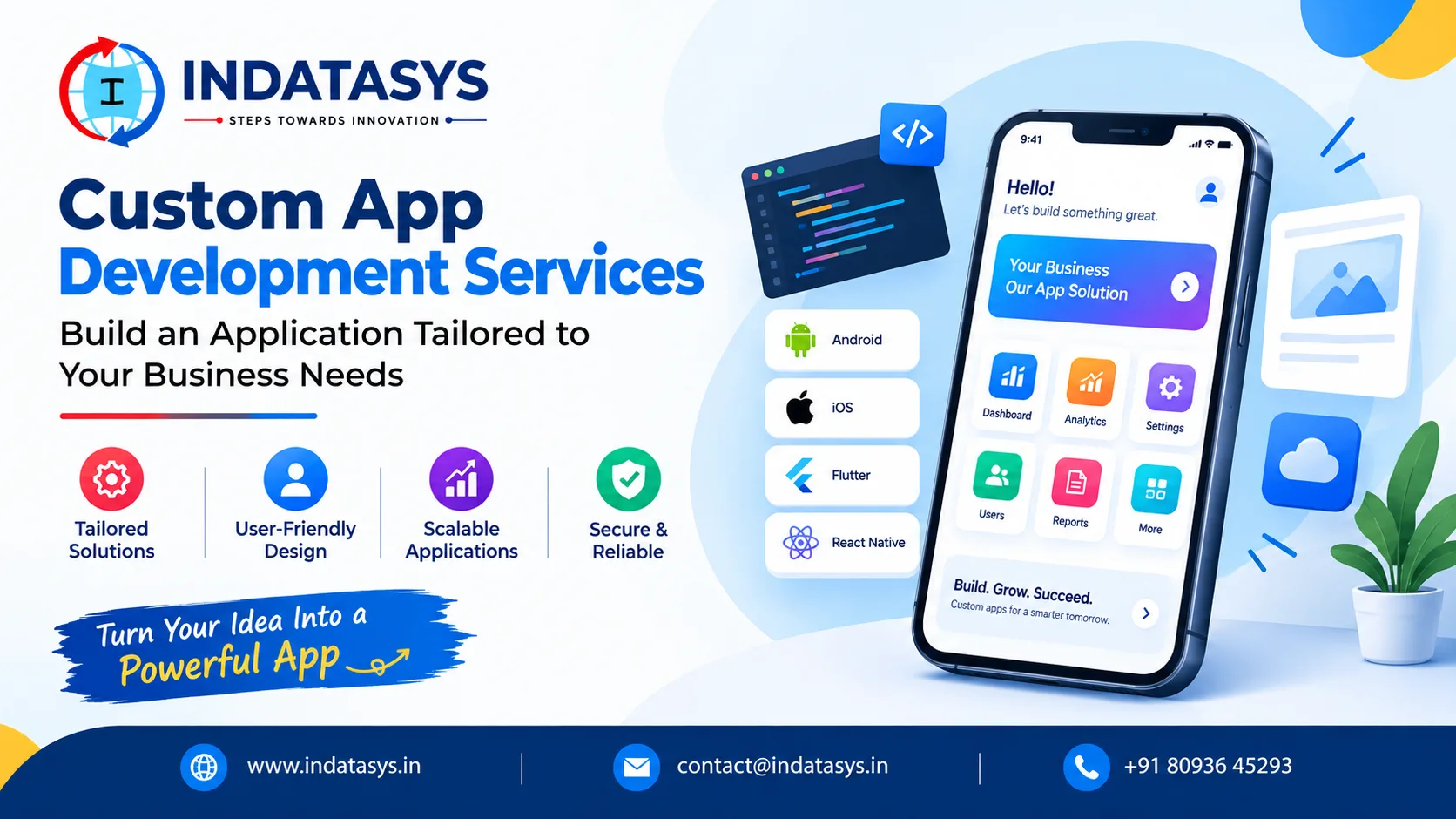
Indatasys provides custom app development services designed to help businesses turn their ideas into practical digital solutions. From business applications to customer-focused platforms, custom app development can help organizations improve efficiency and support long-term growth.
What Is Custom App Development?
Custom app development is the process of designing, developing, testing, and maintaining applications based on specific business requirements. These applications are created to solve particular problems, support business operations, or improve the way customers interact with a company.
For example, a retail business may need an application to manage orders and inventory, while a service-based company may require an app for appointment scheduling and customer communication.
With custom application development, businesses can select the features, design, integrations, and functionality that best suit their objectives.
Why Do Businesses Need Custom App Development Services?
Every business has different goals, operational challenges, and customer expectations. Standard applications may not always provide the flexibility required to address these needs.
Here are some important reasons businesses consider custom app development services.
1. Solutions Designed for Your Business
Custom applications are developed according to your business requirements. You can choose features and functionalities that support your daily operations instead of adjusting your processes to fit a standard application.
2. Improved Business Efficiency
Applications can automate repetitive tasks, reduce manual work, and organize business information. This allows employees to focus on more important responsibilities and helps businesses manage operations more effectively.
3. Better Customer Experience
A user-friendly application makes it easier for customers to access services, explore products, submit inquiries, and interact with your business.
By focusing on intuitive navigation and useful features, businesses can create smoother digital experiences.
4. Scalability and Flexibility
As your business grows, your technology requirements may change. Custom applications can be designed with future expansion in mind, making it easier to introduce additional features and support evolving business needs.
5. Integration With Existing Systems
Businesses often use multiple tools to manage sales, customer relationships, inventory, and internal operations. Custom applications can be developed to integrate with compatible systems and help information flow more efficiently.
6. Greater Control Over Features
Custom app development gives businesses more control over application functionality, design, and future enhancements. This flexibility helps organizations adapt their applications as their objectives change.
Types of Custom App Development Services
Different businesses require different types of applications. The right solution depends on your target audience, business model, operational requirements, and budget.
1. Custom Business Application Development
Business applications help organizations manage internal processes, employee activities, reporting, and daily operations.
Examples include:
- Employee management applications
- Inventory management systems
- Project management applications
- Business reporting dashboards
- Workflow automation solutions
These applications can help simplify operations and improve access to important business information.
2. Custom Mobile App Development
Mobile applications allow customers and employees to access digital services through smartphones and tablets.
Businesses can develop mobile applications for customer engagement, online shopping, service booking, communication, and other specific requirements.
A well-designed mobile application can make business services more accessible and convenient.
3. Customer-Focused Application Development
Customer-focused applications help businesses improve interactions with their audiences.
Depending on business requirements, these applications may include customer accounts, booking systems, service requests, order tracking, notifications, and personalized features.
Such solutions can support customer satisfaction and encourage ongoing engagement.
4. E-commerce Application Development
Businesses that sell products online may benefit from custom e-commerce applications designed around their sales processes.
Features can include product catalogs, shopping carts, payment gateway integration, order management, and customer account functionality.
The final feature set depends on the business model and technical requirements.
5. Enterprise Application Development
Larger organizations may need applications that support complex workflows, multiple departments, and large volumes of business information.
Enterprise applications can help improve collaboration, centralize information, and streamline processes across different teams.
Essential Features of a Successful Custom Application
A successful application should do more than look attractive. It should provide useful functionality, perform reliably, and deliver a positive user experience.
Consider the following features when planning your application.
User-Friendly Interface: Simple navigation and clear layouts help users understand how to use the application.
Security Features: Appropriate authentication, access controls, data protection, and secure development practices help protect application information.
Responsive Design: Applications should provide a suitable experience across supported devices and screen sizes.
Scalable Architecture: A well-planned architecture can make it easier to accommodate increasing usage and future functionality.
System Integration: Integration with relevant business tools can reduce duplicated work and improve operational efficiency.
Performance Optimization: Efficient application design and testing can help improve responsiveness and reliability.
Maintenance and Updates: Regular maintenance helps address technical issues, improve compatibility, and keep the application aligned with changing requirements.
The features you choose should reflect your actual business needs rather than adding unnecessary complexity.
Our Custom App Development Process
A structured development process helps transform an initial idea into a functional application.
Step 1: Requirement Analysis
The process begins by understanding your business objectives, target audience, challenges, and expected application features.
Clear requirements help establish the project's scope and priorities.
Step 2: Planning and Strategy
The development team defines the project roadmap, key functionalities, technical requirements, and expected milestones.
This stage helps establish a practical direction for the project.
Step 3: UI/UX Design
The design process focuses on creating an intuitive interface and a smooth user journey.
Wireframes and prototypes can help visualize the application's structure before development begins.
Step 4: Application Development
Developers build the application according to the approved requirements and technical plan.
The technology stack depends on factors such as the application type, performance requirements, integrations, and supported platforms.
Step 5: Testing and Quality Assurance
Testing helps identify bugs, usability issues, compatibility problems, and performance concerns before deployment.
The goal is to deliver an application that meets its defined requirements.
Step 6: Deployment
Once the application has been tested and approved, it can be deployed to the appropriate environment or app distribution platform.
Deployment requirements vary depending on whether the solution is web-based, mobile, or enterprise-focused.
Step 7: Maintenance and Improvement
After launch, applications may require updates, performance improvements, security enhancements, and additional features.
Ongoing maintenance helps businesses keep their applications useful as requirements evolve.
How to Choose the Right Custom App Development Company
Selecting the right development partner is an important decision that can influence your application's quality, usability, and long-term value.
Consider these factors before choosing a provider.
- Understand your requirements: Choose a development partner that takes time to understand your business goals.
- Review relevant experience: Examine previous projects or portfolio examples that relate to your requirements.
- Evaluate communication: Clear communication helps keep expectations, timelines, and project requirements aligned.
- Discuss technology choices: Ensure the proposed technologies are suitable for your application and future plans.
- Ask about security and testing: Understand how the team approaches application security, quality assurance, and performance.
- Clarify maintenance arrangements: Discuss how updates, bug fixes, and future enhancements will be handled.
- Understand the project scope: Request clarity on deliverables, estimated timelines, costs, and potential additional expenses.
A development partner should help you identify a practical solution rather than simply recommend the largest number of features.
How Much Does Custom App Development Cost?
The cost of custom app development depends on several factors, and there is no single price that applies to every project.
Important cost factors include:
- Application complexity and functionality
- Number of platforms supported
- UI/UX design requirements
- Backend infrastructure and database needs
- Third-party integrations
- Security and compliance requirements
- Testing and deployment requirements
- Ongoing maintenance and support
A basic application with limited functionality generally requires less development effort than a complex platform with multiple user roles, integrations, and advanced features.
Before starting development, define your essential requirements and establish a realistic budget. A clear project scope can help you prioritize features and make informed decisions.
Why Choose Indatasys for Custom App Development?
Choosing a development partner that understands your business objectives can help you plan and build a suitable digital solution.
Indatasys offers technology services to help businesses strengthen their digital capabilities and explore application solutions aligned with their requirements.
When planning a custom application, businesses should focus on:
- Solutions aligned with specific business requirements
- User-friendly design and application functionality
- Scalable development planning
- Application testing and quality considerations
- Integration with relevant business systems
- Future maintenance and improvement opportunities
Whether you are planning a new application or looking to improve an existing business process, identifying the right requirements is the first step toward a successful project.
To learn more, visit the Indatasys website: https://indatasys.in/custom-app-development
Future Trends in Custom App Development
Application development continues to evolve as businesses adopt new technologies and digital workflows.
Several trends are influencing how organizations plan their applications.
Artificial Intelligence Integration
AI-powered features can support tasks such as customer assistance, data analysis, recommendations, and workflow automation when appropriate for the application.
Cloud-Based Applications
Cloud technologies can help businesses access applications and data across supported devices and locations. The right cloud architecture depends on security, performance, and operational requirements.
Cross-Platform Development
Cross-platform frameworks can allow developers to build applications for multiple operating systems using shared code. This approach may reduce duplicated development effort, depending on the project's needs.
Low-Code and Workflow Automation
Low-code tools can accelerate the development of certain applications, while workflow automation can reduce repetitive manual tasks.
Greater Focus on Application Security
As applications handle increasing amounts of business and customer information, security needs to be considered throughout the development lifecycle.
Businesses should evaluate these trends based on their actual requirements, available resources, and long-term technology strategy.
Conclusion
Custom app development helps businesses create digital solutions tailored to their specific goals, workflows, and customer needs. From automating daily tasks to improving customer engagement, the right application can support efficiency, flexibility, and long-term business growth.
The key to a successful project is understanding your requirements, prioritizing useful features, selecting appropriate technologies, and planning for testing and maintenance.
Indatasys provides custom app development services for businesses looking to explore tailored digital solutions. If you have an application idea or want to improve your existing business processes, take the next step toward building an application designed around your needs.