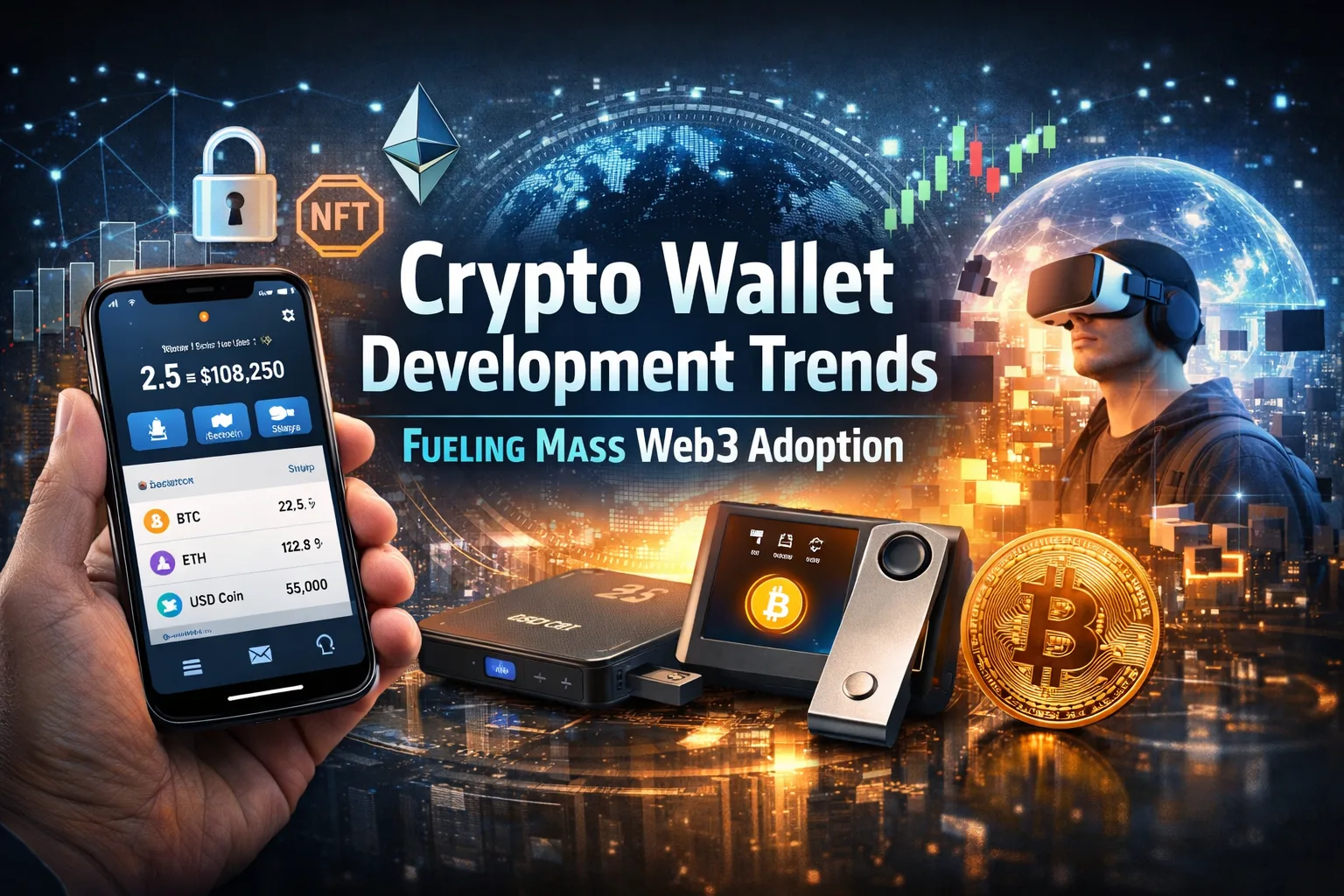
The growth of Web3 is no longer confined to cryptocurrency enthusiasts and blockchain developers. As decentralized technologies continue moving toward mainstream adoption, crypto wallets have emerged as one of the most critical infrastructure layers supporting this transition. They serve as the primary gateway through which users interact with decentralized applications (dApps), digital assets, tokenized ecosystems, decentralized finance (DeFi) platforms, and emerging digital identity frameworks.
While blockchain networks often receive attention for their scalability and consensus innovations, the user experience offered by wallets plays an equally important role in determining adoption rates. The next phase of Web3 growth will largely depend on how effectively wallets can simplify complex blockchain interactions while maintaining security, interoperability, and user ownership.
Several technological trends are reshaping the crypto wallet landscape and accelerating broader participation in decentralized ecosystems.
The Shift Toward User-Centric Wallet Experiences
For years, onboarding into blockchain ecosystems required users to understand private keys, seed phrases, gas fees, and network configurations. These technical barriers discouraged many potential users from exploring decentralized applications.
Modern wallet architectures are increasingly focused on abstraction and usability.
Developers are designing interfaces that resemble traditional fintech applications while preserving the principles of self-custody and decentralization. Features such as guided onboarding, transaction previews, human-readable wallet addresses, and simplified asset management are making blockchain interactions significantly more intuitive.
This evolution reflects a broader industry recognition that mass adoption cannot occur unless blockchain technology becomes invisible to end users. Rather than forcing individuals to learn the underlying mechanics of distributed systems, wallets are being engineered to provide seamless experiences comparable to conventional digital banking platforms.
As a result, wallet usability has become a major competitive differentiator across the Web3 ecosystem.
Account Abstraction Is Redefining Wallet Functionality
One of the most transformative developments in wallet technology is account abstraction. Traditionally, blockchain wallets have operated under rigid account structures that require users to manage cryptographic keys directly. Account abstraction introduces programmable wallet logic, enabling more flexible security and recovery mechanisms.
Key capabilities enabled through account abstraction include:
- Social recovery mechanisms that eliminate sole dependence on seed phrases.
- Custom transaction validation rules based on user preferences.
- Multi-factor authentication integration.
- Automated recurring transactions and spending limits.
- Gas fee sponsorship models that reduce onboarding friction.
These capabilities significantly improve user accessibility without compromising decentralization. As account abstraction frameworks mature across multiple blockchain ecosystems, they are expected to become foundational components of future wallet infrastructure.
By reducing operational complexity, programmable accounts help bridge the gap between traditional digital experiences and decentralized ownership models.
Multi-Chain Interoperability Is Becoming Essential
The early blockchain landscape was dominated by isolated ecosystems. Today, users frequently interact across multiple networks including Ethereum-compatible chains, Layer-2 solutions, application-specific blockchains, and cross-chain protocols.
This fragmentation has created demand for wallets capable of supporting seamless multi-chain experiences. Users increasingly expect to manage assets, identities, and transactions across diverse blockchain environments from a single interface.
Several trends are driving this shift:
- Unified portfolio visibility across multiple networks.
- Cross-chain asset transfers without external bridging complexity.
- Integrated support for Layer-2 scaling solutions.
- Consolidated transaction history and analytics.
- Network-agnostic decentralized application connectivity.
These capabilities are transforming wallets from simple asset storage tools into comprehensive digital operating systems for Web3 participation.
The increasing focus on interoperability is also influencing innovation in blockchain wallet development, as organizations seek solutions capable of supporting diverse blockchain ecosystems without sacrificing performance or security.
As blockchain adoption expands into enterprise environments, interoperability will become a prerequisite rather than a premium feature.
Enhanced Security Through Advanced Cryptographic Models
Security remains one of the most significant concerns limiting broader Web3 adoption. High-profile exploits, phishing attacks, and compromised credentials continue to generate hesitation among new users entering decentralized ecosystems.
To address these concerns, wallet developers are implementing increasingly sophisticated security architectures. The objective is to strengthen protection while minimizing user friction.
Modern security innovations include biometric authentication, threshold signature schemes, hardware-backed key storage, secure enclave integration, behavioral anomaly detection, and real-time transaction risk analysis.
Additionally, emerging cryptographic techniques are enabling distributed key management systems that eliminate single points of failure. Rather than storing sensitive credentials in one location, cryptographic authority can be distributed across multiple devices or trusted entities.
This layered approach improves resilience against attacks while preserving the user-controlled ownership model that defines Web3.
As security standards continue to evolve, confidence in decentralized technologies is expected to increase among both individual users and enterprise stakeholders.
Wallets Are Expanding Beyond Asset Management
The role of crypto wallets is rapidly expanding beyond simple cryptocurrency storage. They are increasingly becoming digital identity hubs that facilitate interactions across multiple decentralized services.
Emerging wallet functionalities now include credential verification, decentralized identity management, tokenized membership access, governance participation, reputation systems, and secure authentication for Web3 platforms.
This transformation aligns with the broader vision of user-owned digital ecosystems where individuals maintain control over both their assets and personal data.
Wallets are also becoming central to industries exploring blockchain integration, including finance, gaming, healthcare, supply chain management, and digital commerce. As tokenization initiatives continue to expand, wallets will serve as the interface through which users access and manage a growing range of digital assets and services.
The convergence of identity, ownership, authentication, and value transfer within a single application creates a powerful foundation for mainstream Web3 participation.
Conclusion
Crypto wallets are evolving from basic transaction tools into sophisticated gateways that power the next generation of decentralized experiences. Innovations such as account abstraction, multi-chain interoperability, enhanced security frameworks, and identity-centric functionality are removing many of the barriers that previously limited blockchain adoption.
As the Web3 ecosystem matures, wallet technology will play a defining role in shaping how users interact with decentralized networks. Organizations that prioritize usability, security, and interoperability will be better positioned to support the growing demand for seamless digital ownership experiences.
The future of Web3 adoption depends not only on the capabilities of blockchain networks but also on the quality of the wallet experiences that connect people to them. As these technologies continue to advance, crypto wallets are poised to become one of the strongest catalysts driving mass participation in the decentralized economy.