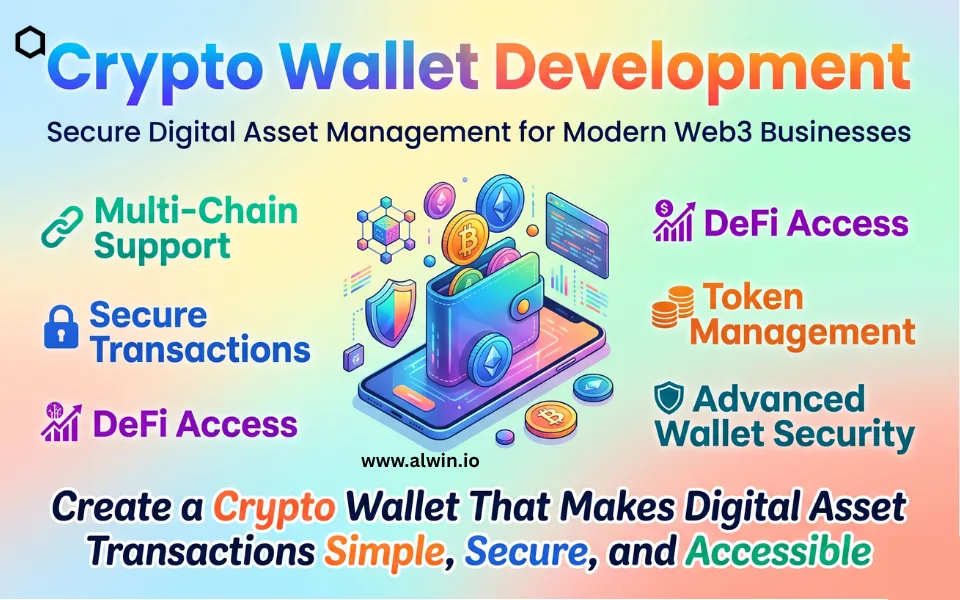
Crypto wallets are moving beyond basic digital asset storage. Users now expect faster transactions, stronger security, easier authentication, stablecoin payments, and access to multiple blockchain networks from a simple interface.
Technologies such as AI agents, MPC, smart accounts, passkeys, cross-chain infrastructure, and account abstraction are changing how wallets operate. These technologies can reduce user friction while giving businesses more options for building secure and flexible digital asset platforms.
This shift is creating new opportunities for businesses that want to offer modern financial services through blockchain technology. This blog covers the major trends shaping crypto wallet development and explains how each technology can improve the way users manage digital assets.
AI Agent Integration for Smarter Crypto Wallets
AI agents can make crypto wallets more intelligent by assisting users with routine activities, transaction analysis, and digital asset management.
Instead of manually checking every transaction detail, users can receive AI-assisted information before approving an action. An AI agent can analyze transaction data, identify unusual activity, monitor selected assets, and provide useful recommendations based on predefined user preferences.
Important AI wallet capabilities include:
- Transaction analysis before approval
- Portfolio monitoring and asset updates
- Suspicious activity detection
- Automated alerts and notifications
- Natural language wallet interactions
- Support for predefined transaction conditions
For example, a user could ask a wallet to review recent activity or check whether a transaction meets a specific condition. The wallet can then provide information while keeping final transaction approval under the user's control.
This combination of blockchain infrastructure and AI assistance can make complex wallet functions easier to understand and use.
MPC and Smart Account Security for Digital Assets
Security is one of the most important priorities in modern digital asset infrastructure. Traditional wallets often depend heavily on private keys and recovery phrases, but newer approaches provide additional layers of protection.
MPC, or Multi-Party Computation, can divide cryptographic control across multiple parties or locations instead of keeping a complete private key in one place. This can reduce the risks associated with a single compromised key location.
Smart accounts introduce another layer of flexibility by allowing programmable rules around wallet activity.
These rules can include:
- Spending limits
- Transaction approval requirements
- Application permissions
- Recovery conditions
- Multiple authorization methods
- Customized transaction policies
MPC and smart accounts can therefore address different parts of wallet security. MPC focuses on protecting cryptographic control, while smart accounts provide programmable account behavior.
Together, they can create a stronger security architecture for wallets handling valuable digital assets.
Passkey Authentication in Modern Crypto Wallet Development
Wallet authentication needs to be secure without creating unnecessary complexity for users. Passkeys provide an alternative to traditional password-based access by using credentials protected by the user's device.
A simplified passkey wallet experience can work like this:
Open Wallet → Verify With Device → Authenticate With Passkey → Access Account → Approve Transaction
Users may authenticate through a fingerprint, facial recognition, device PIN, or another supported security method. This creates a familiar experience for people who already use passkeys across other digital services.
Passkeys can also reduce dependence on traditional passwords, which are often targeted through phishing and credential theft.
For modern crypto wallet development, passkeys can work alongside other security mechanisms rather than replacing transaction-level controls. A wallet can authenticate the user first and then apply additional authorization rules before a transaction is signed.
This approach can make wallet access simpler while maintaining appropriate protection for digital assets.
Stablecoin Payments and Everyday Digital Transactions
Stablecoins are expanding the role of crypto wallets from asset storage to everyday digital transactions. Because stablecoins are designed to maintain a relatively stable value, they can be useful for payment-focused applications.
Consider a typical stablecoin payment experience:
- A user selects a supported stablecoin.
- The wallet identifies the available blockchain network.
- The user enters the recipient's wallet address.
- The wallet displays the transaction amount and estimated network fee.
- The user reviews and authorizes the transaction.
- The blockchain confirms the transfer.
- The wallet updates the transaction history.
This process can support several use cases, including peer-to-peer transfers, merchant payments, international transactions, and business settlements.
For businesses, stablecoin functionality can also create opportunities to connect wallet infrastructure with payment services. Features such as QR payments, payment requests, transaction notifications, address management, and transaction history can make stablecoin payments easier for everyday users.
Cross-Chain and Account Abstraction for Crypto Wallets
Users increasingly interact with multiple blockchain networks, but each network can introduce different transaction requirements, fees, assets, and application environments.
Cross-chain wallet functionality can bring these experiences into a more unified interface. Users can manage supported assets across different networks without relying on separate wallet applications for every ecosystem.
Account abstraction adds another layer of flexibility by making wallet behavior programmable.
For example, account abstraction can support:
- Sponsored transaction fees
- Transaction batching
- Custom spending limits
- Flexible authorization rules
- Social or alternative recovery methods
- Programmable application permissions
Imagine a user interacting with a decentralized application. Instead of manually handling several technical steps, the wallet can apply predefined rules and present a simpler transaction experience.
This can reduce the technical complexity users face while giving developers more control over wallet behavior.
The combination of cross-chain support and account abstraction can therefore help create wallets that are easier to use across multiple blockchain environments.
Future Trends Shaping Crypto Wallet Development
The next generation of wallets is likely to focus on four major areas: intelligence, security, interoperability, and automation.
AI-Powered Wallet Assistance
AI agents may become more deeply integrated into wallet interfaces, helping users analyze transactions, monitor assets, and manage routine activities.
Programmable Security
Smart accounts and policy-based authorization can give users greater control over how transactions are approved and how applications interact with their wallets.
Mainstream Authentication
Passkeys can make wallet access more familiar to users who are not comfortable managing traditional passwords or complex authentication methods.
Digital Payments
Stablecoins can expand wallet functionality across payments, transfers, settlements, and other financial activities.
Multi-Chain Access
Wallets are likely to provide simpler access to multiple blockchain networks as users interact with increasingly diverse digital asset ecosystems.
The broader trend is toward wallets that act as programmable financial interfaces rather than simple storage applications.
Final Thoughts
Crypto wallets are becoming more intelligent, flexible, and focused on practical digital asset management. AI agents can simplify user interactions, MPC can strengthen cryptographic security, smart accounts can introduce programmable controls, and passkeys can make authentication easier.
Stablecoins can expand wallets into payment environments, while cross-chain technology and account abstraction can reduce the complexity of interacting with multiple blockchain networks.
Businesses planning a modern wallet should consider security architecture, supported networks, authentication, asset management, transaction logic, and user experience as connected parts of the platform.
A capable crypto wallet development company can help businesses select suitable technologies and design wallet infrastructure around their specific digital asset requirements. As these technologies continue to mature, crypto wallet development will play an increasingly important role in making blockchain-based financial services easier, safer, and more practical for everyday users.