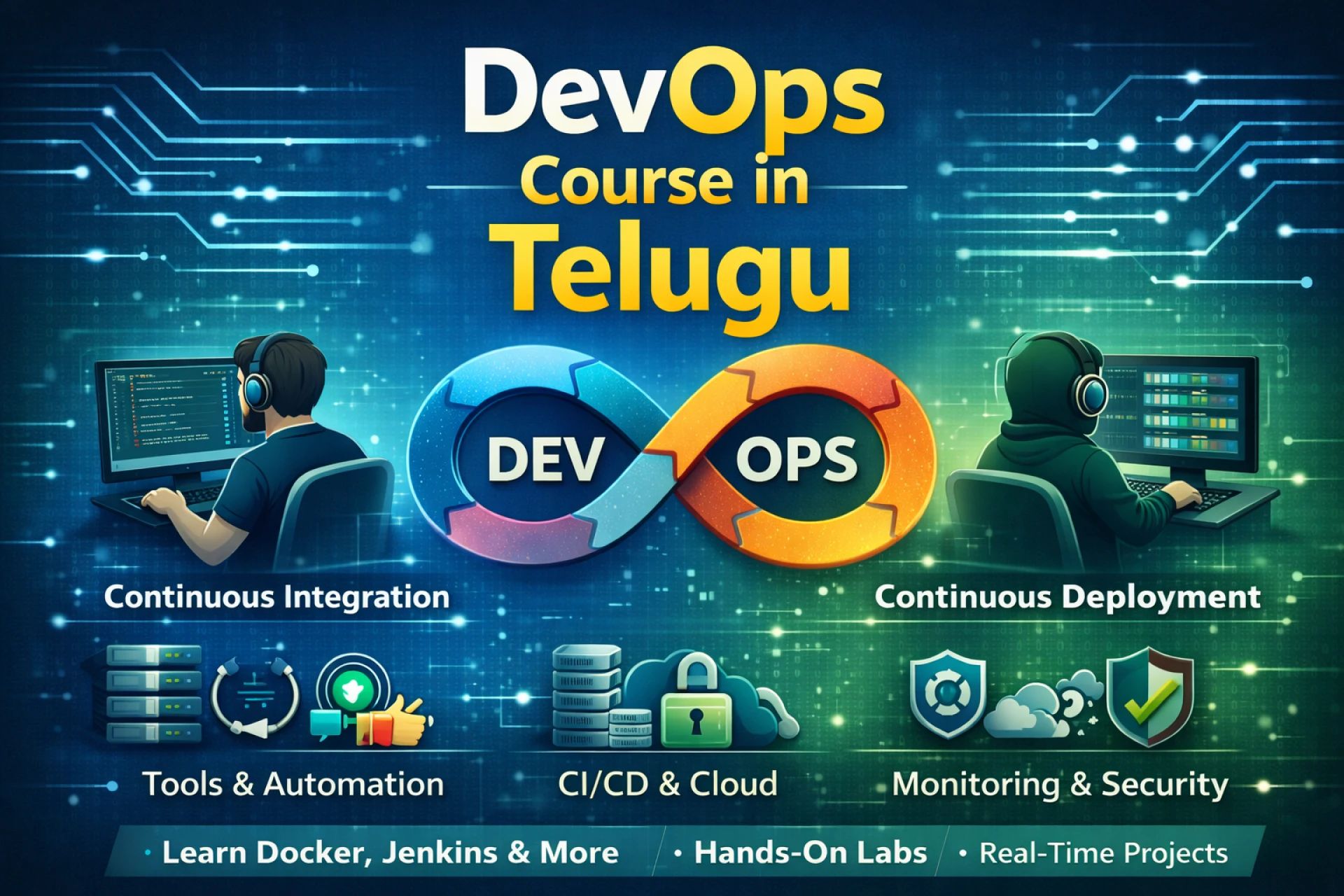
In today’s cloud-driven world, efficiently managing infrastructure has become a critical component of modern DevOps practices. Organizations are increasingly using Infrastructure as Code (IaC) tools to automate the provisioning and management of cloud resources. IaC enables developers and DevOps engineers to define infrastructure using code, thereby improving consistency, scalability, and automation. One of the modern tools gaining popularity in the DevOps ecosystem is Crossplane.
For students and IT professionals who want to build a career in cloud computing and DevOps, learning Crossplane is highly valuable. A Crossplane IaC DevOps Course in Telugu helps learners understand how to manage cloud infrastructure using Kubernetes-based infrastructure automation clearly and practically.
What is Infrastructure as Code (IaC)?
Infrastructure as Code (IaC) is a method of managing and provisioning computing infrastructure using machine-readable configuration files instead of manual processes. Instead of manually creating servers, databases, and networks through cloud dashboards, engineers can define infrastructure using code.
This approach helps automate infrastructure management and ensures consistency across development, testing, and production environments.
Some key benefits of Infrastructure as Code include:
Automated infrastructure provisioning
Consistent environments across teams
Faster infrastructure deployment
Reduced manual configuration errors
Better version control for infrastructure
IaC has become a standard practice in modern DevOps workflows.
Introduction to Crossplane
Crossplane is an open-source Kubernetes add-on that allows DevOps teams to manage cloud infrastructure directly through Kubernetes. It extends Kubernetes functionality so that engineers can provision and manage cloud resources such as databases, storage systems, and virtual machines using Kubernetes APIs.
Unlike traditional IaC tools that operate separately from Kubernetes, Crossplane integrates directly into the Kubernetes control plane. This means that infrastructure and applications can be managed from the same platform.
Crossplane enables teams to define infrastructure resources as Kubernetes objects. These resources can then be deployed and managed just like other Kubernetes resources.
Key Features of Crossplane
Crossplane provides several features that make it a powerful tool for managing cloud infrastructure.
One important feature is Kubernetes-native infrastructure management. This means that infrastructure resources are defined and controlled using Kubernetes APIs and configuration files.
Another key feature is multi-cloud support. Crossplane can manage resources across different cloud providers such as AWS, Microsoft Azure, and Google Cloud.
Crossplane also supports declarative infrastructure management, where users define the desired infrastructure state, and the system automatically ensures that the infrastructure matches that state.
Some major features include:
Kubernetes-based infrastructure management
Multi-cloud resource provisioning
Reusable infrastructure configurations
Integration with GitOps workflows
Automated infrastructure lifecycle management
These features help organizations simplify infrastructure automation in cloud-native environments.
How Crossplane Works
Crossplane works by extending Kubernetes with custom resource definitions (CRDs). These CRDs allow users to define infrastructure resources in Kubernetes configuration files.
For example, a DevOps engineer can create a YAML configuration that defines a database or storage service in a cloud provider. Crossplane reads this configuration and communicates with the cloud provider’s API to create the resource automatically.
Crossplane also allows users to create composite resources, which are reusable infrastructure templates. These templates make it easier to standardize infrastructure across multiple projects and teams.
This approach allows organizations to manage both applications and infrastructure from a single Kubernetes platform.
Crossplane vs Traditional IaC Tools
Traditional IaC tools like Terraform or CloudFormation manage infrastructure separately from application platforms. DevOps teams often use these tools alongside Kubernetes, which creates additional complexity.
Crossplane solves this problem by integrating infrastructure management directly into Kubernetes. This means DevOps teams can manage infrastructure and application workloads from the same environment.
Another advantage of Crossplane is its strong support for GitOps workflows, where infrastructure configurations are stored in Git repositories and automatically deployed through automation pipelines.
Because of these advantages, Crossplane is becoming increasingly popular in modern cloud-native DevOps environments.
Importance of Crossplane in DevOps
DevOps focuses on automation, collaboration, and faster delivery of software applications. Crossplane supports these goals by simplifying infrastructure management and improving automation.
Using Crossplane, DevOps teams can:
Automate cloud infrastructure provisioning
Standardize infrastructure across teams
Integrate infrastructure management with Kubernetes
Improve scalability and reliability
Enable GitOps-based infrastructure automation
These capabilities help organizations build more efficient and scalable cloud infrastructures.
Why Learn Crossplane in Telugu?
Many beginners find DevOps infrastructure tools difficult to understand when they are explained only in English. Learning Crossplane concepts in Telugu can make it easier for students to grasp the technical details.
A DevOps course in Telugu can explain Crossplane architecture, Kubernetes integration, and infrastructure automation step-by-step with practical examples.
A Crossplane IaC DevOps course in Telugu usually includes topics such as:
DevOps fundamentals and cloud computing basics
Introduction to Infrastructure as Code
Kubernetes architecture and configuration
Installing and configuring Crossplane
Creating and managing infrastructure resources
Implementing multi-cloud infrastructure management
Integrating Crossplane with GitOps workflows
Real-time DevOps infrastructure projects
Learning these topics in Telugu helps students understand complex infrastructure concepts more easily.
What You Will Learn in the Course
A well-designed Crossplane DevOps course includes both theoretical concepts and hands-on training.
The course typically begins with DevOps fundamentals, where learners understand automation, CI/CD pipelines, and infrastructure management.
Next, students learn about Kubernetes basics, which are essential for understanding how Crossplane works within Kubernetes clusters.
After that, the course focuses on Crossplane architecture and configuration, where learners create infrastructure resources using Kubernetes YAML files.
Later modules introduce advanced infrastructure automation, including reusable templates and GitOps integration.
Finally, students work on real-world DevOps projects, where they deploy cloud infrastructure and applications using Crossplane.
These practical exercises help learners gain real industry experience.
Career Opportunities After Learning Crossplane
Infrastructure automation skills are highly demanded in the IT industry. Companies adopting cloud-native architectures require professionals who understand Kubernetes-based infrastructure management.
After completing a Crossplane IaC DevOps course, learners can explore several career opportunities such as:
DevOps Engineer
Cloud Engineer
Kubernetes Administrator
Platform Engineer
Site Reliability Engineer (SRE)
Professionals with expertise in Infrastructure as Code and cloud automation are highly valued in modern technology companies.
Conclusion
As organizations continue to adopt cloud-native technologies, managing infrastructure efficiently becomes increasingly important. Crossplane provides a powerful Kubernetes-native approach to Infrastructure as Code, allowing DevOps teams to manage cloud resources directly from Kubernetes.