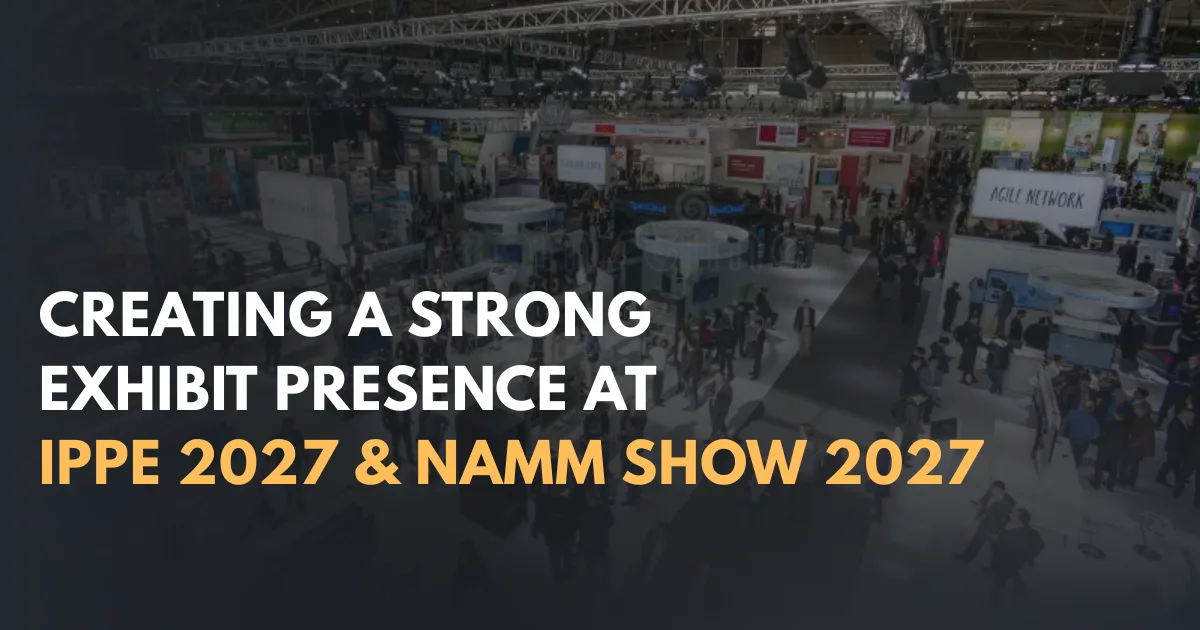
Trade shows give businesses an opportunity to introduce products, demonstrate solutions, meet industry professionals, and build valuable business relationships. However, standing out in a busy exhibition hall requires more than simply occupying floor space. The booth needs to communicate the company's message quickly while creating an environment that encourages visitors to stop, explore, and start conversations.
Two very different events, IPPE 2027 and NAMM Show 2027, demonstrate why exhibitors should consider the audience, products, and objectives of each event when planning their exhibit strategy.
Understanding the Audience Before Designing the Booth
Every trade show attracts a different audience. IPPE brings together professionals from the poultry, meat, feed, and food-processing industries, while NAMM attracts professionals from the music products and entertainment technology sectors.
Because visitor expectations vary, exhibitors should begin their booth planning by understanding who they want to reach. A booth designed around technical demonstrations may work well for an industrial audience, while a music-focused exhibit may benefit more from interactive product experiences.
This audience-first approach can influence everything from graphics and furniture to demonstrations and meeting spaces.
Building an Effective Exhibit for IPPE 2027
For companies exhibiting at IPPE, functionality is especially important. Visitors may want to learn about processing equipment, technology, ingredients, packaging solutions, or other specialized products. The booth therefore needs to provide enough space for product information and demonstrations without becoming difficult to navigate.
A trade show booth builder for IPPE 2027 can help exhibitors plan a layout around these requirements. Demonstration counters, product displays, storage areas, reception points, and meeting spaces can be positioned strategically to support different visitor interactions.
Large graphics can communicate the primary message from a distance, while detailed information can be provided through screens, product literature, or one-on-one discussions.
The goal is not to display everything at once. Instead, the booth should guide visitors toward the information that is most relevant to them.
Creating an Interactive Experience at NAMM Show 2027
The requirements can be very different at NAMM. Products often benefit from interaction, demonstrations, and hands-on experiences. Visitors may want to see or hear a product in action before deciding whether to learn more.
Companies preparing for the event can consider trade show booth rental for NAMM Show 2027 when they need a flexible exhibit environment that can accommodate product displays, demonstration zones, branded graphics, and visitor engagement areas.
A well-planned rental exhibit can also help companies adjust their presentation strategy according to the available booth space and event objectives.
Interactive elements should remain easy to access. If a demonstration area becomes congested, visitors may simply move on. Creating sufficient circulation space can therefore be just as important as the technology or products being demonstrated.
Considering the Exhibition Location
Location is another factor that should be considered during the planning process. Exhibitors attending IPPE can evaluate Booth Rental in Atlanta when looking for a flexible exhibit approach. A rental display can provide a professional environment while giving companies the ability to adapt their exhibit strategy for future events.
For companies exhibiting at NAMM, Trade Show Booth Design in Anaheim should take into account the booth footprint, venue requirements, visitor movement, branding, and product presentation.
Local planning also involves practical considerations such as shipping, installation schedules, storage, electrical requirements, and dismantling. Addressing these details early can help reduce unexpected problems during the event.
Making the Booth Easy to Navigate
A visually impressive booth can still underperform if visitors cannot easily understand where to go. Exhibitors should consider how attendees will enter, move through, and leave the space.
An open layout can make the booth more approachable. Clearly defined areas can then help organize different activities. For example, one section can be dedicated to product demonstrations, another to informal conversations, and another to private meetings.
This approach can be especially useful when multiple representatives are speaking with visitors at the same time.
Using Graphics Strategically
Graphics should support the overall booth message rather than compete with it. A visitor walking through a busy exhibition hall may only have a few seconds to decide whether a booth is relevant.
A strong headline, recognizable brand identity, concise messaging, and high-quality product imagery can help communicate the purpose of the exhibit quickly.
Additional technical information can be placed on digital screens or secondary graphics for visitors who want to explore the product in greater detail.
This balance between simple messaging and deeper information creates a more comfortable experience for different types of attendees.
Planning for Flexibility
Companies that participate in multiple exhibitions may benefit from flexible custom trade show exhibits that can evolve with their marketing requirements.
Booth components can be designed around reusable structures, graphics, counters, display systems, meeting areas, and technology. This allows exhibitors to make adjustments for different booth sizes and audiences instead of developing an entirely new concept for every event.
Flexibility can also make it easier to introduce new products or change messaging as the company's marketing priorities develop.
Final Thoughts
Successful trade show exhibiting starts with understanding the audience and creating a booth around its expectations. IPPE 2027 and NAMM Show 2027 serve as good examples of how different industries can require very different approaches to exhibit planning.
Whether the focus is technical equipment, food-processing solutions, musical products, or entertainment technology, the fundamentals remain similar: clear messaging, practical layouts, engaging demonstrations, comfortable visitor flow, and careful preparation.
By combining thoughtful planning with effective trade show display solutions, exhibitors can create an environment that attracts attention while making it easier for visitors to understand their products and begin meaningful conversations.