
Introduction
The rise of digital broadcasting has revolutionized how audio content is delivered and consumed. Businesses, content creators, educational institutions, and media organizations can now create online radio station platforms that reach global audiences without the limitations of traditional broadcasting systems. Internet radio has become a powerful medium for sharing music, talk shows, podcasts, news updates, and educational content across multiple devices and regions.
As online radio grows in popularity, broadcasters face increasing competition for audience attention. Success depends not only on creating compelling content but also on delivering a smooth and organized listening experience. One of the most effective tools for achieving this goal is an EPG TV guide.
Although originally developed for television broadcasting, EPG TV guide technology has evolved to support digital streaming platforms, helping broadcasters organize schedules, improve content discovery, and enhance audience engagement. For online radio stations, an effective EPG TV guide can significantly improve operational efficiency while making programming easier for listeners to follow.
Why Businesses Create Online Radio Stations
The ability to create online radio station services has become more accessible thanks to advancements in cloud technology and streaming infrastructure. Organizations are increasingly investing in internet radio because it offers flexibility, scalability, and direct audience engagement.
Global Audience Reach
Unlike traditional radio stations that rely on local transmission coverage, online radio can be accessed from anywhere with an internet connection. This enables broadcasters to reach international audiences and develop niche listener communities.
Cost-Effective Operations
Internet radio broadcasting eliminates the need for expensive transmission towers and broadcasting infrastructure. Cloud-based solutions further reduce operational complexity and costs.
Flexible Content Distribution
Online radio stations can broadcast a wide range of content formats, including:
- Music programming
- Podcasts
- Live interviews
- Talk shows
- Educational content
- Sports coverage
- Industry discussions
This flexibility allows broadcasters to tailor programming to specific audience interests.
What Is an EPG TV Guide?
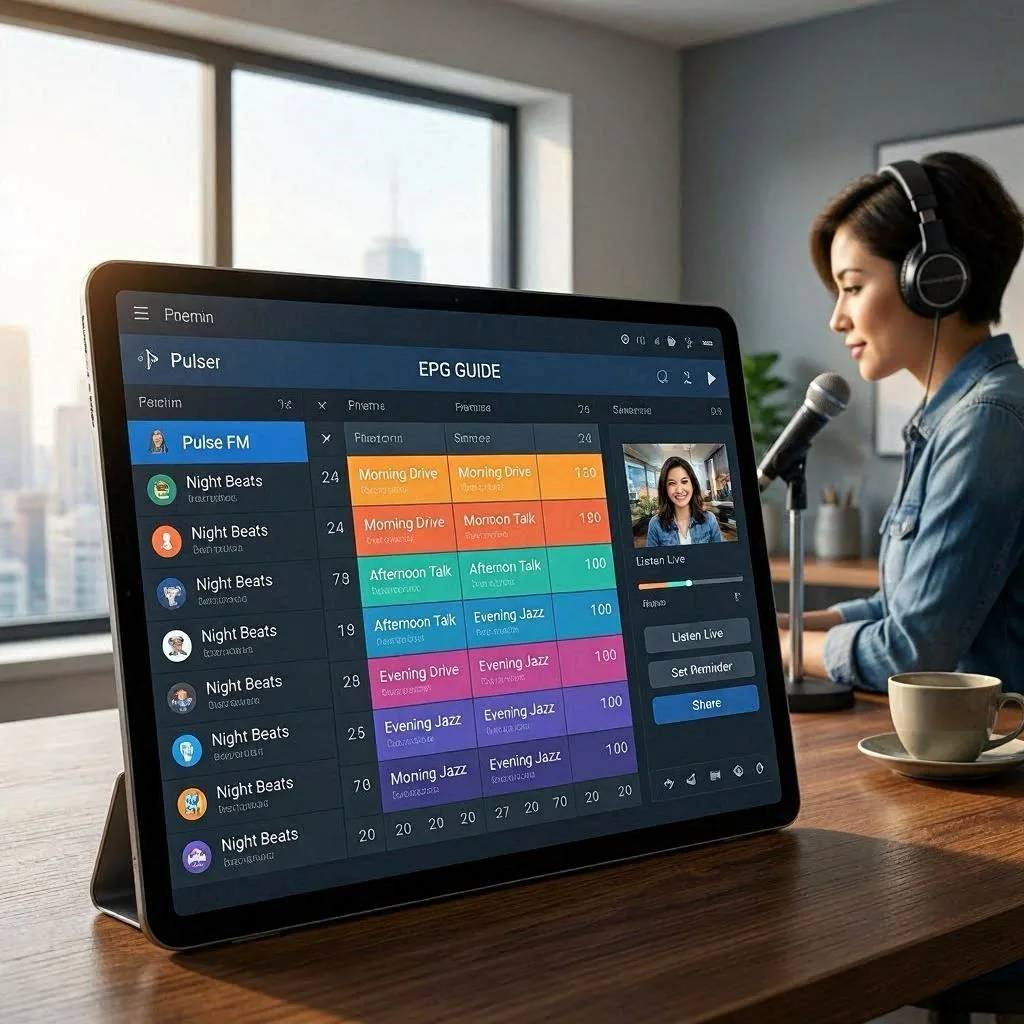
An EPG TV guide, or Electronic Program Guide, is a digital scheduling system that displays information about current and upcoming programming. It provides audiences with a structured overview of available content and helps them navigate schedules more efficiently.
While EPG systems are commonly associated with television broadcasting, they have become increasingly valuable for digital radio and streaming platforms. An EPG TV guide serves as a centralized source of scheduling information, making it easier for users to discover and follow content.
Core Functions of an EPG TV Guide
Modern EPG systems offer several important capabilities.
Program ListingsListeners can view current broadcasts as well as future programming schedules.
Content InformationThe guide provides descriptions, show details, and relevant metadata that help audiences understand available content.
Schedule NavigationUsers can browse programming by date, time, category, or content type.
Real-Time UpdatesCloud-based EPG systems allow broadcasters to update schedules instantly when changes occur.
Why an EPG TV Guide Matters for Online Radio
When organizations create online radio station platforms, maintaining audience engagement becomes a top priority. An EPG TV guide helps achieve this by improving content accessibility and creating a more organized user experience.
Improved Content Discovery
Many listeners may not be aware of all the programs available on a station. An EPG TV guide makes it easier to discover new shows and upcoming broadcasts.
This increased visibility helps maximize content consumption across the station.
Better Audience Retention
Listeners are more likely to return when they know when their favorite programs are scheduled to air.
A clear and accessible schedule encourages repeat engagement and strengthens listener loyalty.
Enhanced Professionalism
A well-designed EPG TV guide demonstrates that a broadcaster is organized and committed to delivering a high-quality experience.
Professional presentation can improve credibility among audiences, advertisers, and sponsors.
Simplified Listener Planning
Many listeners prefer planning their listening sessions in advance. An EPG guide allows them to identify programs that match their interests and schedule accordingly.
How EPG TV Guides Support Seamless Scheduling
One of the greatest advantages of an EPG TV guide is its ability to support seamless scheduling and content management.
Centralized Schedule Management
Broadcasters can manage all programming information from a single interface, reducing administrative complexity.
Automated Updates
Modern systems synchronize programming schedules automatically, ensuring listeners always have access to accurate information.
Consistent Programming Presentation
A structured schedule helps create a professional broadcasting environment and ensures content is presented consistently.
Reduced Scheduling Errors
Automation minimizes the risk of manual scheduling mistakes that could impact audience experience.
Best Practices for Using an EPG TV Guide
To maximize the benefits of an EPG TV guide, broadcasters should follow several important practices.
Maintain Accurate Program Information
Listeners depend on reliable scheduling information. Regular updates help build trust and improve user satisfaction.
Include Detailed Show Descriptions
Program descriptions provide context and encourage audiences to explore new content.
Highlight Featured Programs
Special events, interviews, and premium broadcasts should be prominently displayed within the guide.
Optimize for Mobile Devices
Since many listeners access content through smartphones and tablets, mobile-friendly EPG interfaces are essential.
Future of EPG Technology in Online Radio
As digital broadcasting technologies continue to evolve, EPG systems are becoming increasingly intelligent and personalized. Artificial intelligence and audience analytics are enabling broadcasters to deliver customized recommendations based on listener behavior and preferences.
Future EPG TV guide solutions may offer interactive features, personalized schedules, and advanced search capabilities that further improve content discovery and engagement.
These innovations will help broadcasters strengthen audience relationships while simplifying content management processes.
Conclusion
The decision to create online radio station services presents significant opportunities for organizations seeking to connect with audiences through digital audio broadcasting. However, success requires more than great content. Broadcasters must also ensure that listeners can easily discover, access, and follow programming.
An effective EPG TV guide enhances the listener experience by providing clear scheduling information, improving content visibility, and supporting seamless scheduling operations. As online radio continues to grow, EPG technology will remain an essential tool for broadcasters looking to improve engagement, strengthen professionalism, and achieve long-term success in the competitive digital media landscape.