Introduction
The growing demand for sustainable agriculture has created new opportunities for livestock waste recycling. Cattle farms produce large quantities of manure every day, and managing this material efficiently is becoming increasingly important. Instead of treating cow manure simply as waste, farmers and fertilizer manufacturers can process it into valuable organic fertilizer.
Cow manure contains organic matter and naturally occurring plant nutrients. However, fresh manure is wet, bulky, unstable, and difficult to transport or apply efficiently. A professional processing system can transform it into a stable, uniform, and commercially attractive fertilizer product through fermentation, crushing, mixing, pelleting, drying, cooling, screening, and packaging.
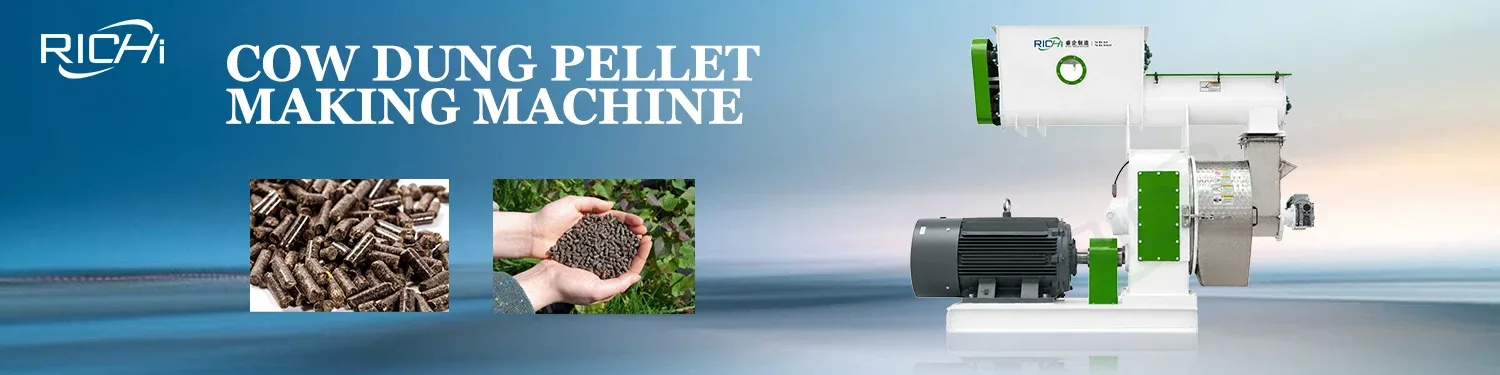
At the center of the pelletizing stage is the cow manure pelleting machine, which compresses prepared manure-based fertilizer materials into dense pellets with a controlled size and shape. Pelletized fertilizer is easier to store, transport, package, and apply than loose manure.
This article explains the complete cow manure fertilizer production process, the role of pelleting equipment, raw material preparation, equipment selection, quality control, and the key considerations for establishing a commercial organic fertilizer plant.
Why Process Cow Manure Into Organic Fertilizer?
Cow manure has traditionally been returned directly to farmland or composted before agricultural use. While these approaches remain practical for some farms, pelletizing offers additional advantages for commercial fertilizer production.
Fresh manure can be difficult to handle because of its high moisture content and irregular physical structure. It can also require considerable storage space and generate odors during uncontrolled decomposition.
Processing manure into pellets creates a more standardized product.
The main advantages include:
- Recycling livestock waste
- Recovering valuable organic resources
- Reducing manure storage pressure
- Improving transportation efficiency
- Increasing bulk density
- Producing uniform fertilizer particles
- Simplifying packaging
- Improving application convenience
- Creating additional commercial value
For cattle farms located near agricultural areas, manure pellet production can connect livestock farming with crop production through a circular resource utilization system.
Cow Manure as an Organic Fertilizer Raw Material
Cow manure contains organic matter and nutrients that can contribute to soil fertility management.
However, its composition is not fixed. It can vary according to:
- Cattle diet
- Feed formulation
- Animal age
- Bedding materials
- Water consumption
- Manure collection method
- Storage conditions
- Fermentation conditions
Therefore, raw material analysis should be conducted before designing a fertilizer production line.
Important parameters may include:
- Moisture content
- Organic matter
- Nitrogen
- Phosphorus
- Potassium
- pH
- Particle size
- Foreign materials
These data can help determine the appropriate processing method and fertilizer formula.
Challenges of Fresh Cow Manure
Although cow manure is a valuable organic resource, fresh manure is not an ideal direct feedstock for pellet production.
High Moisture Content
Fresh manure may contain a large amount of water. Excessive moisture makes transportation expensive and can interfere with mechanical pellet formation.
Strong Odor
Fresh manure can generate unpleasant odors during storage and decomposition.
Biological Instability
The organic matter in fresh manure continues to decompose. Controlled fermentation is therefore necessary before producing a stable commercial fertilizer.
Irregular Particle Size
Fresh manure can contain lumps, straw, bedding, and other materials of different sizes.
Difficult Storage
Loose manure has a low bulk density and requires relatively large storage areas.
These characteristics make pretreatment essential.
Complete Cow Manure Fertilizer Production Process
A typical production line can follow this process:
Cow Manure Collection → Fermentation → Crushing → Mixing → Pelleting → Drying → Cooling → Screening → Packaging
Depending on the raw materials and final product, additional equipment may be added.
The purpose of each stage is described below.
1. Cow Manure Collection
The production process begins with the collection of cow manure from cattle farms.
Potential sources include:
- Dairy farms
- Beef cattle farms
- Feedlots
- Cattle breeding facilities
- Livestock cooperatives
The collection system should minimize contamination with soil, stones, plastic, metal, and other unwanted materials.
If the manure is stored before processing, a covered storage area is preferable. Rainwater can significantly increase moisture content and subsequently increase drying costs.
Efficient collection and transportation are particularly important for large commercial plants because manure is usually generated continuously.
2. Fermentation of Cow Manure
Fermentation is a fundamental stage of cow manure fertilizer production.
During controlled biological decomposition, microorganisms break down easily degradable organic compounds and gradually stabilize the manure.
Proper fermentation can help:
- Reduce unpleasant odors
- Stabilize organic matter
- Improve material consistency
- Reduce pathogen risks
- Prepare manure for mechanical processing
A fermentation system may use compost turners, fermentation tanks, composting halls, or other suitable equipment depending on the project scale.
Moisture Management
Microbial activity requires suitable moisture.
If the material is too wet, oxygen movement can be restricted. If it is too dry, microbial activity may become insufficient.
Therefore, moisture should be monitored throughout fermentation.
Temperature Monitoring
Microbial activity generates heat. Monitoring temperature can help operators understand the fermentation process and determine when the material is sufficiently stabilized.
Aeration
Aerobic fermentation requires oxygen. Turning the material periodically can improve aeration and distribute moisture and heat more evenly.
3. Crushing Fermented Cow Manure
After fermentation, the manure may still contain large lumps.
A crusher breaks these lumps into smaller particles and creates a more uniform material.
Crushing improves:
- Material uniformity
- Mixing efficiency
- Feeding performance
- Pelleting stability
- Final pellet appearance
If the manure contains straw or bedding, the crushing system should be selected according to the actual material characteristics.
4. Mixing and Fertilizer Formula Preparation
Cow manure can be used as the main raw material, but other ingredients may be added to create different fertilizer products.
Possible materials include:
- Compost
- Crop residues
- Straw
- Sawdust
- Grass
- Peat or other organic materials
- Mineral fertilizer ingredients
- Microbial preparations
A mixer combines the ingredients and distributes them evenly.
Uniform mixing is essential when producing commercial fertilizer because every pellet should have relatively consistent composition.
The formula should be determined according to raw material testing, crop requirements, soil conditions, and applicable fertilizer standards.
5. Cow Manure Pelleting
After fermentation, crushing, and mixing, the prepared material enters the pelleting stage.
The cow manure pelleting machine compresses the organic fertilizer mixture and forms it into pellets.
A typical process involves:
Feeding → Compression → Extrusion → Cutting
The prepared material enters the compression chamber. Mechanical pressure forces the material through holes in the die. Continuous material strands are formed and then cut into pellets.
The pellet diameter is determined mainly by the die specification, while pellet length can be adjusted through the cutting system.
Advantages of a Cow Manure Pelleting Machine
A professional pelleting system can significantly improve the physical characteristics of manure-based fertilizer.
Uniform Pellet Size
Pelleting produces fertilizer particles with a relatively consistent diameter and shape.
This gives the final product a more standardized appearance.
Higher Bulk Density
Loose manure occupies a large amount of space. Compression creates denser fertilizer pellets, which can improve storage and transportation efficiency.
Easier Handling
Pellets can be moved using conveyors, elevators, loaders, bags, and bulk handling systems.
Convenient Application
Uniform pellets can be applied more easily with suitable fertilizer spreading equipment.
Better Packaging
Pelletized fertilizer is well suited to automatic weighing and packaging systems.
Factors Affecting Pelleting Quality
Pellet quality depends on the characteristics of the feedstock and the operating conditions of the pelleting system.
Moisture Content
Moisture has a major influence on pellet formation.
If the material is excessively wet, pellets may become soft or unstable. If it is too dry, the material may not bind effectively.
The appropriate moisture range depends on the raw material and equipment.
Particle Size
A relatively uniform particle size helps improve compression and pellet formation.
Material Composition
Different organic materials have different natural binding characteristics.
For example, adding fibrous materials can change the physical properties of the mixture.
Compression Conditions
Roller pressure, die configuration, feeding rate, and machine operating conditions influence pellet density and durability.
Die Condition
A worn die can reduce production efficiency and affect pellet quality. Regular inspection is therefore important.
Choosing the Right Pellet Diameter
Different fertilizer markets may require different pellet sizes.
The desired diameter should be selected based on:
- Target crops
- Application equipment
- Customer requirements
- Packaging method
- Production capacity
The die determines pellet diameter, while the cutter controls pellet length.
A manufacturer should confirm the target pellet specifications before selecting the pelleting equipment.
6. Drying the Fertilizer Pellets
Freshly formed fertilizer pellets may still contain excessive moisture.
A drying system can reduce moisture to a suitable level for storage and transportation.
The dryer should be selected based on:
- Initial moisture
- Final moisture requirement
- Production capacity
- Material properties
- Available heat source
- Energy cost
Drying is often one of the most energy-intensive stages in organic fertilizer production.
For this reason, efficient dryer design is important for controlling operating costs.
7. Cooling the Pellets
After drying, fertilizer pellets are usually warm.
A cooling machine reduces pellet temperature before screening and packaging.
Cooling helps:
- Stabilize pellet structure
- Improve storage performance
- Reduce condensation
- Improve packaging conditions
- Protect pellet quality
The cooling system should be matched to the output of the drying and pelleting equipment.
8. Screening the Finished Pellets
The cooled fertilizer pellets are then screened.
The screening system separates the product into different particle sizes.
It can remove:
- Fine powder
- Broken pellets
- Oversized pellets
- Other off-specification material
Qualified pellets are transferred to the packaging section.
Fine and irregular materials can often be returned to the production process, reducing waste.
9. Packaging Organic Fertilizer
After screening, qualified cow manure fertilizer pellets can be packaged.
Packaging options include:
Small Bags
Suitable for gardening, horticulture, retail sales, and small farms.
Medium Bags
Suitable for agricultural distributors and commercial farmers.
Large Bags
Suitable for large agricultural customers.
Bulk Packaging
Suitable for large fertilizer distributors and industrial agricultural operations.
Automatic packaging systems can improve weighing accuracy, production speed, and labor efficiency.
Equipment for a Cow Manure Fertilizer Production Line
A complete plant can include the following equipment:
EquipmentFunctionCow manure collection systemCollects and transfers manureCompost turnerSupports fermentation and aerationCrusherReduces particle sizeMixerBlends fertilizer materialsCow manure pelleting machineForms fertilizer pelletsDryerRemoves excess moistureCoolerReduces pellet temperatureScreenerSeparates qualified pelletsPackaging machineWeighs and packs fertilizerConveyorsConnect individual production stagesThe exact configuration should be customized according to production capacity and raw material characteristics.
How to Build a Cow Manure Fertilizer Plant
Establishing a commercial plant requires careful planning.
Evaluate Raw Material Availability
First, determine the amount of cow manure available every day and every year.
A stable supply is important for maintaining continuous production.
The plant can be supplied by a single large cattle farm or multiple nearby farms.
Determine Production Capacity
Production capacity should be based on both manure availability and fertilizer market demand.
For example, a small farm may need only a compact processing system, while a regional fertilizer manufacturer may require a much larger continuous production line.
Analyze the Target Market
Potential customers include:
- Grain farms
- Vegetable farms
- Fruit orchards
- Organic farms
- Nurseries
- Greenhouses
- Landscaping companies
- Fertilizer distributors
Customer requirements can influence pellet size, formula, packaging, and production capacity.
Cow Manure Fertilizer Formulation
Different fertilizer products can be developed from cow manure.
Pure Cow Manure Organic Fertilizer
Fermented cow manure serves as the primary ingredient.
This is suitable when the manure itself has the desired organic and nutrient characteristics.
Cow Manure and Crop Residue Fertilizer
Cow manure can be combined with straw, grass, or other agricultural residues.
This approach can help recycle multiple agricultural waste streams.
Cow Manure-Based Compound Organic Fertilizer
Additional nutrient materials can be incorporated to create a more balanced fertilizer product.
Microbial Organic Fertilizer
Suitable microbial preparations can be incorporated into the production process to develop specialized products.
The appropriate formula should always be based on laboratory analysis and the requirements of the target market.
Applications of Pelletized Cow Manure Fertilizer
Cow manure-based organic fertilizer can be used in many agricultural applications.
Field Crops
It can be incorporated into nutrient management programs for crops such as:
- Corn
- Wheat
- Rice
- Barley
- Sorghum
Vegetable Production
Vegetable growers can use organic fertilizer as part of soil fertility management.
Fruit Orchards
Pelletized manure fertilizer can be applied around fruit trees according to crop and soil requirements.
Horticulture
Nurseries, greenhouses, gardens, and landscaping operations can also use pelletized organic fertilizer.
Application rates should be based on soil tests, crop nutrient requirements, fertilizer analysis, and applicable regulations.
Quality Control
A commercial fertilizer plant should establish quality control procedures from raw material reception through final packaging.
Raw Material Testing
Test:
- Moisture
- Organic matter
- Nutrient composition
- Foreign materials
Fermentation Control
Monitor:
- Temperature
- Moisture
- Aeration
- Fermentation progress
Pellet Quality
Check:
- Diameter
- Length
- Moisture
- Durability
- Appearance
Finished Fertilizer
Depending on the market, additional testing may include:
- Organic matter
- Nitrogen
- Phosphorus
- Potassium
- pH
- Other relevant fertilizer parameters
Consistent quality is essential for building a reliable fertilizer brand.
How to Improve Production Efficiency
Several measures can improve the performance of a cow manure fertilizer production line.
Optimize Fermentation
Proper turning, moisture management, and aeration help produce a more stable raw material.
Control Particle Size
Effective crushing improves mixing and pelleting.
Maintain Uniform Mixing
A good mixer ensures consistent distribution of different ingredients.
Optimize Pelleting
The pellet machine should be operated according to the actual characteristics of the material.
Improve Drying Efficiency
The drying system should be matched to the actual moisture load and production capacity.
Recycle Fine Material
Screening fines can often be returned to the pelleting process.
Automate Material Handling
Automatic conveyors, feeders, elevators, and packaging machines can reduce manual handling and improve production continuity.
Maintenance of the Pelleting System
Regular maintenance helps maintain stable operation and extend equipment service life.
Key components to inspect include:
- Die
- Pressure rollers
- Bearings
- Main shaft
- Gear transmission
- Feeding system
- Lubrication system
Operators should check wear components regularly and replace them according to actual operating conditions.
Proper maintenance can reduce unexpected shutdowns and maintain consistent pellet quality.
Economic Value of Cow Manure Fertilizer
Processing cow manure into fertilizer can generate value for both livestock farms and fertilizer manufacturers.
For cattle farms, the system can reduce manure accumulation and create a more organized waste management process.
For fertilizer producers, manure provides a locally available organic raw material in cattle-producing regions.
For agricultural customers, pelletized fertilizer provides a convenient product that is easier to transport, store, and apply than loose manure.
The overall value chain can be represented as:
Cattle Farming → Cow Manure → Fermentation → Processing → Pelleting → Drying → Packaging → Agricultural Application
This creates a circular connection between livestock production and crop production.
Environmental Benefits
Proper manure recycling can provide several environmental benefits.
Reduced Manure Accumulation
Processing manure into fertilizer reduces the amount of untreated material requiring long-term storage.
Nutrient Recycling
Organic matter and nutrients can be returned to agricultural soil.
Reduced Waste
Instead of treating manure purely as waste, it becomes a useful raw material.
Support for Circular Agriculture
Livestock waste can become an input for crop production, reducing dependence on a linear waste-disposal model.
The environmental performance of a specific plant should still be evaluated according to its energy consumption, emissions, wastewater, odor control, and local environmental regulations.
Future Trends in Cow Manure Fertilizer Production
The market for livestock waste recycling is expected to continue developing alongside sustainable agriculture.
More Automated Production Lines
Automatic feeding, fermentation management, pelleting, screening, and packaging can improve production efficiency.
Customized Fertilizer Products
Manufacturers can develop fertilizer formulas for different crops and soil conditions.
Integration With Other Organic Waste
Cow manure can be combined with suitable crop residues and agricultural processing by-products.
Better Energy Efficiency
Drying technology and heat management will remain important areas for reducing production costs.
Integrated Livestock-Crop Systems
Future agricultural projects may increasingly connect cattle farming, organic fertilizer production, and crop cultivation into a single resource-recycling system.
Conclusion
Cow manure is a valuable organic resource that can be transformed into commercial fertilizer through controlled biological and mechanical processing. Rather than dealing with fresh manure as a difficult waste material, livestock farms and fertilizer manufacturers can use fermentation, crushing, mixing, pelleting, drying, cooling, screening, and packaging to create a stable and convenient organic fertilizer product.
The cow manure pelleting machine plays a central role in this process by compressing prepared manure-based materials into uniform fertilizer pellets. Pelletizing improves bulk density, handling, transportation, storage, packaging, and application convenience.
However, successful production depends on the entire process rather than one machine. Proper fermentation, moisture control, particle-size management, formula design, efficient drying, pellet quality control, and regular equipment maintenance are all important.
For cattle farms and agricultural investors, a complete cow manure organic fertilizer production line can turn livestock waste into a marketable agricultural product while supporting nutrient recycling and sustainable farming. With customized process design and appropriate equipment selection, cow manure can become an important raw material for modern organic fertilizer manufacturing.
(view our website: RICHI Manufacture )