
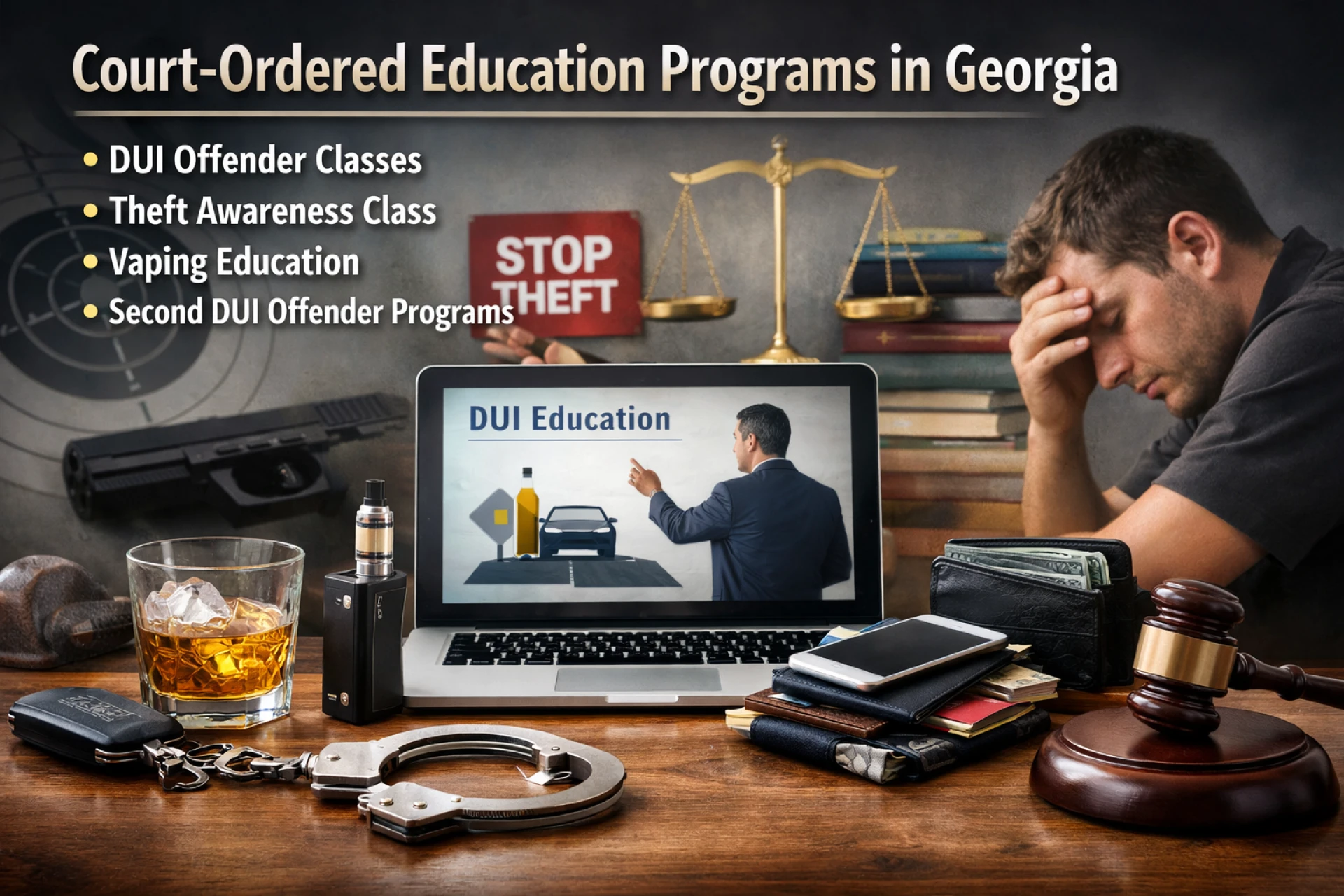
Georgia courts increasingly rely on educational programs to address offenses related to impaired driving, theft, and public health concerns such as vaping. These court-ordered classes are designed not only to fulfill legal requirements but also to educate individuals about the consequences of their actions and help prevent repeat violations. By focusing on awareness, accountability, and responsible decision-making, Georgia’s education-based approach supports long-term behavior change.
This article explains several commonly required court-approved programs in Georgia, their purpose, and why they play such an important role in the legal system.
Understanding DUI Education in Georgia
Driving under the influence is one of the most serious offenses addressed through court-mandated education. Georgia distinguishes between first-time and repeat offenders, ensuring that the level of education matches the severity of the violation.
Driving While Intoxicated 1st Offender Education
The Driving While Intoxicated 1st Offender Class in Georgia is typically required for individuals facing their first DUI-related offense. This course focuses on awareness and prevention, helping participants understand how alcohol or drug impairment affects judgment, reaction time, and driving ability.
Participants learn about Georgia DUI laws, potential penalties, and the long-term consequences of impaired driving, including license suspension, insurance increases, and employment challenges. The goal of this program is to ensure that first-time offenders fully understand the risks involved and make safer choices moving forward.
Advanced Accountability for Repeat Offenders
The Driving While Intoxicated 2nd Offender Class in Georgia is required for individuals with repeat DUI offenses. This program reflects a more serious level of intervention, emphasizing accountability and long-term behavior change.
This course goes deeper into identifying risky patterns, understanding the increased legal consequences of repeat offenses, and recognizing the broader impact impaired driving has on families and communities. Courts require this education to reduce the likelihood of future violations and promote public safety.
Ethical Decision-Making and the Theft Awareness Program
Understanding the Impact of Theft
The Theft Awareness Class in Georgia is commonly assigned for shoplifting, petty theft, or other property-related offenses. While these offenses may seem minor, the course explains how theft affects businesses, individuals, and communities as a whole.
Participants learn about the legal consequences of theft, including criminal records and financial penalties, as well as the long-term personal impact such violations can have. The course encourages ethical decision-making and personal responsibility, helping participants understand why theft laws exist and how to avoid similar situations in the future.
Public Health Education and Vaping Awareness
Addressing a Growing Concern
The Vaping Awareness Program in Georgia reflects the state’s response to the increasing health concerns surrounding e-cigarettes and vaping products. Courts often assign this program for underage vaping violations or possession-related offenses.
This course focuses on educating participants about the health risks associated with vaping, including nicotine addiction and potential long-term respiratory issues. It also explains Georgia’s vaping laws and age restrictions. By emphasizing health awareness and legal responsibility, the program aims to prevent repeat violations and promote informed decision-making.
Why Georgia Courts Emphasize Education
Georgia’s use of court-ordered education programs reflects a broader commitment to prevention rather than punishment alone. These programs help individuals understand the consequences of their actions while providing tools to avoid future legal trouble.
Online court-approved classes make it easier for participants to complete requirements on their own schedule while still meeting court standards. Whether addressing impaired driving, theft, or public health concerns, these courses are designed to reduce repeat offenses and improve community safety.
Benefits of Court-Approved Online Courses
Court-approved online education programs offer flexibility, accessibility, and efficiency. Participants can complete coursework at their own pace, access materials from any device, and receive certificates upon completion. This format allows individuals to fulfill legal obligations while focusing on learning and personal improvement.
Frequently Asked Questions (FAQ)
What is the Driving While Intoxicated 1st Offender Class in Georgia?
The Driving While Intoxicated 1st Offender Class in Georgia is a court-required program for first-time DUI offenders. It focuses on education, awareness, and preventing future impaired driving incidents.
Who must take the Driving While Intoxicated 2nd Offender Class in Georgia?
The Driving While Intoxicated 2nd Offender Class in Georgia is required for individuals with repeat DUI offenses. It emphasizes accountability, behavior patterns, and long-term prevention.
What does the Theft Awareness Class in Georgia cover?
The Theft Awareness Class in Georgia educates participants about the legal, financial, and personal consequences of theft-related offenses and encourages ethical decision-making.
Why is the Vaping Awareness Program in Georgia required?
The Vaping Awareness Program in Georgia is required for vaping-related violations and focuses on health risks, addiction awareness, and Georgia vaping laws.
Are these courses accepted by Georgia courts?
Yes. These are court-approved programs, and completion certificates are accepted by Georgia courts when submitted according to court instructions.
Final Thoughts
Court-ordered education programs in Georgia play a vital role in promoting accountability, awareness, and safer decision-making. Courses such as the Driving While Intoxicated 1st Offender Class in Georgia, Driving While Intoxicated 2nd Offender Class in Georgia, Theft Awareness Class in Georgia, and Vaping Awareness Program in Georgia help individuals meet legal requirements while gaining valuable knowledge that supports long-term change.