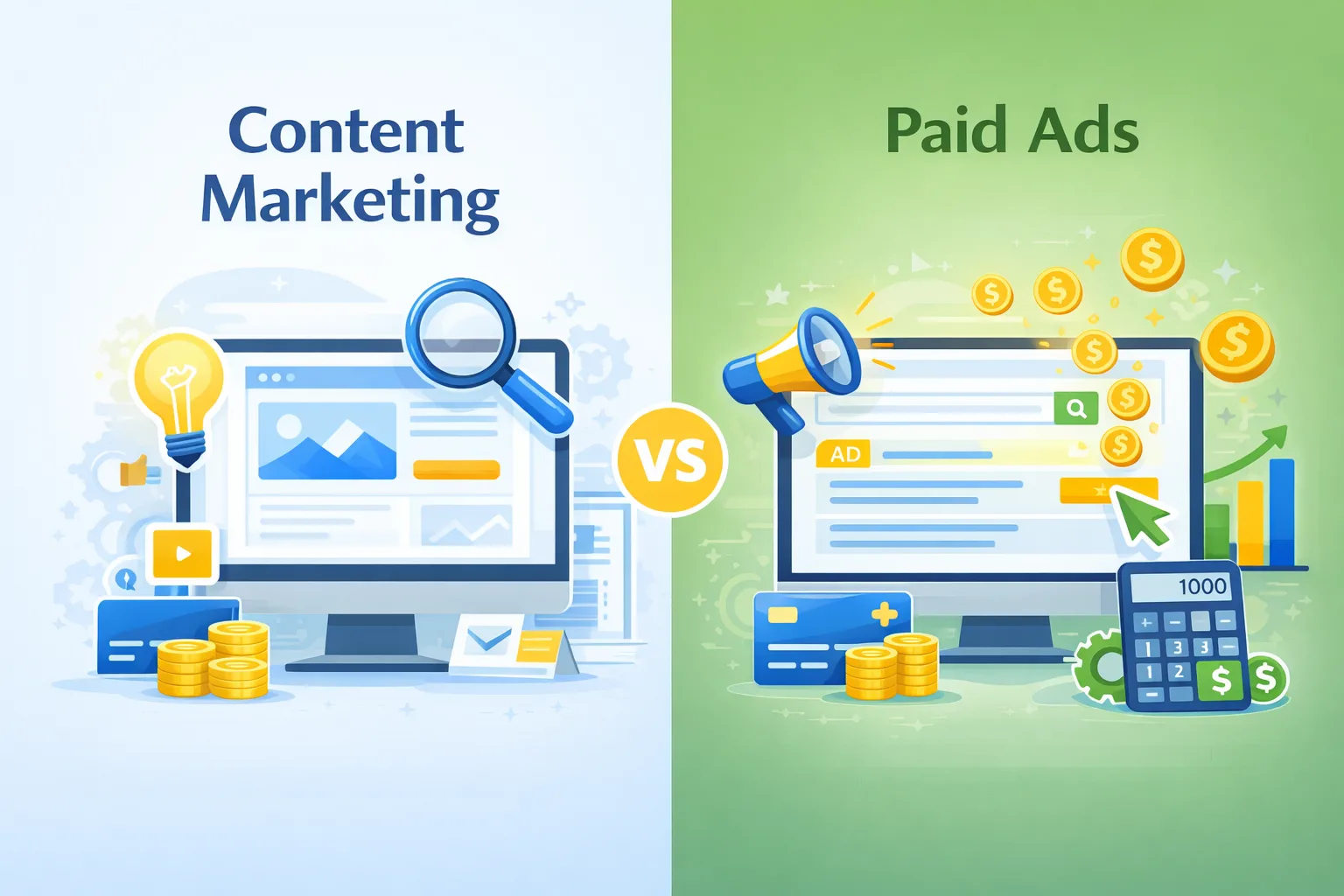
Every business needs leads to grow, but choosing between content marketing and paid advertising can be difficult. Paid ads can bring quick results, while content marketing builds long-term value. The right choice depends on your goals, budget, timeline, and resources. In this article, we’ll compare both strategies to help you choose the best approach for your business.
What Is Content Marketing?
Content marketing means creating helpful, valuable content to attract your target audience. Think blog posts, videos, guides, and social media content. Instead of pushing a sale, content marketing focuses on answering questions and solving problems.
For example, imagine a fitness brand publishing articles about workout routines and nutrition tips. Readers visit these posts, find them useful, and gradually start trusting the brand. Over time, some of them turn into leads and eventually into paying customers.
The key idea behind content marketing is simple. When you help people solve their problems, they start to trust your brand. Over time, that trust turns into sales.
Common Types of Content Marketing
- Blog posts and articles
- Video tutorials and webinars
- eBooks and whitepapers
- Podcasts and interviews
- Social media content
- Email newsletters
What Is Paid Advertising?
Paid advertising means paying to place your message directly in front of potential customers. This includes Google Ads, Facebook Ads, LinkedIn Ads, and similar platforms. Once you launch a campaign, your ad appears almost instantly, and clicks start rolling in.
You create an ad, choose who should see it, and set a daily or monthly budget. When someone clicks on your ad, you pay a fee. The goal is to send that visitor to a landing page where they share their contact information and become a lead.
Unlike content marketing, paid advertising delivers instant visibility. You can launch a campaign today and start getting clicks within hours. However, the leads stop coming the moment you stop spending.
Common Types of Paid Advertising
- Search ads (Google Ads)
- Social media ads (Facebook, Instagram, LinkedIn)
- Display ads (banner ads on websites)
- Video ads (YouTube pre-roll)
- Retargeting ads (targeting past visitors)
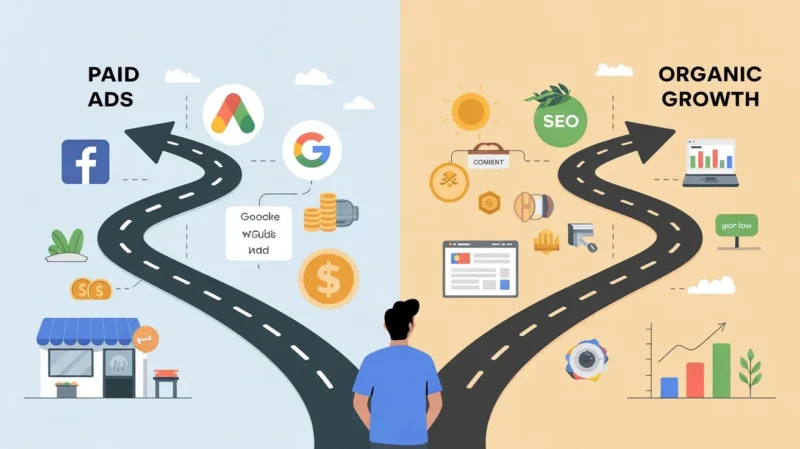
Content Marketing vs Paid Advertising: Key Differences
Before choosing a strategy, you need to understand how they differ.
1. Speed of Results
Paid advertising wins here. As soon as you launch a campaign, you can start getting clicks and leads within hours. Content marketing, on the other hand, takes time. It can take weeks or months before your content ranks on search engines and starts pulling in consistent traffic.
Note: Paid ads generate leads within hours. Content marketing takes months to build momentum.
2. Cost Over Time
This is where content marketing shines. Once you publish a blog post or video, it keeps working for you often for years without extra spending. Paid ads, however, stop working the moment you stop paying. Therefore, if you’re looking for long term, cost effective lead generation, content marketing usually wins in the long run.
Note: Content keeps working long after publishing. Ads stop the moment you stop paying.
3. Trust and Credibility
People trust helpful content more than ads. In fact, many buyers today skip ads entirely and search for genuine information instead. Content marketing builds authority because it positions your brand as an expert, not just a seller.
Note: Content builds credibility naturally. Ads can feel intrusive to skeptical audiences.
4. Scalability
Paid advertising is easier to scale quickly. Want more leads tomorrow? Increase your ad budget. Content marketing takes more patience because you can’t simply “buy” faster rankings or more shares.
5. Data and Targeting
Paid ads offer precise targeting. You can choose exact demographics, locations, interests, and even the time of day your ad appears. Content marketing, meanwhile, targets people based on the questions they search for, which is more organic but less controllable.
Note: Paid platforms offer precise audience targeting. Content relies on search intent and topic relevance.
Both strategies can generate quality leads. However, they work best in different situations. Let us explore the key differences in more detail.
Cost Comparison of Content Marketing vs Paid Advertising
Cost is often the first thing businesses consider. So let us compare both strategies honestly.
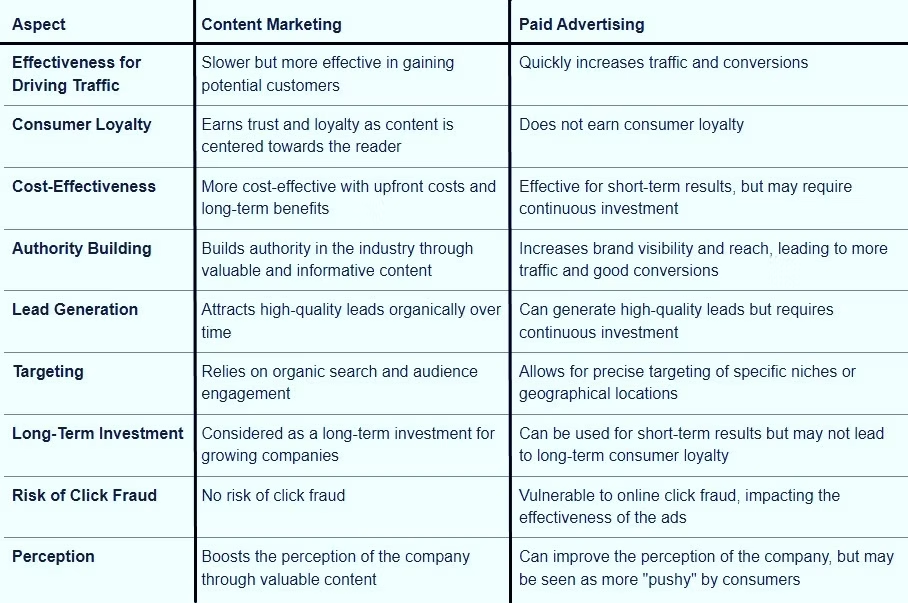
Content marketing requires an upfront investment in time and resources. You need writers, designers, and SEO experts. In the beginning, the cost per lead can be high because traffic builds slowly. However, once your content ranks on search engines, the cost per lead drops significantly. A single blog post can generate leads for years without any extra spending.
Paid advertising has clear and immediate costs. You pay for every click, impression, or conversion. In competitive industries like finance or healthcare, the cost per click can be very high. Moreover, you must keep spending to maintain your lead flow.
In short: content marketing costs more upfront but becomes cheaper over time. Paid advertising costs less to start but requires ongoing investment.
Which Generates Leads Faster?
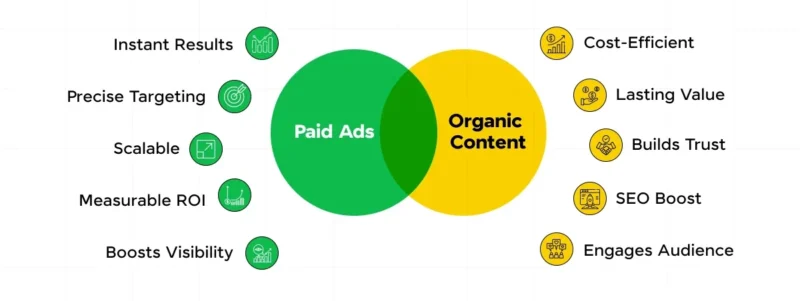
If speed is your priority, paid advertising wins without question. Campaigns can go live within a day, and leads often start flowing almost immediately. The targeting options are powerful. You can reach people based on their age, location, interests, job title, and even recent online behavior.
This makes paid ads perfect for businesses that need quick results, such as seasonal promotions or event registrations.
Content marketing, however, is a slow burn. It typically takes three to six months before your content starts ranking and attracting consistent traffic. That said, patience often pays off, since the leads generated tend to be more engaged and better qualified.
However, here is an important point: fast does not always mean better. Paid leads may convert at a lower rate because they do not yet trust your brand. Content marketing leads often arrive already warmed up and ready to engage.
Which Provides Better Long-Term Results?
When it comes to long-term lead generation, content marketing has a clear advantage.
A well-written blog post can rank on Google for years. It can attract hundreds or even thousands of visitors every month without any additional cost. Over time, your content library becomes a powerful lead generation machine.
Paid advertising does not offer this benefit. Once your campaign ends, the traffic disappears. You are essentially renting attention rather than owning it.
Therefore, if you want a strategy that compounds over time, content marketing is the better investment. The effort you put in today continues to pay off for months and years to come.
🔗 Read the full strategy here: https://digitalpocketnews.com/content-marketing-vs-paid-advertising-which-generates-more-leads/
Want to know more? Read on our website and follow updates: https://digitalpocketnews.com/