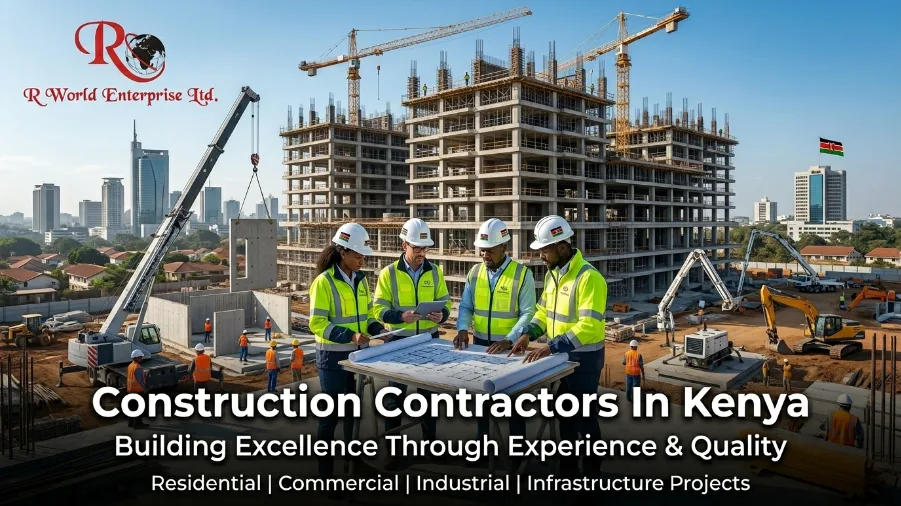
The construction industry continues to serve as one of the strongest pillars of economic growth and infrastructure expansion throughout Kenya. From residential communities and commercial developments to industrial facilities and public infrastructure projects, Construction Contractors In Kenya, they play a critical role in transforming development plans into practical and lasting structures. As urban populations continue growing and investment opportunities increase, the demand for reliable and experienced construction professionals remains higher than ever.
Modern construction projects require a combination of technical knowledge, strategic planning, quality workmanship, and effective project management. Clients today expect buildings that are not only durable but also functional, visually appealing, environmentally responsible, and cost-efficient. To meet these expectations, construction companies continue investing in innovation, workforce development, and improved operational systems.
The success of any construction project depends on proper coordination among various stakeholders, including architects, engineers, project managers, suppliers, contractors, and clients. Every phase must be carefully managed to ensure quality standards are maintained while project objectives are achieved within the planned timeline and budget.
The Role of Construction Contractors in National Development
Construction activities contribute significantly to economic development by supporting infrastructure expansion, job creation, and investment growth. Professional contractors provide the expertise necessary to execute projects that support residential, commercial, industrial, and institutional needs.
As communities continue expanding, demand for quality infrastructure continues increasing. Roads, office buildings, schools, hospitals, shopping centers, and residential developments all require professional construction services that meet modern standards.
Supporting Residential Growth
The growing demand for housing has created opportunities for construction companies to develop residential projects that improve living standards and accommodate population growth.
Contractors help transform housing concepts into practical solutions that provide safety, comfort, and long-term value.
Advancing Commercial Development
Businesses require modern facilities that support operational efficiency and customer satisfaction.
Professional construction contractors deliver commercial buildings designed to meet business objectives while maintaining durability and functionality.
Encouraging Infrastructure Expansion
Construction projects contribute to improved transportation networks, public facilities, and community services that support national development objectives.
Effective Planning for Construction Success
Every successful construction project begins with thorough preparation and detailed planning. Proper planning reduces risks while improving efficiency throughout project execution.
Site Evaluation and Feasibility Analysis
Before construction activities begin, contractors conduct detailed site assessments to understand environmental conditions, terrain characteristics, drainage systems, accessibility, and soil stability.
These evaluations help identify challenges and determine the most effective construction strategies.
Financial Planning and Budget Management
Budget development is essential for maintaining financial control throughout a project.
Professional contractors prepare detailed cost estimates that account for materials, labor, equipment, permits, transportation, and operational expenses.
Careful budgeting helps clients make informed decisions while minimizing financial uncertainty.
Scheduling and Resource Coordination
Construction projects involve numerous activities that must be completed in a coordinated sequence.
Project managers create schedules that organize workforce allocation, procurement activities, inspections, and construction milestones to maintain progress and productivity.
Construction Project Completion Through Strategic Management
Successful Construction project completion requires more than technical expertise. It depends on effective leadership, communication, and continuous supervision throughout every stage of development.
Professional contractors focus on maintaining consistency and quality while ensuring project goals remain aligned with client expectations.
Quality Assurance Systems
Quality control measures help ensure construction work meets required standards and specifications.
Regular inspections and performance evaluations allow project teams to identify potential issues before they affect overall project outcomes.
Maintaining quality throughout construction contributes to long-term durability and customer satisfaction.
Workforce Leadership and Coordination
Construction projects bring together professionals from various disciplines, including engineers, electricians, plumbers, welders, machine operators, and supervisors.
Effective leadership ensures all team members work together efficiently toward common objectives.
Managing Challenges and Risks
Construction environments often present unexpected situations that require quick decision-making and problem-solving skills.
Experienced contractors develop contingency plans that help minimize disruptions while maintaining project momentum.
Advantages of Design Construction Services
Many clients now recognize the benefits of design construction services because they simplify project management and improve overall efficiency.
This integrated approach combines planning, design, engineering, and construction within a unified framework.
Improved Communication and Collaboration
When design and construction teams work together from the beginning, communication becomes more effective.
This collaborative environment helps reduce misunderstandings and improves project coordination.
Faster Project Delivery
Integrated project teams can make decisions more quickly because all stakeholders remain involved throughout development.
This often results in shorter timelines and improved operational efficiency.
Better Budget Control
Design Construction Services improve financial transparency by providing greater visibility into project costs from the planning stage onward.
Clients benefit from more accurate estimates and improved cost management.
The Importance of Construction Holding Companies
Large-scale developments often require extensive resources, specialized expertise, and advanced management systems. Construction holding companies provide strategic oversight that supports complex projects and long-term industry growth.
These organizations coordinate multiple operations while managing engineering services, procurement systems, workforce allocation, and financial planning.
Managing Multiple Projects Efficiently
Holding companies have the resources and organizational structure needed to oversee several projects simultaneously.
This capability improves resource utilization and operational consistency.
Promoting Industry Innovation
Large construction organizations frequently invest in advanced technologies, workforce training programs, and modern construction techniques.
These investments contribute to improved productivity and higher-quality project outcomes.
Strengthening Economic Growth
Construction holding companies support economic development by creating employment opportunities, attracting investment, and contributing to infrastructure expansion.
Their involvement helps strengthen the construction sector and support broader development goals.
Sustainability and Modern Construction Practices
Environmental responsibility continues becoming increasingly important within the construction industry.
Developers and property owners are seeking solutions that balance functionality, efficiency, and environmental stewardship.
Energy-Efficient Building Solutions
Modern buildings incorporate technologies designed to reduce energy consumption while improving operational performance.
These systems contribute to lower operating costs and improved sustainability.
Responsible Material Selection
Contractors increasingly choose materials that support environmental objectives while maintaining quality and durability standards.
Sustainable material choices help reduce environmental impact throughout the building lifecycle.
Waste Management and Resource Efficiency
Efficient resource management practices help reduce waste generation and improve project sustainability.
Construction companies continue adopting processes that support responsible environmental management.
Technology Transforming Construction Operations
Technology has become an essential component of modern construction management.
Digital tools improve planning, communication, project monitoring, and decision-making throughout the construction process.
Digital Project Management
Modern software platforms help contractors track schedules, budgets, procurement activities, and workforce performance in real time.
This improves project visibility and operational efficiency.
Advanced Construction Equipment
Modern machinery improves productivity while enhancing safety and precision on construction sites.
Building Information Modeling
Advanced modeling technologies allow project teams to visualize designs and identify potential challenges before construction begins.
This contributes to improved planning and reduced project risks.
Future Opportunities for Construction in Kenya
The future of construction remains highly promising as demand for housing, commercial developments, industrial facilities, and infrastructure projects continues increasing.
Urban expansion, population growth, and investment activity will continue creating opportunities for professional construction companies.
Organizations that embrace innovation, sustainability, quality management, and customer-focused service delivery will be well positioned for long-term success.
Conclusion
Construction contractors in Kenya continue playing an essential role in shaping the country's infrastructure and supporting economic growth. Their expertise helps transform development concepts into durable and functional structures that serve communities, businesses, and institutions. Successful construction project completion depends on careful planning, quality management, and effective coordination throughout every stage of development. Design construction services improve efficiency through integrated project delivery, while construction holding companies provide the leadership and resources necessary to support large-scale construction initiatives.
As the industry continues evolving, construction companies that prioritize excellence, innovation, sustainability, and customer satisfaction will remain at the forefront of Kenya's development journey.
For more details please visit our website — https://www.rworld.co.ke/
Visit: https://share.google/10uo6mVc2tcKQAkcf
Address — Trance Towers Fourth Floor, along Tsavo road South B, P.O. Box 22111–00400, Nairobi, Kenya
Email: [email protected]
Call us today!
Mobile Number: 0722 330 584
Office Number: 0780 330 584