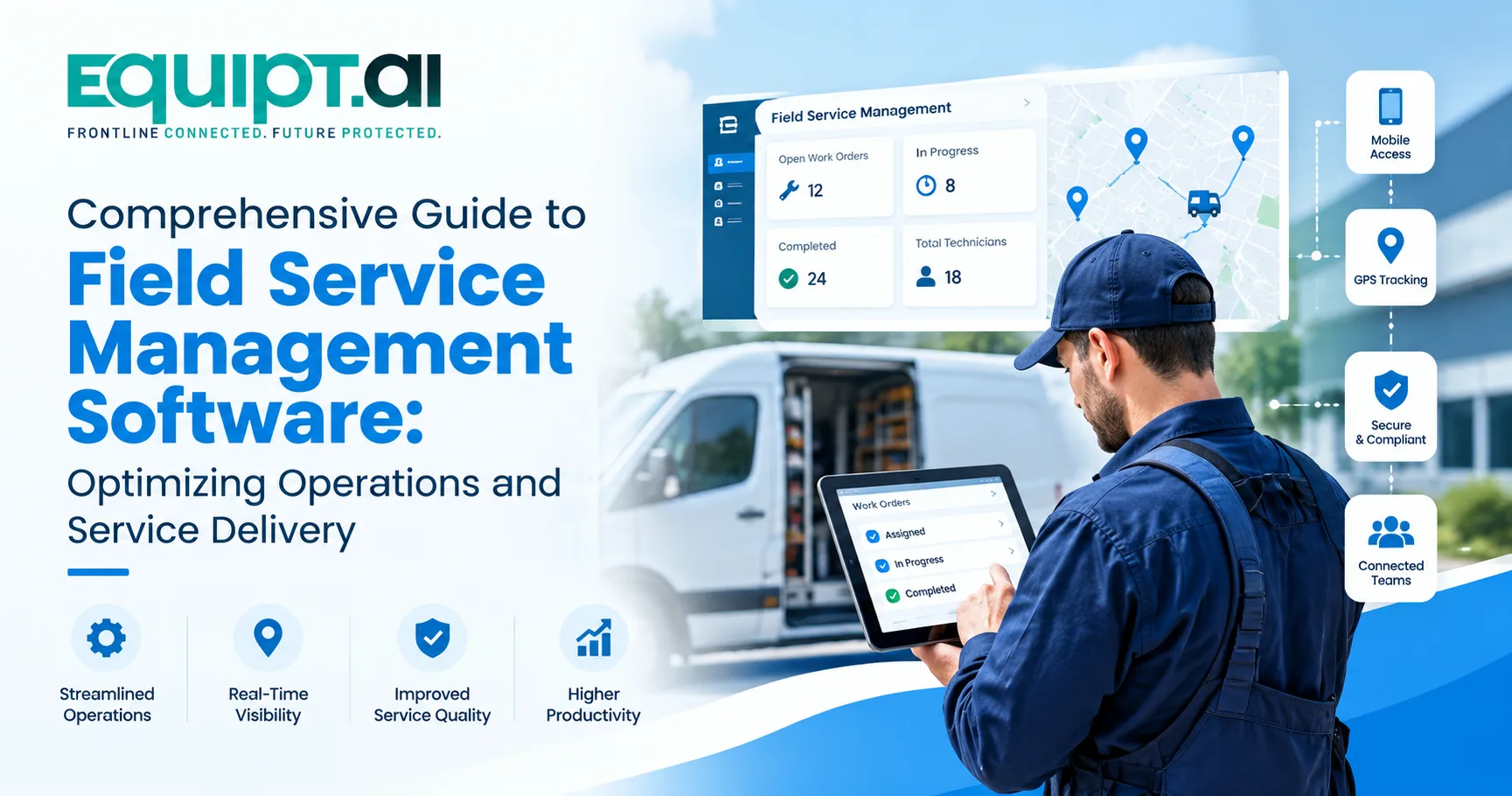
Managing field operations efficiently is a primary challenge for growing service-based businesses. As organizations scale, coordinating field technicians, scheduling appointments, handling dispatch, tracking inventory, and ensuring real-time communication across multiple channels becomes increasingly complex. Relying on legacy systems, paper forms, or disjointed spreadsheets often leads to scheduling conflicts, missed service appointments, delayed invoicing, and lower customer satisfaction.
Modern field service operations require clear visibility, structured automation, and seamless integration between back-office staff and field crews. Field service management software addresses these core operational hurdles by providing a centralized platform to streamline service requests, field dispatching, equipment tracking, and reporting.
What Is Field Service Management Software?
Field service management (FSM) software is an enterprise digital solution designed to help companies track, coordinate, and optimize operations performed outside the central office. It covers the full lifecycle of a service request—from initial customer intake and work order creation to dispatch, execution, site billing, and final reporting.
Rather than managing dispatch on whiteboards and tracking inventory manually, FSM software consolidates all operational workflows into a single dashboard accessible via desktop and mobile devices.
Key Components of FSM Operations
Work Order Management centralizes incoming service requests, job creation, asset history, and progress updates. Intelligent scheduling and dispatch matches technician skill sets, geographical availability, and job requirements to send the right technician to the right job at the right time.
Mobile field workforce enablement equips field technicians with a mobile app to view schedules, log hours, upload job photos, capture digital signatures, and update work status live. Additionally, inventory and asset tracking tracks tools, equipment, spare parts, and truck stock in real time to prevent project delays caused by missing components. Customer communication portals provide automated SMS or email updates, arrival time estimates, and self-service booking options to enhance transparency.
Core Operations Simplified by Modern FSM Solutions
Understanding how FSM tools transform day-to-day operations highlights their value across various industries, including HVAC, electrical, plumbing, telecommunications, heavy equipment maintenance, and facility management.
Work Order Lifecycle Management
Work order execution forms the backbone of any field service business. Manual work orders often suffer from missing details, unclear job specs, or delayed updates.
FSM platforms digitize work order generation. When a customer reports an issue, the system automatically pulls account history, warranty status, and asset details into the digital ticket. Technicians arrive on-site fully prepared with job instructions, history logs, and required tools.
Intelligent Scheduling and Route Optimization
Engineers and field workers lose hours weekly sitting in traffic or navigating unoptimized travel routes. Smart scheduling features leverage real-time location mapping and traffic data to plot efficient transit paths.
Automation algorithms analyze job location, urgency, technician certification, and current route layouts to auto-assign tasks. This reduces fuel consumption, minimizes vehicle wear and tear, and allows teams to complete more calls per day.
Real-Time Communication and Mobile Access
A major source of downtime in field operations is the communication delay between field crews and back-office administrators. Mobile FSM applications bridge this gap by keeping field personnel connected even in areas with limited network connectivity through offline data syncing.
Technicians can instantly access wiring diagrams, complete safety checklists, upload photos, process digital customer approvals, and issue invoices right from the job site.
Major Strategic Benefits for Service Businesses
Implementing specialized software delivers distinct operational advantages that directly impact profitability and customer retention.
Eliminating Operational Bottlenecks
Manual paperwork often creates bottlenecks between job completion and invoice generation. Delayed invoicing slows cash flow and introduces clerical errors. FSM systems capture billable hours, replacement parts used, and digital sign-offs immediately, triggering instant invoice generation upon job completion.
Boosting First-Time Fix Rates
First-time fix rate is a critical metric in field operations. When a technician arrives without the required replacement part or specialized tool, a secondary visit must be scheduled, increasing operating costs and frustrating the client. By providing inventory visibility and matching job demands with technician skill profiles, FSM tools ensure technicians are properly prepared before arriving at the job site.
Data-Driven Decision Making and Analytics
Modern business growth depends on accurate operational reporting. FSM dashboards deliver actionable insights into key metrics such as average resolution times, technician productivity, equipment failure frequencies, fuel costs, and customer satisfaction scores. Companies looking to modernize their operational workflows can leverage modern field service management software to automate routine service tasks, monitor field workforce productivity, and improve end-to-end service delivery. Decision-makers can analyze these trends to refine resource allocation and forecast seasonal demand accurately.
Choosing the Right Field Service Platform
Selecting an effective operational platform requires evaluating key technical criteria and business requirements to ensure long-term usability and scalable performance.
The platform should adapt to custom workflows, custom form fields, and industry-specific checklists rather than forcing rigid operational processes. Furthermore, ensure seamless integration with accounting platforms, enterprise resource planning (ERP) systems, and CRM databases.
A simple, intuitive interface ensures fast adoption across field teams and office administration without extensive training periods. Mobile applications must function reliably without active internet connections and sync automatically once connectivity is restored. Finally, verify data encryption standards, user role permissions, and cloud backup protocols to keep client data secure.
Key Industry Use Cases
Field service software serves a wide array of service industries, each with unique workflow demands.
In HVAC and refrigeration businesses, the focus is on preventive maintenance schedules, seasonal demand tracking, and emergency call dispatching. For plumbing and electrical businesses, key features include job site quoting, mobile payments, and rapid technician dispatch for urgent repairs.
Commercial facility management relies on multi-site asset monitoring, SLA compliance tracking, and recurring service contract management. Telecom and utility providers utilize field management software for fleet tracking, complex technician routing, and high-volume work order processing.
Best Practices for Successful FSM Implementation
Adopting software requires careful execution to maximize return on investment and minimize operational disruption.
Step 1: Audit Existing Workflows
Map out your operational flow from initial customer contact to final payment. Identify recurring bottlenecks, missing communication steps, and areas where data loss occurs.
Step 2: Standardize Data Entry Rules
Set clear protocols for naming conventions, asset categories, inventory tracking, and job status tagging. Clean data ensures accurate reporting and seamless system automation.
Step 3: Prioritize Field Team Training
Focus heavily on training field technicians on mobile app usage. Emphasize how mobile tools simplify administrative tasks, eliminate physical paperwork, and speed up end-of-day reporting.
Step 4: Track Metrics and Continuously Optimize
Monitor core operational metrics such as mean time to repair, travel duration per call, inventory accuracy, and customer review scores. Use these insights to refine dispatch rules and training schedules continuously.
Streamlining Operational Growth
Adopting dedicated field service tools shifts field operations from reactive problem-solving to proactive management. Centralizing scheduling, field communication, asset history, and performance analytics enables service businesses to reduce overhead costs, improve technician efficiency, and deliver consistent, high-quality customer experiences. Moving away from manual workflows equips organizations to scale operations sustainably and meet changing market demands.