Safety footwear is one of those things that is easy to take for granted until you spend eight or ten hours wearing the wrong pair.
A boot that feels perfectly acceptable for half an hour can become heavy and uncomfortable during a full shift. In some workplaces, metal components can also create practical problems around security systems, sensitive equipment or areas with metal detection.
That is where composite workwear shoes in the UK have become an increasingly useful option.
Rather than relying on traditional steel components, composite safety footwear can use materials such as fibreglass, reinforced plastics or other non-metallic materials for protective elements. The result can be lighter footwear that still provides the protection required for particular working environments.
The important point is not to assume that one style suits every job.
Choosing composite workwear shoes in the UK
Start with the demands of your workplace.
A warehouse worker may prioritise toe protection, grip and durability, while someone working in facilities management could be more concerned with weight and all-day comfort. Construction sites can present very different requirements again, particularly where there are risks from sharp objects, wet surfaces or uneven ground.
The first question should therefore be: what hazards am I actually protecting against?
Safety footwear is not simply about having a protective toe. Depending on the job, you may need additional protection against penetration, electrical hazards, slipping, water or harsh working conditions.
Check the safety classification and manufacturer's specification rather than relying on general descriptions such as "work shoe" or "safety trainer".
A lightweight shoe is only useful if it provides the protection your role requires.
What makes metal-free workwear shoes different?
The main attraction of metal-free workwear shoes in the UK is that they avoid metal components in key protective areas.
This can be particularly useful in workplaces where employees regularly pass through metal detectors or work around equipment that makes metal footwear inconvenient. Airports, certain manufacturing environments, security-controlled premises and some industrial settings may have specific requirements.
There is also a comfort consideration.
Composite components can be lighter than traditional steel alternatives, which may make a noticeable difference over a long shift. For someone who spends most of the day standing or walking, reducing unnecessary weight can be worthwhile.
That does not mean composite protection is automatically better.
Steel still has advantages in certain applications, and the correct choice depends on the risks involved. Composite footwear should be selected because its properties suit the workplace, not simply because it sounds more modern.
When composite workwear trainers make sense
Not every job calls for a traditional safety boot.
For workers who spend much of their day walking, driving, stocking shelves or moving between indoor and outdoor environments, composite workwear trainers can offer a more familiar trainer-style fit while incorporating safety features.
Their lower profile can also feel less restrictive than a heavier boot.
That said, appearance should not be confused with suitability. A safety trainer may look almost identical to an ordinary sports shoe while having a completely different construction and certification.
Pay attention to the sole as well.
If the workplace involves wet floors, oil or other substances, slip resistance may be more relevant than how lightweight the shoe feels. If you regularly move between different surfaces, consider how the outsole is designed to perform across them.
Comfort and protection need to work together.
Look beyond the toe cap
The toe area tends to receive most of the attention, but it is only one part of a safety shoe.
Grip is crucial in workplaces where spills or wet surfaces are common. A durable outsole can also help when footwear is exposed to rough flooring, debris or frequent outdoor use.
Water resistance may matter for people working outside, although water-resistant and fully waterproof are not necessarily the same thing.
The upper construction is worth examining too. Breathable materials can make a considerable difference in warm environments, while reinforced areas may be useful where the shoe is likely to experience repeated abrasion.
Think about the entire shift.
A pair that protects your toes but leaves your feet overheated, unsupported or sore after several hours is not a particularly successful choice.
Getting the fit right for a working day
Work shoes should fit securely without creating pressure points.
Try them with the socks you normally wear at work. Your heel should stay reasonably stable, while your toes need enough space to move without pressing against the protective toe area.
Do not judge fit purely while standing still.
Walk around. Bend your feet. If possible, wear the shoes for long enough to identify areas that might rub or feel restrictive.
This is especially important with safety footwear because protective components can make a poorly fitting shoe less forgiving than an ordinary trainer.
Remember that feet can swell slightly during a long day, too. A pair that feels perfect for five minutes in the morning may feel considerably different after several hours.
Matching footwear to the workplace
There is no universal "best" safety shoe.
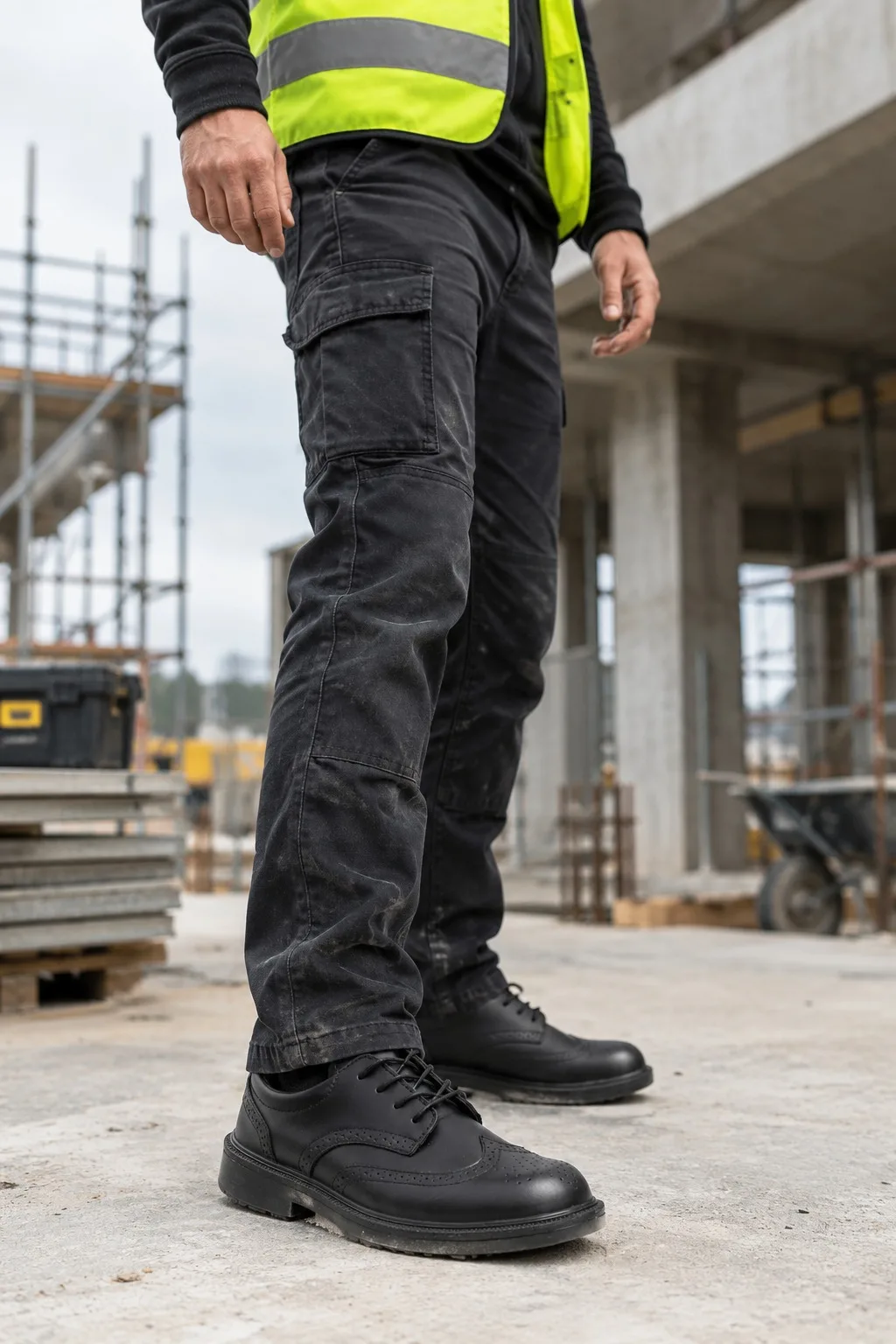
A construction worker dealing with uneven ground may need a robust boot, whereas someone working in a warehouse could find a lightweight composite trainer more practical. An engineer moving between office areas and a workshop might want something that combines a relatively discreet appearance with appropriate protection.
Consider the environment, too.
Indoor workers may place greater emphasis on breathability and cushioning. Outdoor workers need to think about weather exposure, grip and durability. If you move between customer-facing areas and operational spaces, appearance can also have a practical role.
Briggs Safetywear, for example, provides a range of work footwear and safety footwear, making it useful to consider the requirements of the job before narrowing down the style. Briggs Safetywear
The useful approach is to work backwards from the job rather than forwards from the shoe.
Caring for safety footwear
Even well-made work shoes need regular care.
Remove dirt and debris after use, particularly if the footwear is regularly exposed to mud, dust or industrial materials. Allow damp shoes to dry naturally rather than placing them directly against a radiator or strong heat source.
Inspect the soles periodically.
Once the tread becomes significantly worn, grip can deteriorate even if the rest of the shoe still looks perfectly usable. Check stitching, uppers and protective areas for visible damage as well.
Employers may also have specific inspection and replacement procedures, particularly where footwear forms part of required personal protective equipment.
A few minutes of routine care can help you spot problems before they become a workplace issue.
Ultimately, the best composite workwear shoes in the UK are not necessarily the lightest or most fashionable pair. They are the ones that provide the protection your job demands while remaining comfortable enough to wear throughout a full working day.
Get that balance right, and safety footwear becomes something you barely notice — which is usually a good sign.
FAQ
Are composite safety shoes better than steel toe shoes?
Neither is universally better. Composite footwear can offer lower weight and avoid metal components, while steel toe protection remains a practical choice for many demanding environments. The workplace hazards and required safety rating should guide the decision.
What are metal-free workwear shoes used for?
They can be useful in workplaces where metal components are inconvenient, including some security-controlled or metal-detection environments. They may also appeal to workers looking for lighter safety footwear.
Are composite workwear trainers suitable for construction?
They can be, provided the specific footwear meets the safety requirements of the construction work and site. Always check the manufacturer's safety classification rather than choosing based on appearance.
Are composite safety shoes lighter than steel toe shoes?
Composite protective components are often lighter than steel, although the overall weight depends on the shoe's construction, sole, upper and other safety features.
How should safety work shoes fit?
They should feel secure without squeezing the foot. Leave enough room for natural toe movement, keep the heel reasonably stable and check for pressure or rubbing when walking.