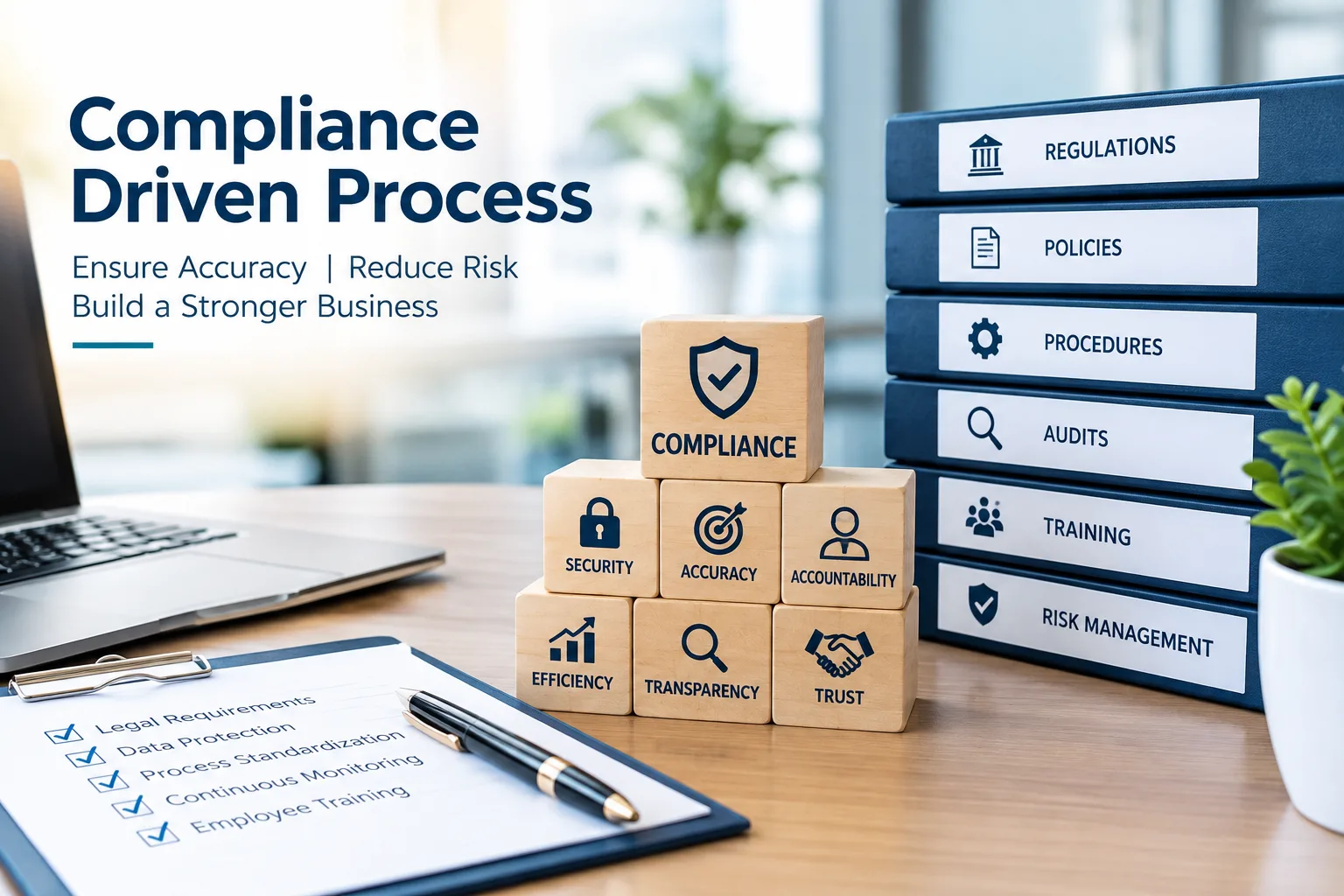
A compliance-driven process is a structured approach that helps an organization operate according to applicable laws, regulations, industry standards, contractual requirements, and internal policies. Instead of treating compliance as a one-time task, businesses integrate it into their everyday operations to reduce risk, improve accountability, and maintain consistent service quality.
In industries such as healthcare, finance, and medical billing, compliance is especially important because organizations often handle sensitive information, financial transactions, and regulatory requirements.
What Is a Compliance-Driven Process?
A compliance-driven process establishes clear procedures and controls to ensure that business activities follow predefined regulatory and organizational requirements. It typically includes documentation, verification, monitoring, audits, employee training, and corrective actions.
For a healthcare organization or medical billing company, for example, a compliance-driven process can help ensure that patient information is handled appropriately, claims are submitted accurately, and billing activities follow applicable regulations and payer requirements.
The goal is not simply to avoid penalties. A well-designed process can also promote accuracy, transparency, consistency, and operational efficiency.
Key Components of a Compliance-Driven Process
1. Understanding Regulatory Requirements
The first step is identifying the laws, regulations, payer policies, contractual obligations, and industry standards that apply to the organization.
Requirements should be reviewed regularly because regulations and payer guidelines can change. Keeping policies updated helps employees follow the latest applicable procedures.
2. Standardized Workflows
A compliance-driven organization uses documented workflows instead of relying entirely on individual judgment.
Standard operating procedures can define:
- Who is responsible for each task
- What information must be verified?
- Which approvals are required
- How records should be maintained
- What happens when an exception occurs
- How errors should be reported and corrected
Standardization makes processes easier to monitor and audit.
3. Data Security and Privacy
Organizations that handle sensitive information need appropriate safeguards to protect data from unauthorized access, disclosure, alteration, or loss.
In healthcare, this can involve access controls, secure systems, employee training, appropriate documentation, and procedures for handling confidential patient information.
4. Regular Monitoring and Auditing
Compliance should be continuously monitored rather than reviewed only when a problem occurs.
Internal audits can identify:
- Documentation gaps
- Process inconsistencies
- Billing errors
- Unauthorized access
- Incomplete records
- Policy violations
- Training requirements
Identifying these issues early gives organizations an opportunity to correct them before they become larger operational or regulatory problems.
5. Employee Training
Employees are an important part of compliance. Even well-designed policies can fail if staff members do not understand how to apply them.
Regular training can cover relevant regulations, privacy practices, documentation standards, cybersecurity awareness, billing procedures, and organizational policies.
Training records should also be maintained so organizations can demonstrate that employees received appropriate guidance.
Why Compliance-Driven Processes Matter in Medical Billing
Medical billing involves multiple stakeholders, including healthcare providers, patients, insurance companies, and regulatory bodies. Errors can affect reimbursement, patient accounts, reporting, and overall revenue cycle performance.
A compliance-driven approach can support activities such as:
Patient Information Management: Ensuring sensitive information is accessed and handled appropriately.
Claims Processing: Applying established procedures for accurate claim preparation and submission.
Payment Posting: Recording payments and adjustments consistently according to documented procedures.
Denial Management: Reviewing denied claims systematically and identifying the underlying causes of errors.
Accounts Receivable Management: Monitoring outstanding balances while following appropriate billing and collection procedures.
Credit Balance Management: Reviewing credit balances and handling refunds or adjustments according to applicable requirements.
By integrating compliance into these workflows, organizations can create greater consistency throughout the revenue cycle.
Benefits of a Compliance-Driven Process
A strong compliance framework can provide several operational benefits.
Reduced Compliance Risk
Clear procedures and regular monitoring can help identify potential compliance issues before they become significant problems.
Improved Accuracy
Standardized workflows reduce unnecessary variation and can help employees perform repetitive processes more consistently.
Better Documentation
Proper documentation creates an audit trail that can help demonstrate how decisions and transactions were handled.
Increased Accountability
Clearly defined responsibilities make it easier to identify who owns each stage of a process and where corrective action may be required.
Greater Operational Efficiency
Compliance does not have to mean additional complexity. When policies, workflows, technology, and employee responsibilities are aligned, organizations can reduce rework and avoid preventable errors.
How to Implement a Compliance-Driven Process
Businesses can develop their approach through several practical steps:
- Identify applicable requirements and determine which regulations and standards affect operations.
- Document existing workflows to identify potential compliance gaps.
- Create standardized procedures for high-risk and repetitive activities.
- Assign responsibilities so each process has clear ownership.
- Train employees on policies and operational requirements.
- Use technology and access controls where appropriate to improve monitoring and security.
- Conduct periodic audits to measure compliance.
- Document corrective actions when problems are identified.
- Review policies regularly as regulations, contracts, and business processes change.
- Measure performance using appropriate operational and compliance metrics.
The Role of Technology
Technology can strengthen compliance by creating standardized workflows, maintaining records, controlling system access, and generating reports for monitoring and auditing.
Automation can also reduce manual errors in repetitive processes. However, technology should support, not replace, appropriate policies, employee training, oversight, and human review.
Compliance and Continuous Improvement
Compliance should be viewed as an ongoing process rather than a checklist. Organizations can use audit findings, error trends, employee feedback, and performance data to identify areas for improvement.
For example, if a recurring billing error is discovered, the organization can investigate its root cause, update the workflow, provide additional training, and monitor future transactions to determine whether the corrective action was effective.
This approach connects compliance with continuous improvement and can help organizations build more reliable operations.
Conclusion
A compliance-driven process provides a structured framework for managing regulatory requirements, protecting sensitive information, improving accuracy, and maintaining operational consistency. For healthcare and revenue cycle organizations, integrating compliance into everyday workflows can support more reliable billing, documentation, data management, and financial processes.
Organizations such as Networth RCM can use compliance-focused operational frameworks alongside standardized and data-driven processes to support revenue cycle activities while maintaining appropriate controls and accountability. Ultimately, effective compliance is not simply about meeting regulations; it is about creating sustainable processes that consistently follow established requirements.