
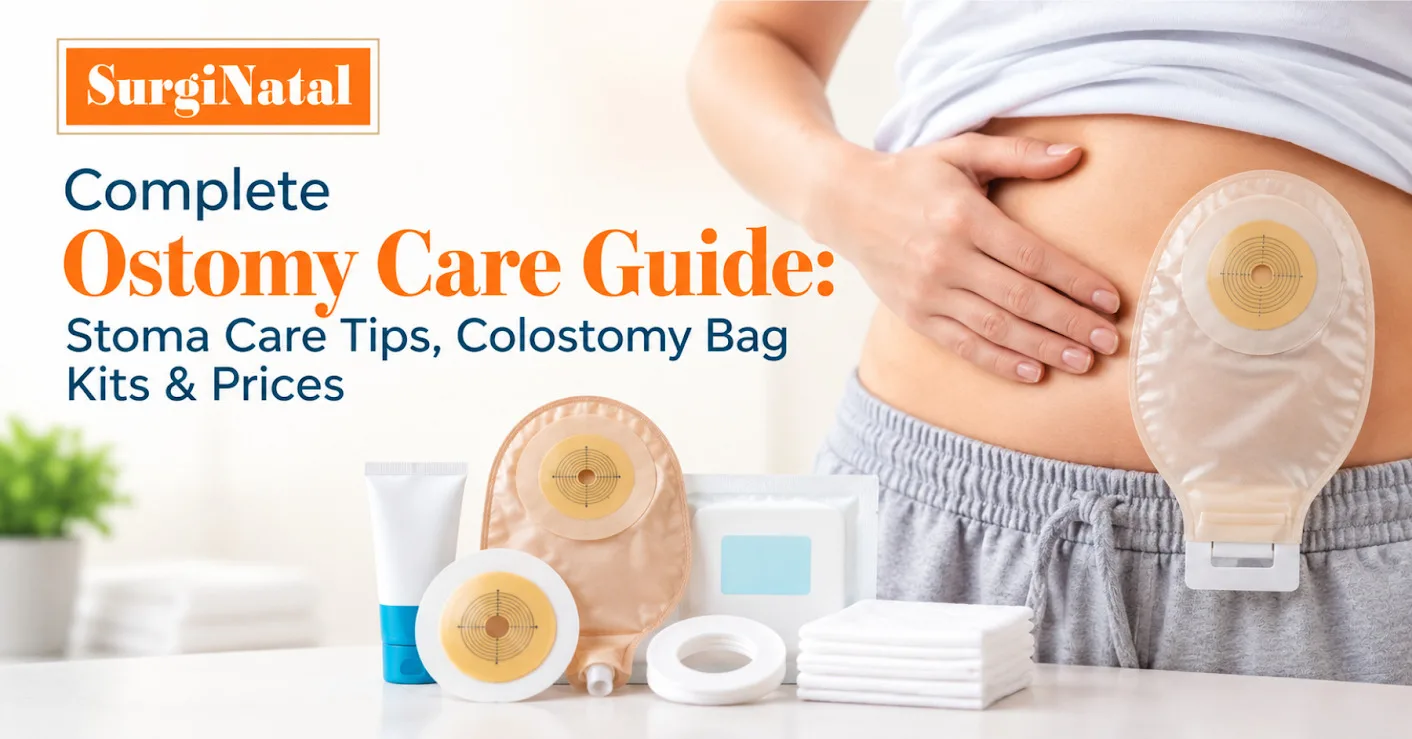
Understanding Ostomy Care
An ostomy is a surgically created opening that lets waste leave the body through the abdomen when the normal route is not working properly. The opening is called a stoma, and an ostomy bag, also called a pouch, is attached over it to collect stool or urine. A colostomy bag is the type used when a section of the colon is brought to the surface of the abdomen.
For many people, a colostomy bag becomes a normal part of daily life, supporting work, travel, exercise, and family routines. Proper stoma and skin care is what keeps this routine comfortable and free of leaks, odour, and irritation. This guide covers how to clean and change a pouch, how to protect the skin, what a colostomy bag kit contains, what affects prices, and how to choose the right products.
Why Is an Ostomy Bag Used?
An ostomy may be needed after surgery for conditions such as colorectal cancer, inflammatory bowel disease, bowel obstruction, diverticular disease, or serious injury. Depending on the condition, the ostomy may be temporary or permanent.
A colostomy bag collects stool as it leaves the stoma, since the stoma has no muscle control like the natural bowel opening. The pouch holds the waste securely until it can be emptied or replaced. The right pouch offers real benefits: it protects the skin, controls odour, and lets you go about your day with confidence. Size and fit matter a great deal. A baseplate that is too large exposes skin to waste, while one that is too small can press on the stoma and cause injury.
How to Clean an Ostomy Bag?
Drainable pouches are usually emptied when they are about one-third to one-half full, and the full pouching system is typically changed every few days, or as advised by your healthcare professional. Change it sooner if you notice itching, burning, or leakage.
A simple routine works well:
- Gather your supplies, including a new pouch, a measuring guide, scissors, and wipes.
- Gently peel off the old baseplate, supporting the skin with your other hand.
- Clean the skin around the stoma with warm water and a soft cloth or gauze.
- Pat the area completely dry before applying anything.
- Fit the new pouch, pressing firmly around the edges for a secure seal.
To clean around the stoma, use plain water and avoid rubbing. A little bleeding when wiping is common, since the stoma is delicate. Avoid oily soaps, alcohol-based products, and harsh scrubbing, as these can leave residue or damage skin. Contact a healthcare professional if you see persistent redness, open skin, a stoma that changes colour or shape, or heavy bleeding.
Essential Ostomy Care Tips for Everyday Use
Good habits make daily care easier. Check the pouch and surrounding skin regularly, and make sure the bag fits properly with no gaps. Keep the stoma area clean and dry, and empty the pouch before it becomes too full, since a heavy pouch can pull on the seal. When travelling, carry extra supplies in your hand luggage so a delay never leaves you without essentials. Above all, follow the instructions given by your healthcare professional, as every stoma and every person is different.
Ostomy Skin Care: How to Protect the Skin Around the Stoma
Healthy skin is the foundation of a secure seal. When skin is red, sore, or broken, the baseplate cannot stick properly, and leaks become more likely. Common causes of irritation include stool contacting the skin, poor fit, harsh cleaning, frequent adhesive changes, and sweating.
Remove adhesives gently by peeling the baseplate downward while pressing the skin away, and consider an adhesive remover to avoid tearing. Barrier products can create a protective layer and fill uneven areas. Products that may help include:
- Coloplast 2650 Paste (60g): helps fill creases and uneven skin around the stoma for a better seal.
- Coloplast 12010 Brava Adhesive Remover Spray (50ml): makes removal of adhesive gentler on the skin.
- Coloplast 12042 Brava Mouldable Ring: can be shaped around the stoma to improve sealing and protect skin.
If irritation persists or the skin looks broken, infected, or very painful, seek professional attention.
What Is Included in a Colostomy Bag Kit?
A colostomy bag kit bundles the essentials for routine care. A typical kit includes a colostomy pouch, a baseplate or skin barrier, and sometimes accessories such as paste, rings, clips, or adhesive removers. Having everything together makes changes quicker and less stressful, which is helpful for new ostomates and for travel.
Options to explore include the Romsons Colostomy Kit and the Coloplast 17501 Colostomy Bag.
Colostomy Bag Price: What Affects the Cost?
Colostomy bag prices vary for several reasons. Brand, pouch type (one-piece or two-piece), size, filter features, and the quality of the adhesive all play a part. Single bags usually cost less upfront than complete kits, but kits can offer better convenience and value since they include accessories.
When considering the Coloplast colostomy bag price, think about how long the product lasts, how well it seals, and whether it suits your skin. A cheaper bag that leaks or irritates the skin can end up costing more in the long run, so compare products on comfort, reliability, and accessory availability, not price alone.
Best Colostomy Bags in India: What Should You Look For?
When choosing among colostomy bags in India, look for a comfortable fit, skin-friendly materials, and a secure adhesive. The pouch capacity should suit your output and lifestyle, and the bag should be easy to empty and change. It also helps if replacement accessories are easy to find locally or online. The Coloplast 17501 Colostomy Bag is one option worth considering.
Other Ostomy Products That May Help With Stoma Care
Beyond bags and kits, other products can support your routine:
- Coloplast 1972 Alterna LongWear Light Ostomy Baseplate (50 mm): a baseplate designed for extended wear.
- Coloplast 1973 Alterna Long Wear Light Ostomy Baseplate (60 mm): the same style in a larger size for bigger stomas.
- Coloplast 1910 Urostomy Bag, Custom Cut up to 35 mm: suited to people with a urostomy who need a cut-to-fit option.
How to Choose the Right Ostomy Products
Start with your stoma size and shape, and choose products suited to your ostomy type, whether colostomy, ileostomy, or urostomy. Consider skin sensitivity, and check that the pouch and accessories are compatible. When unsure, ask a stoma care nurse or healthcare professional.
Conclusion: Making Everyday Ostomy Care Easier
Regular cleaning and skin care are the keys to a comfortable life with a stoma. Choose the right pouch, baseplate, and accessories, and focus on fit, comfort, and skin protection rather than price alone. Every stoma is different, so consult a healthcare professional for guidance on your individual needs. To explore colostomy bags, kits, and ostomy care products, visit SurgiNatal and find supplies that support your daily routine with confidence.
Frequently Asked Questions About Ostomy Care
Q 1. How often should an ostomy bag be changed?
Ans. Most pouching systems are changed every two to five days, or sooner if there is leakage or discomfort.
Q 2. How to clean an ostomy bag at home?
Ans. Empty the pouch, rinse gently with lukewarm water if it is reusable, and clean the skin with water and a soft cloth. Dry thoroughly.
Q 3. How can I prevent skin irritation around my stoma?
Ans. Ensure a correct fit, change the pouch on schedule, remove adhesives gently, and use barrier products where needed.
Q 4. What is included in a colostomy bag kit?
Ans. Usually a pouch, a baseplate, and accessories such as paste or rings.
Q 5. What is the Coloplast Colostomy Bag price?
Ans. Prices vary by size, pack quantity, and seller, so check current listings before buying.
Q 6. Which are the best colostomy bags in India?
Ans. The best choice is one that fits well, protects your skin, and suits your lifestyle.
Q 7. Why is an ostomy bag used?
Ans. It collects waste when the normal route is bypassed or not working after surgery.