Overview
Let’s face it- delays in deliveries, unclear tracking, and manual processes tend to create chaos in logistics operations. You keep chasing information instead of making decisions.
This is where logistics application development steps in. It creates digital solutions that help you manage transportation, inventory, and supply chain operations in real time. A robust logistics management system helps streamline workflows, reduce costs, and give complete visibility over your operations.
This post provides in-depth details of logistics app development and highlights its essential aspects. First, we will quickly look at why traditional logistics systems cannot meet the demands of modern businesses.
Why Traditional Logistics Systems Fail Modern Businesses
Keeping logistics running smoothly these days is not an easy task. Customers expect faster deliveries, real-time updates, and reliable service. Meanwhile, businesses have to manage increasing orders, larger volumes of data, and tighter deadlines. Yet many organizations still depend on outdated systems or manual processes that cannot handle a high level of complexity.
When your logistics run slowly, lack coordination, or frequently make mistakes, then you are likely facing challenges. Some such challenges include missing real-time tracking, poor team communication, manual errors, poor route planning, and limited scalability. These causes delays, higher costs, and unhappy customers for businesses. In other words, you cannot track shipments or make data-driven decisions without a proper logistics system.
Overview of Logistics Application Development
Digital transportation solutions bring all your operations together in one place. It automates key tasks while keeping everything running smoothly. These apps can be customized to fit your business perfectly. They can manage your fleet and run warehouse operations much more efficiently. These apps also allow you to track orders in real time and plan delivery routes.
In essence, the app serves as a central hub that links your entire supply chain. Instead of using multiple tools, everything operates seamlessly in one system, boosting speed, accuracy, and overall control. Many businesses also work with a mobile app development company to create custom solutions that fit their unique workflows.
We will now look at why custom logistics application development outperforms off-the-shelf solutions by comparing the two.
Custom Logistics App Development vs Off-the-Shelf Solutions
Here is a quick table that underscores the key differences between custom logistics app development and off-the-shelf software development.
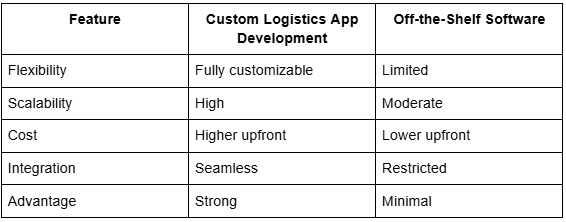
We can see from the table that off-the-shelf tools can be set up quickly and are usually cheaper upfront. But the problem is that they seldom fit with your business needs.
In contrast, a custom logistics application development can meet your specific business requirements. It gives you full control and provides long-term value that grows with your company. Custom logistics apps are ideal for unique processes and fast-growing businesses. They also support integration with other systems.
Now, we will explore the main factors required for logistics applications.
Key Aspects of Logistics Application Development
There are several important factors to keep in mind during the development process, such as—
Real-Time Tracking and Visibility
Both businesses and customers alike want complete transparency regarding the status of their shipments. With GPS tracking and IoT-enabled devices, logistics apps allow companies to provide real-time updates and accurately monitor vehicles, shipments, and delivery schedules. This visibility builds trust with customers by keeping them informed at every stage.
Then comes route planning.
Route Optimization and Planning
Choosing the best route not only speeds up deliveries but also cuts fuel expenses. Modern logistics apps leverage advanced algorithms and AI analytics to evaluate traffic, weather, and delivery priorities, identifying the most efficient paths. This enables companies to deliver on time, increase efficiency, and lower operational costs.
Scalability is another important aspect.
Scalability and Flexibility
A logistics app should grow along with the business. It doesn’t matter if the system handles a few shipments or thousands each day. It must manage growing data and complexity. It should not impact performance by slowing down operations. Cloud-based infrastructure works here as they are flexible, scalable, and cost-effective. It should also be compatible with various business models.
Next, let’s discuss integration.
Integration Capabilities
Logistics systems need to integrate seamlessly with inventory management, customer databases, and payment platforms to ensure smooth data flow across operations. This minimizes manual work and prevents costly mistakes. APIs and middleware support integrations efficiently.
Automation is where things start to get really interesting.
Automation and Workflow Management
Automating repetitive tasks such as order processing, inventory management, and shipment alerts reduces human errors and boosts efficiency. Built-in workflow management tools can define, track, and optimize processes. This allows for seamless operations, from order placement to final delivery.
Data Analytics and Reporting
Logistics applications generate a huge amount of information. It should provide advanced analytics and reporting features that help businesses make informed decisions. Analyzing delivery performance, fleet usage, customer behavior, and operational bottlenecks provides valuable insights that improve logistics operations. Predictive analytics enables businesses to forecast demand and anticipate possible disruptions.
Security is another vital area to consider.
Security and Compliance
Logistics deals with sensitive information, like customer details and shipment data. It requires strong security measures, such as encryption and secure logins, to safeguard it. Businesses must adhere to data protection laws and transportation standards to avoid legal issues.
Next is user experience.
User Experience (UX) and Interface Design
A logistics app should be easy to use for everyone involved. A simple, easy-to-use interface can greatly improve daily operations. Not to forget mobile accessibility, as many users depend on their smartphones to receive updates and manage tasks.
The final aspect is last-mile delivery.
Last-Mile Delivery Optimization
The last step of logistics, which is delivering the product to the customer, is complex. Apps need to handle delivery timing, customer availability, and route changes. Real-time tracking, flexible scheduling, and proof of delivery help make this process smoother and more reliable.
By focusing on these key points, businesses can create solutions that handle today’s needs and be future-ready.
Concluding Remarks
Logistics application development is not just about installing software. It gives your business the tools to work smarter and faster. The right system helps you keep everything organized, make accurate decisions, and scale without stress. This transforms complex logistics challenges into a clear competitive advantage.