Tooth discoloration can develop gradually due to food, drinks, tobacco use, aging, or changes within the tooth. Although regular brushing and professional cleanings help maintain oral health, they may not remove every stain. Teeth whitening is one option for improving tooth color, but the right approach depends on the type of discoloration, dental health, and the results a person hopes to achieve.
Understanding the differences between professional whitening, store-bought products, and other cosmetic treatments can help people make an informed decision.
What Causes Teeth to Become Discolored?
Tooth discoloration generally falls into two categories: surface stains and deeper discoloration.
Surface stains develop on the outer enamel. Coffee, tea, red wine, dark-colored foods, and tobacco can contribute to these stains over time. Professional cleaning and suitable whitening products may help reduce them.
Deeper discoloration occurs when changes develop within the tooth structure. Aging, certain medications, dental injuries, and changes in the enamel or dentin can affect tooth color. These stains may respond differently to whitening treatments and sometimes require alternative cosmetic options.
Identifying the cause of discoloration is an important first step because not every type of stain responds equally well to bleaching.
Professional Teeth Whitening
Professional whitening is performed or supervised by a dental professional. Depending on the treatment plan, it may involve an in-office procedure or custom-fitted trays used at home with a prescribed whitening product.
In-Office Whitening
In-office whitening uses professional-strength whitening agents under controlled conditions. The dental team protects the gums and other soft tissues before applying the product.
One advantage is that treatment takes place during a scheduled dental visit, allowing the provider to monitor the process and assess tooth sensitivity. The degree of whitening varies according to the starting shade, the cause of discoloration, and individual response.
Dentist-Supervised Take-Home Whitening
Custom whitening trays are designed to fit the patient's teeth. The whitening gel is used according to the dental professional's instructions, often over several days or weeks.
This option allows treatment to take place at home while providing guidance on product strength, wear time, and managing sensitivity. Results generally develop gradually rather than during a single appointment.
Over-the-Counter Whitening Products
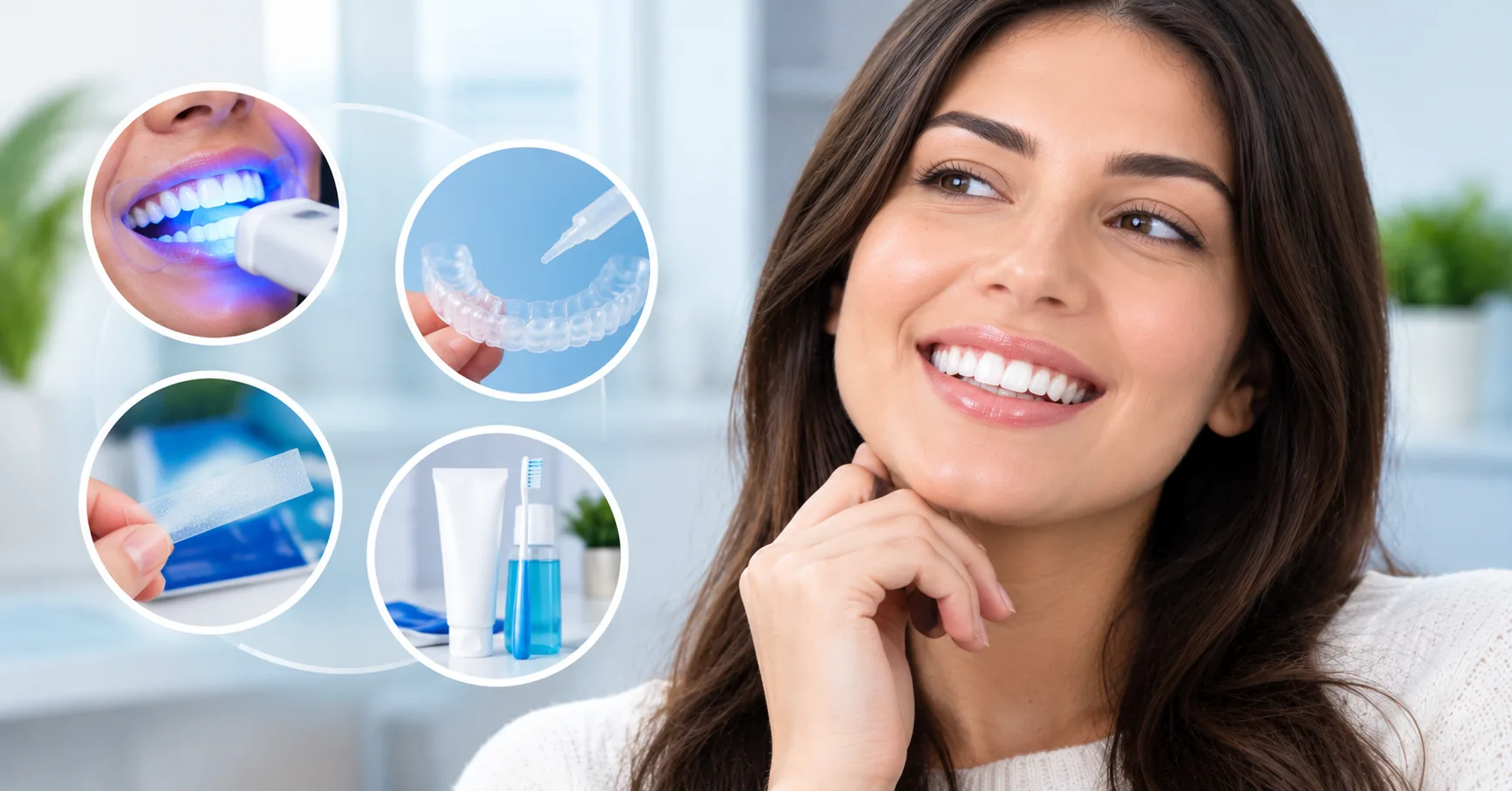
Store-bought whitening products include whitening strips, gels, toothpastes, and tray systems. Their cost and ease of access make them appealing to people who want to try whitening at home.
However, different products work in different ways. Many whitening toothpastes primarily remove surface stains through polishing ingredients, while strips and gels may contain bleaching agents that change tooth color.
Results depend on the product, consistency of use, and type of discoloration. Poorly fitting trays or use beyond the manufacturer's directions can irritate the gums or increase tooth sensitivity. Whitening products should always be used according to their instructions.
People with untreated cavities, gum inflammation, exposed roots, or existing tooth sensitivity should seek dental advice before starting treatment.
Comparing Common Whitening Options
The best choice depends on the desired result, available time, budget, and oral health.
- In-office whitening: A professionally supervised option for people seeking a noticeable change during a dental visit.
- Custom take-home trays: Suitable for gradual whitening with individualized instructions.
- Whitening strips: An accessible option for some surface and general discoloration, depending on the product.
- Whitening toothpaste: May help reduce surface stains but usually produces more limited color changes than bleaching products.
- Professional cleaning: Removes plaque, tartar, and some external stains, although it does not bleach the natural color of teeth.
Whitening does not change the color of crowns, veneers, fillings, or other tooth-colored restorations. If these restorations are visible when smiling, a dentist can explain how whitening may affect the overall appearance.
Is Teeth Whitening Safe for Everyone?
Teeth whitening is generally considered safe when appropriate products are used correctly, but it is not suitable for every situation. Temporary sensitivity and gum irritation are among the more common side effects.
Before whitening, a dental professional can check for cavities, gum disease, cracks, and other issues that may need attention first. The assessment can also help determine whether discoloration is likely to respond to bleaching or whether another treatment would be more appropriate.
People who are pregnant or breastfeeding should discuss whitening with a qualified healthcare professional before proceeding. Children and teenagers also need individualized guidance rather than automatically using adult whitening products.
How to Maintain Whitening Results
After whitening, everyday habits can influence how long the results last. These steps may help maintain a brighter appearance:
- Brush twice daily with fluoride toothpaste and clean between the teeth regularly.
- Limit frequent exposure to staining drinks such as coffee, tea, and red wine.
- Rinse with water after consuming strongly colored foods or drinks.
- Avoid tobacco products, which can contribute to discoloration and harm oral health.
- Attend regular dental checkups and professional cleanings.
- Follow dental guidance before repeating a whitening treatment.
Results vary from person to person. Repeatedly using whitening products more often than recommended will not necessarily produce better results and may increase sensitivity.
Choosing Teeth Whitening in Rockville
When comparing whitening options, consider the cause of discoloration, the expected results, treatment time, cost, and potential sensitivity. A dental evaluation can help determine which approach is suitable for your teeth and whether any existing dental concerns should be addressed first.
People researching teeth whitening Rockville options can use these factors to compare available treatments and prepare informed questions for a dental consultation. The most appropriate choice is one that balances the desired cosmetic improvement with long-term oral health.
Frequently Asked Questions
1. How long does teeth whitening last?
Results vary depending on the treatment, eating and drinking habits, tobacco use, and oral hygiene. Whitening may last for months or longer, but gradual discoloration can return over time.
2. Is professional whitening better than store-bought products?
Professional whitening offers dental assessment and individualized guidance. Store-bought products may be suitable for some people, but results depend on the product and the type of staining. A dentist can help determine which option is appropriate.
3. Does teeth whitening damage enamel?
When used as directed, established whitening products are generally considered safe for enamel. Excessive use or inappropriate application can cause sensitivity and gum irritation, so product instructions should be followed carefully.
4. Can whitening remove all tooth stains?
No. Some stains respond well to bleaching, while deeper discoloration may respond less predictably. Professional cleaning or alternative cosmetic treatments may be recommended depending on the cause.
5. Will whitening change the color of crowns or fillings?
No. Whitening products change the color of natural teeth but do not bleach crowns, veneers, or fillings. Existing restorations may need to be considered when planning cosmetic treatment.
6. Should I have my teeth cleaned before whitening?
A professional cleaning can remove plaque, tartar, and some surface stains. A dental examination can also identify problems that should be treated before whitening begins.