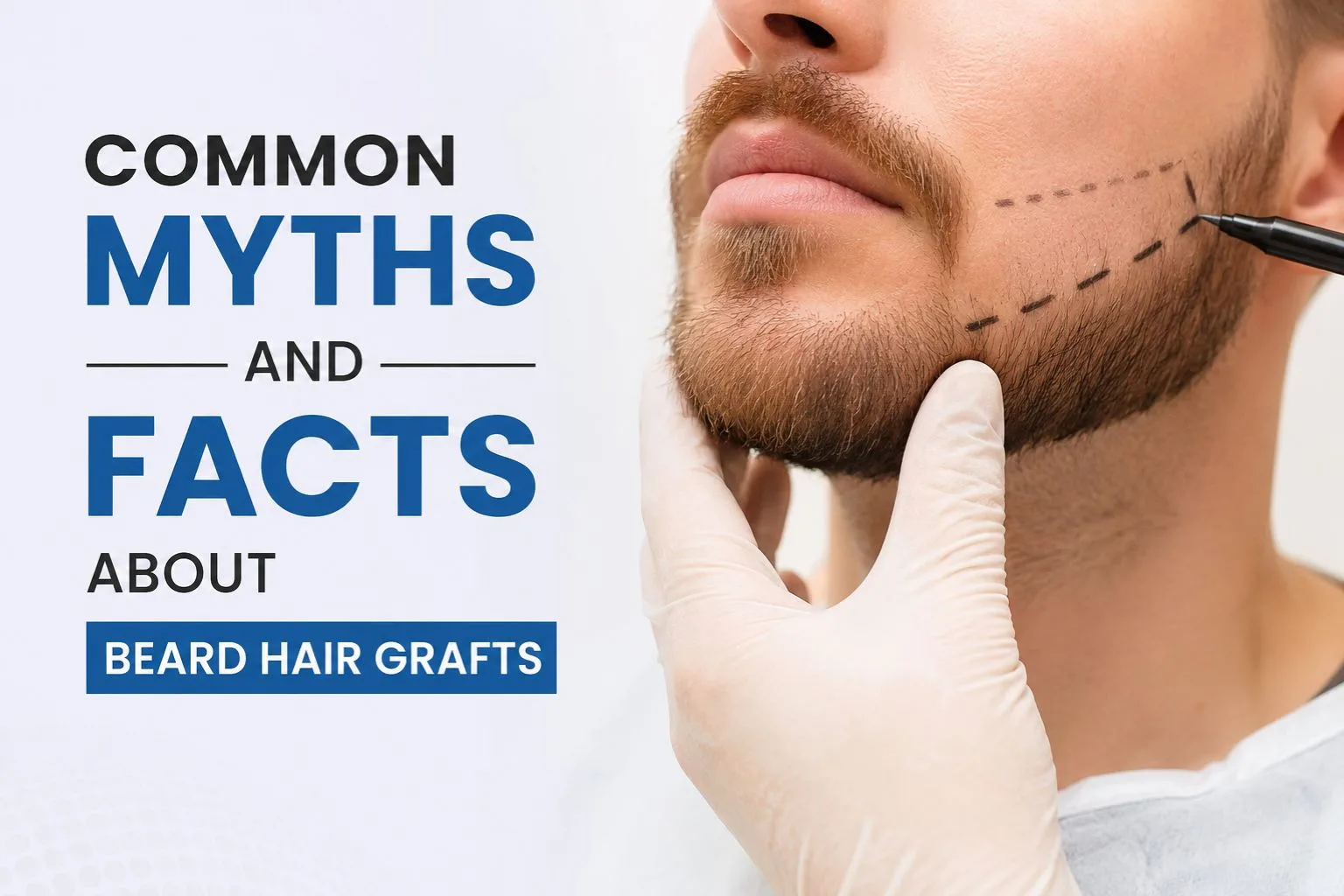
Patchy beards are more common than most men realise. Genetics, hormones, scarring, or an uneven growth pattern can leave bald spots along the jawline or cheeks, no matter how long you let it grow. For years, the only fix was a good razor and low expectations.
That's changed. Beard hair grafts have become one of the most requested facial hair treatments in the UK, and for good reason: they give men a fuller, more even beard using their own natural hair. But because the procedure is still fairly new to mainstream conversation, it's surrounded by half-truths, outdated assumptions, and straight-up myths. Some of these myths stop men from getting a treatment that could genuinely change how they feel about their appearance. Others create unrealistic expectations that lead to disappointment.
“Did You Know? An average beard graft session can involve anywhere from 500 to over 2,000 individual grafts, depending on the coverage needed. Each one is placed by hand, which is why precision and surgical experience matter so much for the final outcome.”
In this guide, we're separating fact from fiction so you can make an informed decision.
What Is Beard Hair Grafting, Exactly?
Beard hair grafting is a form of facial hair restoration where individual hair follicles are taken from a donor area, usually the back or sides of the scalp, and implanted into thinning or bald patches on the beard. The two main techniques used are FUE (Follicular Unit Extraction) and FUT (Follicular Unit Transplantation), both of which allow surgeons to place grafts with precision so the new hair grows in the natural direction of beard hair.
Because the follicles are your own, results blend with your existing facial hair and grow permanently once they settle in.
Myth 1: Beard Transplants Look Fake or Unnatural
This is probably the biggest misconception out there, usually based on outdated photos or poorly done procedures.
The fact: Modern beard grafting techniques are far more advanced now. Skilled surgeons study your natural hair growth pattern and density before placing a single graft, angling each hair to match the surrounding beard. A well-planned facial hair restoration is genuinely difficult to spot, even up close.
Myth 2: Only Men With Full Beard Loss Need It
Some people assume grafting is only for men who can't grow a beard at all.
The fact: Most patients actually have partial beard growth. Common reasons for booking include patchy cheeks, thin moustache areas, scarring from acne or injury, and uneven jawline coverage. Beard hair grafts are just as useful for filling gaps and boosting density as they are for building a beard from scratch.
Myth 3: The Results Look Obvious Straight Away
People often expect instant, dramatic results, like in a before-and-after photo taken the next day.
The fact: Transplanted hair goes through a shedding phase in the first few weeks, which is completely normal. New growth typically begins around three to four months later, with fuller results visible closer to the nine to twelve month mark. Patience is part of the process.
Myth 4: It's a Painful, High-Risk Procedure
The word "surgery" tends to make people picture something far worse than it actually is.
The fact: Beard transplants are performed under local anaesthetic, so discomfort during the procedure is minimal. Most patients describe mild tenderness for a day or two afterwards, similar to light sunburn. Carried out by GMC-registered surgeons in a properly regulated clinic, the procedure carries a low risk of complications.
Myth 5: Donor Hair Won't Match Your Beard
Some men worry that scalp hair implanted into the face will look completely different in texture.
The fact: Beard and scalp hair do have slightly different characteristics, but experienced surgeons account for this during planning. They select donor follicles carefully and place them at the correct angle and depth, so the transplanted hair grows in a way that suits facial hair patterns. Over time, most patients find the texture blends naturally with the rest of their beard.
Myth 6: Anyone Can Perform Facial Hair Restoration Safely
Beard transplants have grown in popularity, so plenty of clinics now offer them, but not all providers are equally qualified.
The fact: Precision matters enormously here, since the face has far less room for error than the scalp. Choosing a clinic with experienced, GMC-registered surgeons and proper CQC regulation makes a real difference to both safety and the final look of your beard density.
Common Mistakes Men Make Before Getting a Beard Transplant
- Choosing a clinic based on price alone instead of surgeon experience
- Expecting full results within the first few weeks
- Skipping a proper consultation to assess donor hair supply
- Not following aftercare instructions during the healing phase
- Ignoring realistic expectations around beard density and coverage
Pro Tip
If you're comparing clinics, ask directly about the surgeon's qualifications, how many beard procedures they've performed, and what aftercare support is included. A clinic that's transparent about these details is one you can trust.
Having worked alongside patients considering facial hair restoration, one thing is consistent: the men who research the timeline, technique, and surgeon beforehand walk away far happier with their results than those who rush the decision.
Ready to Get the Beard You've Always Wanted?
If patchy growth or uneven coverage has been holding your confidence back, a proper consultation is the best next step. At The Skin & Hair Clinic in Liverpool, our GMC-registered surgeons assess your donor hair and goals before recommending a tailored beard transplant plan, with CQC-regulated care from start to finish.
Book your free consultation today and find out whether beard hair grafts are the right fit for you.
Frequently Asked Questions
1. How long do beard transplant results last?
Once transplanted follicles settle in and start growing, the results are permanent. The hair behaves just like your natural beard hair, including needing regular trims and grooming.
2. Is beard transplant surgery painful?
The procedure is done under local anaesthetic, so pain during treatment is minimal. Mild soreness or tightness for a couple of days afterwards is normal and manageable with basic aftercare.
3. How many grafts are needed for a full beard?
This depends on your existing coverage and goals, but most beard transplants involve between 500 and 2,500 grafts. A consultation will give you an accurate estimate based on your donor supply.
4. Will my beard transplant look patchy while it heals?
Some shedding of the transplanted hair happens in the first few weeks, which is a normal part of the growth cycle. Steady, natural-looking growth usually appears from month three onward.
5. Can I combine beard grafts with a scalp hair transplant?
Yes, many clinics can plan both procedures around your donor hair supply, either together or in separate sessions, depending on how much coverage you need in each area.