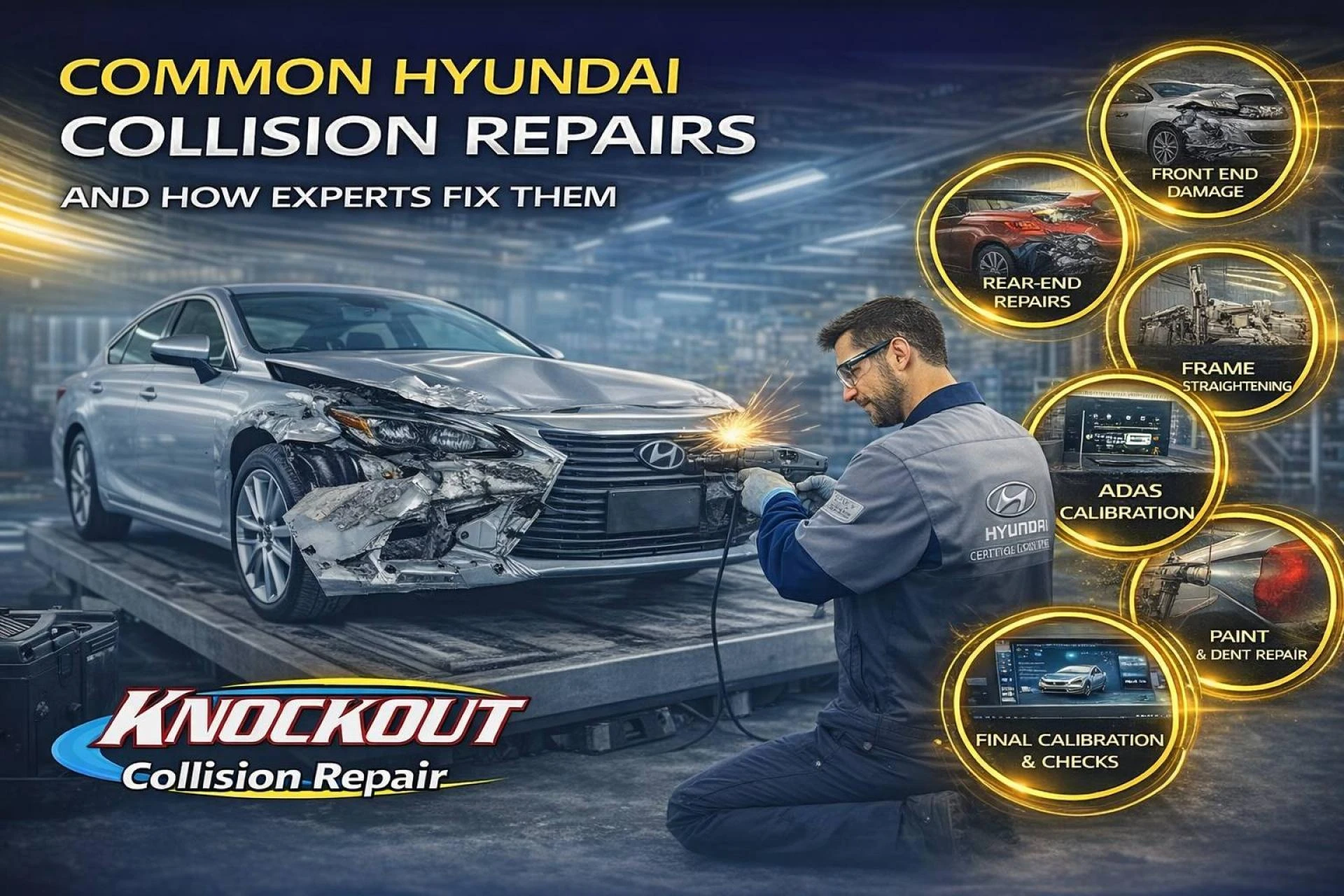
Hyundai vehicles are known for their reliability, safety features, and modern design. However, like any car on the road, they are vulnerable to accidents, minor collisions, and everyday wear. Whether it’s a parking lot dent or a more serious crash, collision damage can affect both the appearance and performance of your Hyundai. Understanding the most common Hyundai collision repairs and how professionals handle them can help vehicle owners make informed decisions and ensure their cars are restored to optimal condition. Looking for the best collision repair chico? Choose Knockout Collision Repair.
Dent and Scratch Repair
One of the most frequent issues Hyundai owners face after minor accidents is dents and surface scratches. These can occur from low-speed impacts, shopping carts, or debris on the road. While they may appear cosmetic, untreated dents can lead to paint damage and rust over time. Professional technicians often use paintless dent repair (PDR) techniques to gently reshape the metal without affecting the original paint. For deeper scratches, sanding, refinishing, and precision paint matching are used to restore the vehicle’s appearance seamlessly.
Bumper Damage and Replacement
Bumpers are designed to absorb impact and protect the rest of the vehicle, making them one of the most commonly repaired parts after a collision. Hyundai bumpers, especially in newer models, often house sensors and safety components. Experts carefully assess whether the bumper can be repaired or requires replacement. When replacement is necessary, certified parts and advanced fitting techniques ensure proper alignment and functionality of parking sensors and driver-assistance features.
Frame Straightening and Structural Repairs
After moderate to severe collisions, the vehicle’s frame may become misaligned. Even a small structural shift can affect handling, tire wear, and safety performance. Auto body professionals use computerized frame measuring systems and hydraulic equipment to restore the frame to factory specifications. This process ensures the vehicle maintains its original strength and structural integrity, which is especially important for passenger safety.
Paint Restoration and Color Matching
Hyundai vehicles feature distinctive paint finishes that enhance their modern design. After a collision, repainting damaged areas requires precision to ensure the new paint matches the original color and texture. Professional repair centers use digital color-matching tools and controlled spray environments to achieve consistent results. This not only improves appearance but also protects the vehicle’s body from environmental damage and corrosion.
Glass and Windshield Replacement
Collisions can result in cracked or shattered windshields and windows. Since Hyundai vehicles often include advanced driver-assistance systems that rely on windshield-mounted sensors and cameras, glass replacement must be handled carefully. Experts install high-quality glass and recalibrate safety systems to ensure features like lane departure warning and automatic braking continue to function correctly.
Repairing Safety Systems and Sensors
Modern Hyundai models are equipped with numerous safety features, including airbags, blind-spot monitoring, and adaptive cruise control. After an accident, these systems may need inspection, repair, or recalibration. Professional technicians use diagnostic tools to identify issues and restore system functionality. This step is critical, as improperly functioning safety systems can compromise driver and passenger protection.
Suspension and Alignment Repairs
A collision can affect more than just the exterior,it may impact the suspension system and wheel alignment. Drivers may notice uneven tire wear, steering issues, or vibrations after an accident. Experts conduct detailed inspections and use specialized alignment equipment to restore stability and handling. Proper suspension repair ensures the vehicle drives smoothly and safely.
Door and Panel Replacement
Side-impact collisions often damage doors and body panels. Repair professionals evaluate whether panels can be repaired or require replacement. Using manufacturer-approved parts and installation methods, technicians ensure proper fit, sealing, and functionality. This process maintains the vehicle’s structural design and protects passengers in future incidents.
Restoring Hyundai to Factory Standards
The goal of professional collision repair is not just to fix visible damage but to restore the vehicle to its original condition. Certified technicians follow manufacturer guidelines, use advanced tools, and prioritize quality workmanship. From cosmetic repairs to structural restoration, every step is designed to maintain safety, performance, and value.
Why Professional Expertise Matters?
Attempting to ignore or delay collision repairs can lead to long-term problems, including rust, safety risks, and decreased resale value. Hyundai vehicles, especially newer models, are built with advanced materials and integrated technology that require specialized knowledge. Professional repair centers understand these complexities and provide solutions tailored to each model.
Keeping Your Hyundai Safe and Reliable
Collision damage can be stressful, but timely and expert repairs ensure your Hyundai remains dependable and visually appealing. Whether dealing with minor dents or major structural issues, trained professionals use modern techniques to restore vehicles efficiently. By addressing damage promptly and trusting experienced technicians, Hyundai owners can protect their investment and continue enjoying a safe, comfortable driving experience for years to come. Visit the best hyundai collision repair center in chico - Choose Knockout Collision Repair for all your car repair requirements.