Owning a hot tub is a great way to enjoy relaxation, reduce stress, and create a luxury spa experience at home. However, keeping your hot tub in excellent condition requires regular care and attention. Many owners unknowingly make maintenance mistakes that can affect water quality, equipment performance, and the overall lifespan of their spa. Understanding these common errors can help you protect your investment and enjoy a cleaner, safer, and more efficient hot tub experience.
Neglecting Regular Water Testing
One of the most common hot tub maintenance mistakes is failing to check water chemistry regularly. Unbalanced water can lead to cloudy water, unpleasant odours, skin irritation, and damage to internal components. High or low pH levels can reduce the effectiveness of sanitizers and encourage bacterial growth.
To avoid this issue, test your hot tub water several times a week and adjust chemical levels as needed. Maintaining the correct balance of pH, alkalinity, and sanitizer levels helps keep the water safe while protecting your spa equipment.
Using Too Many or Too Few Chemicals
Another frequent mistake is adding incorrect amounts of chemicals. Some owners assume that using more sanitizer will keep their hot tub cleaner, but excessive chemicals can damage surfaces, affect water comfort, and create an unpleasant experience. On the other hand, using too little sanitizer may allow harmful contaminants to build up.
Always follow manufacturer guidelines and use high-quality hot tub chemicals designed specifically for spa water. Proper dosing ensures effective cleaning without causing unnecessary problems.
Forgetting to Clean or Replace Filters
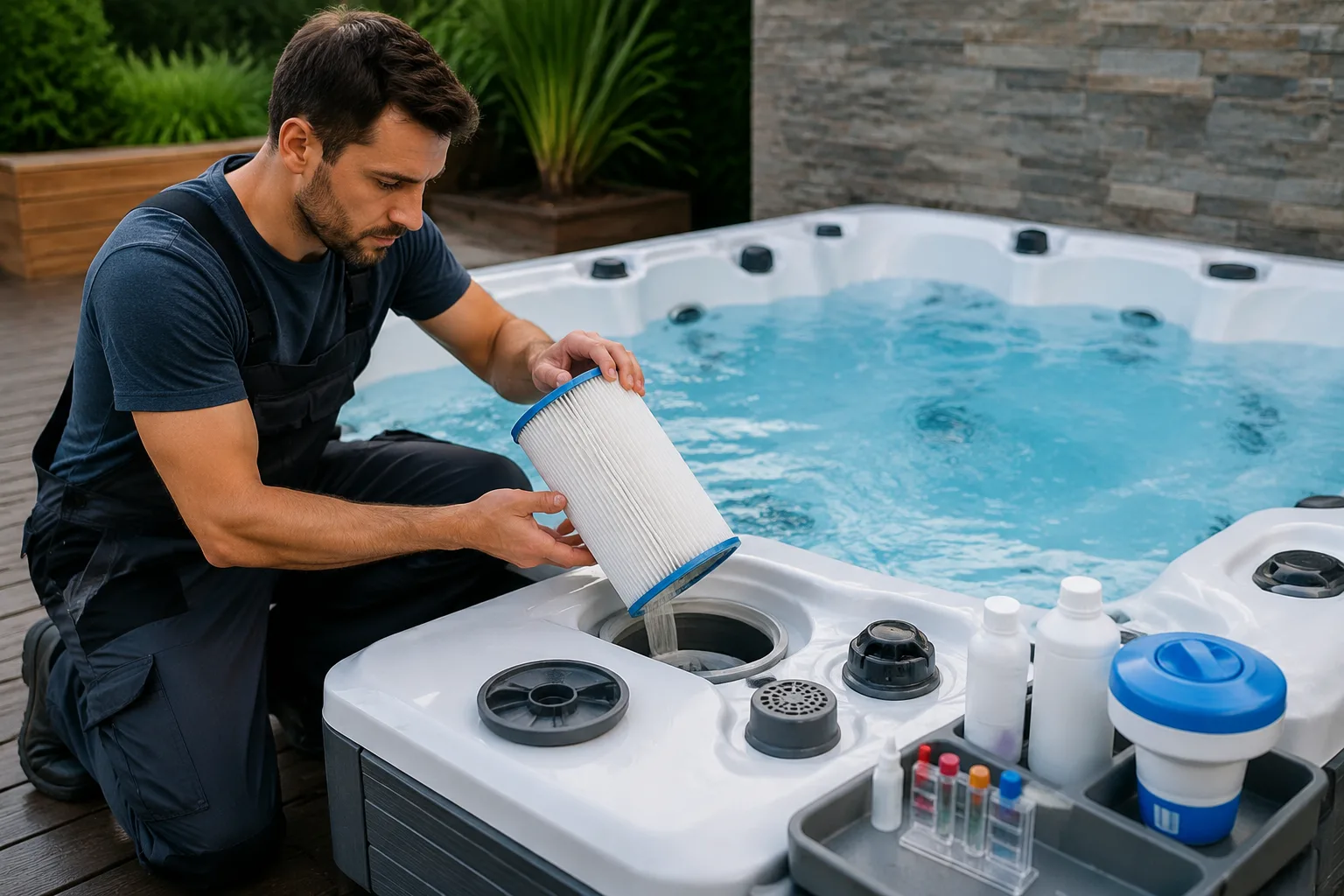
Hot tub filters play an important role in removing dirt, oils, and debris from the water. However, many owners overlook filter maintenance until problems occur. A dirty or clogged filter can reduce water flow, put extra pressure on the pump, and make the water appear cloudy.
Cleaning your filters regularly and replacing them when necessary helps maintain efficient filtration. A well-maintained filter system also improves water circulation and reduces the workload on your hot tub components.
Not Changing the Water Regularly
While proper chemical treatment helps maintain water quality, it does not eliminate the need for complete water changes. Over time, minerals, chemical residues, and contaminants can accumulate, making the water harder to balance.
Most hot tubs require a full water replacement every few months, depending on usage and maintenance habits. Draining, cleaning, and refilling your spa regularly keeps the water fresh and prevents long-term buildup.
Ignoring the Hot Tub Cover
A hot tub cover does more than protect your spa from leaves and debris. It also helps maintain water temperature and reduces energy consumption. Some owners neglect cover maintenance, leading to damaged covers that allow heat loss and contamination.
Clean your cover regularly, check for signs of wear, and replace it if it no longer provides proper insulation. A quality cover can improve efficiency and protect your hot tub throughout the year.
Failing to Inspect Equipment
Many hot tub problems become expensive because small issues are ignored for too long. Unusual noises, reduced water flow, leaks, or inconsistent heating may indicate equipment problems that require attention.
Regularly inspect pumps, heaters, jets, and other components. Addressing minor issues early can prevent costly repairs and extend the life of your hot tub.
Conclusion
Proper hot tub maintenance does not have to be complicated, but consistency is essential. Avoiding common mistakes such as poor water management, neglected filters, and skipped inspections can help keep your spa operating efficiently for years. By following a regular maintenance routine and using the right products, you can enjoy a clean, comfortable, and relaxing hot tub experience every time.