
English grammar plays an important role in reading, writing, speaking, and overall academic performance. However, many students struggle with basic grammar rules even when they understand the subject they are studying. Small mistakes with sentence structure, verb tenses, punctuation, or word usage can make school assignments harder and affect a student's confidence.
The good news is that grammar problems can be improved with regular practice, clear explanations, and the right learning support. For families looking for an english tutor near me in Saskatoon, personalized tutoring can provide students with focused guidance based on their individual needs.
Subject-Verb Agreement
One of the most common grammar problems students face is subject-verb agreement. The subject and verb in a sentence need to match in number.
For example:
- She plays basketball after school.
- They play basketball after school.
Students sometimes use the plural form of a verb with a singular subject or vice versa. This can happen when sentences become longer or more complicated.
How to fix it
Students should first identify the subject of the sentence and then choose the verb that matches it. Practicing short sentences before moving to more complex ones can make this rule easier to understand.
Confusion With Verb Tenses
Verb tenses tell readers when an action happens. Students may switch between past, present, and future tense without realizing it.
For example, a student might write:
"Yesterday, I go to the library and finished my homework."
A better version would be:
"Yesterday, I went to the library and finished my homework."
How to fix it
Students can improve their understanding of tenses by identifying time-related words such as yesterday, today, tomorrow, already, and next week. Reading regularly can also help students see how different tenses are used naturally.
Sentence Fragments
A complete sentence should express a complete thought. Sentence fragments often occur when students leave out a subject or verb.
For example:
"Because I was tired."
This does not express a complete thought. It could be changed to:
"I went to bed early because I was tired."
How to fix it
Students should check whether every sentence has a clear subject, a verb, and a complete idea. Reading written work aloud can also help identify sentences that sound incomplete.
Run-On Sentences
Run-on sentences happen when two or more complete ideas are incorrectly joined together.
For example:
"I finished my homework I watched television."
The ideas need to be separated or connected correctly.
A better version would be:
"I finished my homework, and then I watched television."
How to fix it
Students can learn to use full stops, commas, conjunctions, and other punctuation marks correctly. Breaking long sentences into smaller ideas is often a useful first step.
Incorrect Use of Articles
Articles such as a, an, and the can be confusing for students who are still developing their English skills.
For example:
"I saw a elephant at the zoo."
The word an should be used before "elephant" because the word begins with a vowel sound:
"I saw an elephant at the zoo."
How to fix it
Students should practice articles through everyday examples rather than simply memorizing rules. Reading books, short stories, and age-appropriate articles can help them recognize how articles are used in real sentences.
Problems With Pronouns
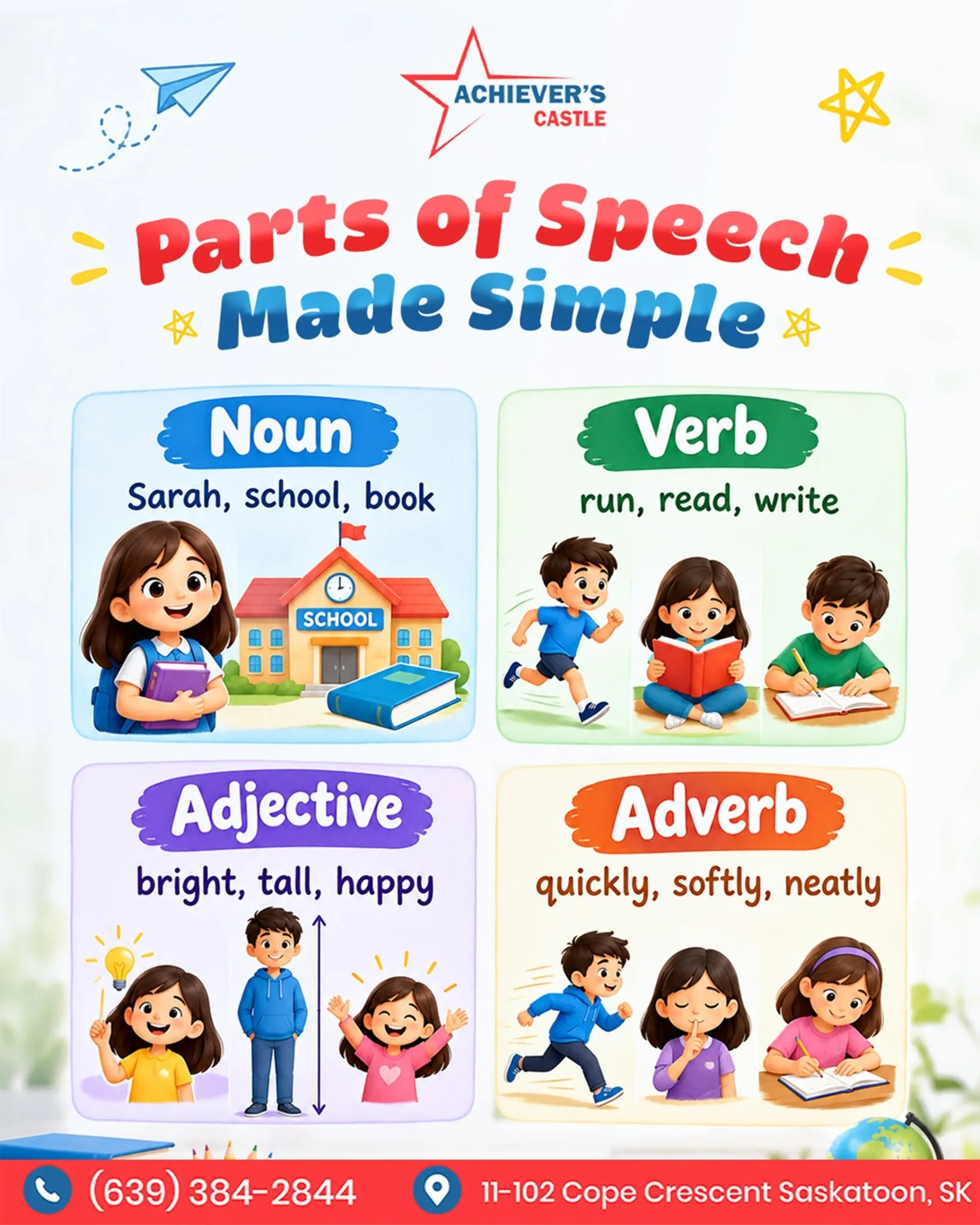
Pronouns replace nouns and make sentences easier to read. However, students may use unclear or incorrect pronouns.
For example:
"Sarah told Emma that she needed to study."
Who needs to study—Sarah or Emma? The meaning is unclear.
How to fix it
Students should make sure that every pronoun clearly refers to the correct person or thing. Rewriting unclear sentences is an effective way to build this skill.
Punctuation Mistakes
Punctuation helps readers understand the meaning and flow of writing. Missing commas, full stops, quotation marks, and apostrophes can make otherwise good writing difficult to understand.
For example:
"Let's eat Grandma."
The missing comma changes the meaning completely. The intended sentence is:
"Let's eat, Grandma."
How to fix it
Students can improve punctuation by practicing short paragraphs and checking their work after writing. A simple editing checklist can help them look for missing punctuation before submitting an assignment.
Spelling and Vocabulary Challenges
Grammar and vocabulary often work together. Students with limited vocabulary may find it difficult to create clear and varied sentences. Spelling mistakes can also affect the quality of written work.
Regular reading is one of the best ways to build vocabulary naturally. Students can also keep a small list of new words and use each word in their own sentence.
How English Tutoring Can Help
Every student learns differently. Some may need help with basic grammar rules, while others may understand grammar but struggle to apply it in essays, assignments, or exams.
An experienced tutor can identify specific problem areas and create practice activities around them. English tutoring can also support reading comprehension, writing development, vocabulary building, and communication skills.
Instead of trying to correct every mistake at once, students can work on one area at a time. This approach can make learning less overwhelming and help them develop confidence.
Building Better Grammar Skills Takes Practice
Grammar improvement does not happen overnight. Students need opportunities to read, write, review their mistakes, and try again. With consistent practice and appropriate guidance, common grammar problems can become much easier to manage.
For parents in Saskatoon, choosing the right academic support can make a meaningful difference. A personalized learning environment can help students understand difficult concepts, improve their English skills, and become more confident in their schoolwork.
At Achiever's Castle, students can receive learning support designed around their individual academic needs. With regular practice and the right guidance, stronger grammar skills can become a foundation for better reading, writing, and overall academic success.