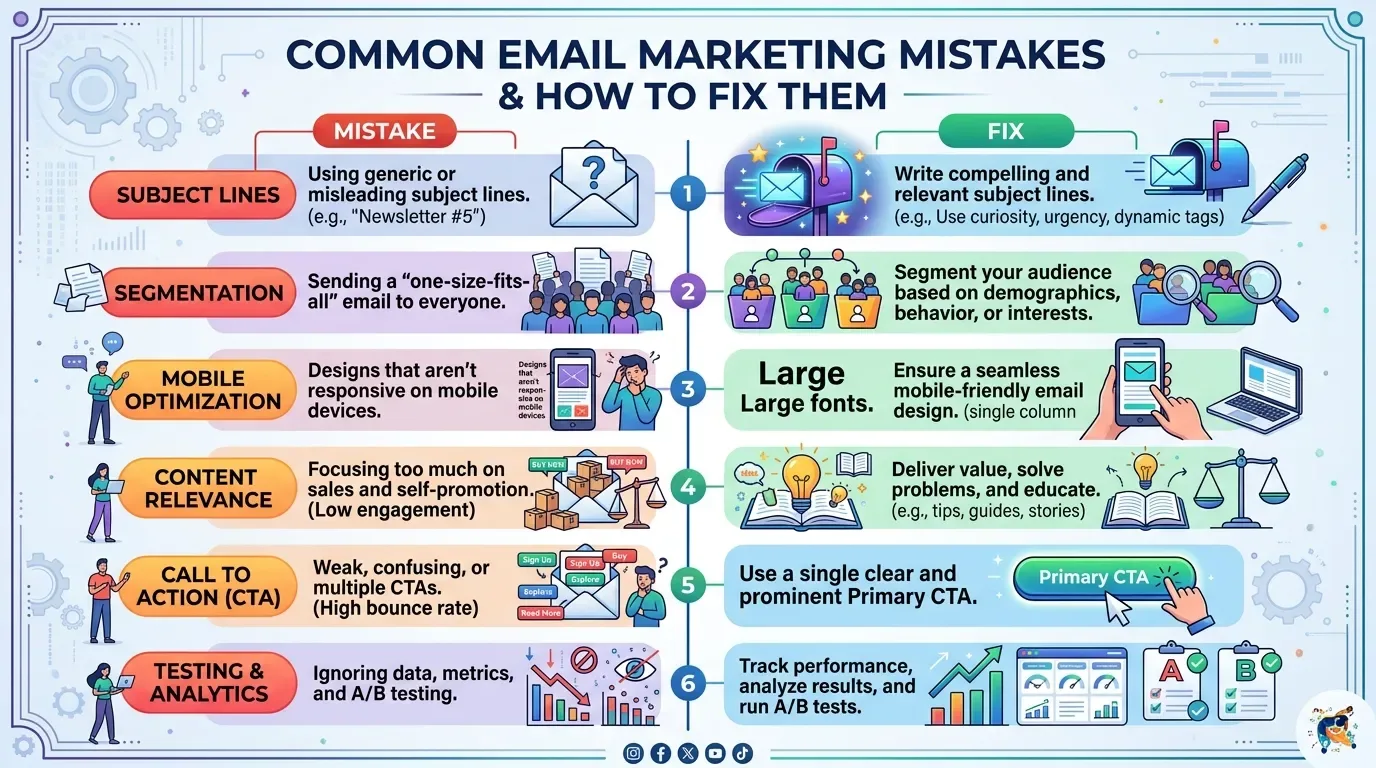
Email marketing remains one of the most effective digital marketing channels for building customer relationships, generating leads, and driving sales. Unlike social media platforms that rely on changing algorithms, email gives businesses direct access to their audience. However, even well-intentioned campaigns can fail when marketers overlook critical details that impact engagement and deliverability.
Many businesses invest significant time creating email campaigns but struggle to achieve strong open rates, clicks, and conversions. In most cases, the problem is not email marketing itself but the common mistakes that reduce effectiveness. By understanding these errors and learning how to avoid them, businesses can improve campaign performance and build stronger connections with subscribers.
Why Email Marketing Mistakes Matter
Every email campaign represents an opportunity to communicate with potential customers. When campaigns are poorly targeted, irrelevant, or difficult to engage with, subscribers may ignore messages, unsubscribe, or even mark emails as spam. These actions can negatively affect sender reputation and reduce future deliverability.
Successful email marketing requires a balance of strategy, personalization, and ongoing optimization. Small improvements in content, targeting, and timing can have a significant impact on long-term results. Businesses that focus on delivering value and understanding subscriber needs are more likely to achieve consistent growth through email marketing.
Sending Generic Emails to Your Entire List
One of the biggest mistakes businesses make is treating every subscriber the same. Sending identical emails to an entire list may seem convenient, but it often results in lower engagement because different subscribers have different interests and needs.
A new subscriber may be looking for educational content, while a returning customer may be interested in product updates or exclusive offers. Audience segmentation allows marketers to group subscribers based on behavior, interests, demographics, or purchase history. This makes it easier to send relevant content that resonates with each group.
When subscribers receive emails that match their interests, they are more likely to open messages, click links, and take action.
Focusing on List Size Instead of List Quality
Many marketers become obsessed with growing subscriber numbers while ignoring the quality of their email list. A large list may look impressive, but it provides little value if subscribers rarely engage with emails.
Inactive contacts, outdated addresses, and invalid email accounts can lower engagement rates and harm deliverability. Regular list cleaning helps maintain a healthy database by removing inactive subscribers and reducing bounce rates.
A smaller list of engaged subscribers often produces better results than a large list filled with uninterested contacts. Quality should always take priority over quantity.
Writing Weak Subject Lines
The subject line is often the deciding factor in whether an email gets opened. Generic, unclear, or overly promotional subject lines frequently lead to poor open rates.
Effective subject lines should communicate value quickly and encourage curiosity without being misleading. Readers should immediately understand why the email is worth opening. Clear and relevant messaging tends to perform better than exaggerated marketing language.
Testing different subject line styles can help identify what resonates best with your audience and improve campaign performance over time.
Sending Too Many Sales Emails
While email is an excellent channel for promoting products and services, constantly sending sales-focused messages can quickly reduce subscriber engagement. When every email feels like a promotion, subscribers may lose interest or unsubscribe.
A better approach is to balance promotional content with educational resources, helpful tips, industry insights, and useful information. This creates a more positive experience and helps build trust with subscribers.
Businesses that consistently provide value are often more successful when they eventually present a sales offer because subscribers already see them as a trusted source of information.
Ignoring Personalization
Modern consumers expect personalized experiences. Generic emails that fail to acknowledge subscriber interests often feel impersonal and irrelevant.
Personalization goes beyond simply adding a subscriber’s first name. It can include product recommendations, location-based content, browsing behavior, or customized offers based on previous interactions.
Relevant and personalized emails typically generate higher engagement because subscribers feel the content is designed specifically for them. Personalization helps strengthen customer relationships while improving campaign performance.
Failing to Optimize for Mobile Devices
A large percentage of email opens now occur on smartphones and tablets. Despite this, many businesses still create emails that are difficult to read on smaller screens.
Poor mobile experiences can result in lower engagement and missed opportunities. Text that is too small, images that load incorrectly, or buttons that are difficult to click can frustrate readers and reduce conversions.
Responsive email design ensures that emails display properly across all devices. Mobile-friendly layouts, readable fonts, and easy-to-tap buttons create a better user experience and encourage action.
Overlooking Email Deliverability
Creating great content is pointless if subscribers never receive it. Deliverability issues remain one of the most damaging email marketing problems because they prevent messages from reaching inboxes.
High bounce rates, spam complaints, poor sender reputation, and missing authentication settings can all affect deliverability. Businesses should regularly monitor these factors and implement email authentication protocols such as SPF, DKIM, and DMARC.
Strong deliverability practices help ensure emails reach their intended audience and maximize campaign effectiveness.
Skipping Campaign Testing
Many marketers send campaigns without testing important elements such as subject lines, layouts, images, or calls to action. This often results in missed opportunities for improvement.
A/B testing allows marketers to compare different versions of an email and identify which elements generate better results. Even small changes can significantly increase opens, clicks, and conversions.
Instead of relying on assumptions, businesses should use testing data to make informed decisions and continuously optimize their campaigns.
Ignoring Performance Data
Every email campaign generates valuable insights. Open rates, click-through rates, conversions, bounce rates, and unsubscribe rates provide important information about subscriber behavior.
Businesses that fail to analyze these metrics often continue using ineffective strategies without understanding why performance is declining. Regular reporting helps identify trends, uncover opportunities, and improve future campaigns.
Data-driven decision-making allows marketers to refine content, targeting, and timing to achieve better results over time.
Using Weak Calls to Action
Every email should guide subscribers toward a specific action. Whether the goal is making a purchase, downloading a resource, or visiting a website, readers need clear direction.
Weak or confusing calls to action often result in lower conversions because subscribers are unsure what to do next. Strong calls to action use direct language, stand out visually, and align naturally with the purpose of the email.
When subscribers clearly understand the next step, they are more likely to engage with the content and complete the desired action.
Building a Stronger Email Marketing Strategy
Avoiding common email marketing mistakes requires ongoing attention and improvement. Successful campaigns are built on understanding subscriber needs, maintaining a healthy email list, creating relevant content, and continuously analyzing performance.
Businesses that focus on audience segmentation, personalization, deliverability, and testing often see better engagement and stronger long-term results. Instead of viewing email marketing solely as a sales channel, they use it as a relationship-building tool that provides consistent value to subscribers.
Conclusion
Email marketing continues to deliver excellent results for businesses that approach it strategically. However, mistakes such as poor segmentation, weak subject lines, excessive promotions, lack of personalization, and deliverability issues can significantly reduce campaign effectiveness.
The good news is that these problems are preventable. By focusing on relevant content, maintaining list quality, testing campaigns, and monitoring performance metrics, businesses can improve engagement, increase conversions, and maximize the return on their email marketing efforts.
Successful email marketing is not about sending more emails—it is about sending better emails that provide value, build trust, and encourage meaningful customer interactions.