
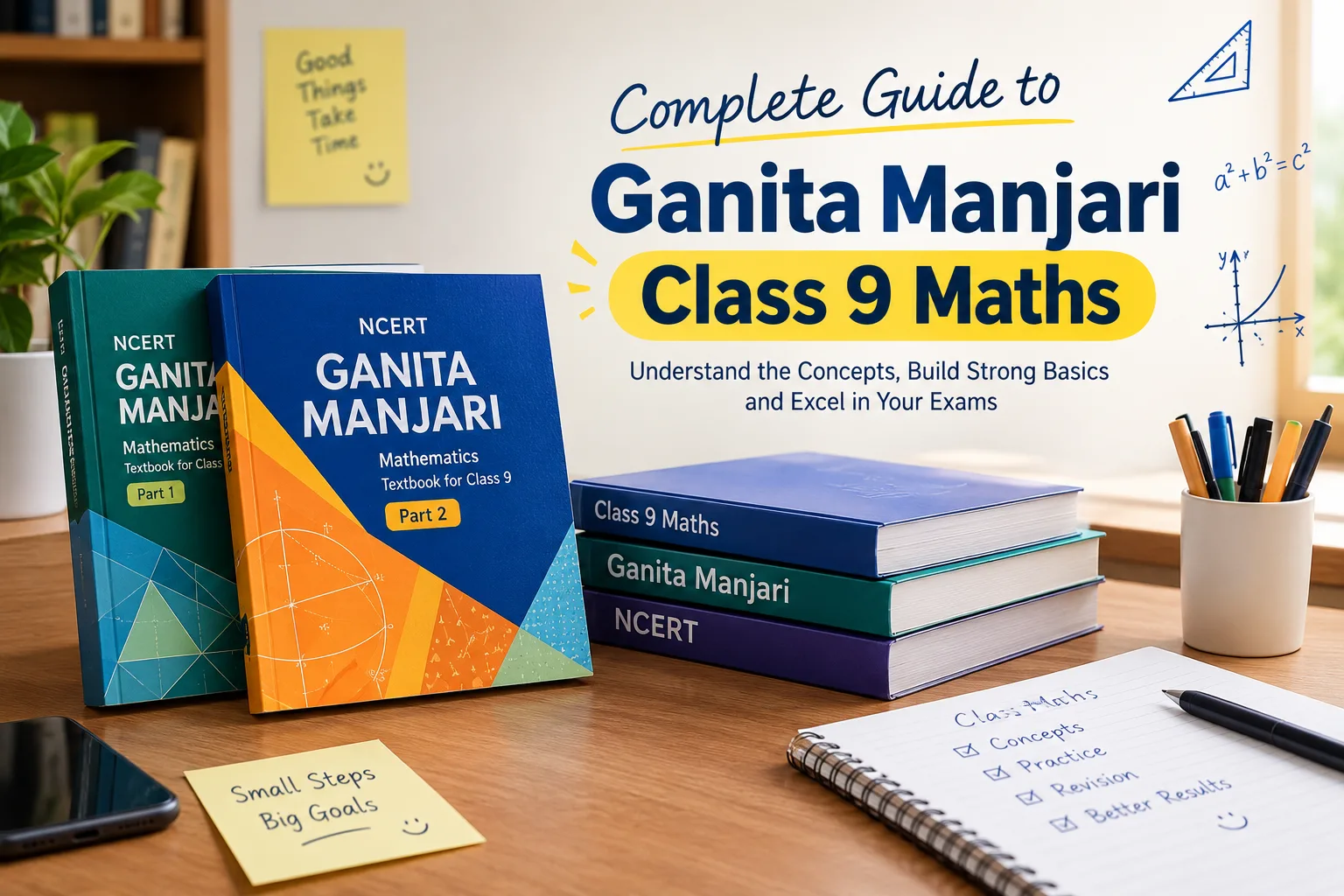
Class 9 Mathematics introduces students to more detailed concepts and multi-step problems. At this stage, mistakes are a normal part of learning, but some common errors can affect marks even when a student understands the basic concept.
The good news is that most of these mistakes can be reduced through regular practice and better exam habits. Identifying common problems early can help students become more accurate and confident in Mathematics.
1. Trying to Memorise Instead of Understanding
One of the most common mistakes is memorising formulas without understanding where or when they should be used.
A formula may be easy to remember, but students can still struggle when a question is presented in an unfamiliar format. Instead of memorising formulas alone, try to understand the concept behind them and solve several different types of questions.
Using a structured Class 9 Maths textbook can help students study concepts and examples together rather than treating formulas as isolated information.
2. Skipping Steps While Solving Problems
Students sometimes try to solve questions mentally or write only the final calculation. This can lead to avoidable errors.
Writing the important steps makes it easier to check where a mistake occurred. It can also make the solution easier for a teacher or examiner to follow.
This is particularly important for algebra and geometry, where one incorrect step can affect the entire answer.
3. Making Basic Calculation Errors
Even when the method is correct, simple calculation mistakes can result in an incorrect answer.
Common examples include:
- Sign errors with positive and negative numbers
- Incorrect multiplication or division
- Copying a number incorrectly
- Forgetting brackets
- Making mistakes while simplifying expressions
Students can reduce these errors by slowing down during calculations and checking important steps before moving to the next part of a problem.
4. Not Practising Enough Questions
Reading examples can help explain a concept, but Mathematics requires active practice.
After studying a topic, students should attempt questions without looking at the solution. If a particular type of question causes difficulty, they should practise several similar problems before moving ahead.
A resource such as Ganita Manjari Part II – Textbook of Mathematics for Class 9 can be incorporated into a regular practice routine alongside classroom learning.
5. Ignoring Difficult Chapters
Another common mistake is repeatedly postponing chapters that seem difficult.
Avoiding a difficult topic does not make it easier. Instead, break it into smaller sections. Understand one concept at a time and solve basic questions before attempting more complicated ones.
Students can also ask their teacher or classmates for clarification when they remain stuck after reviewing the topic themselves.
6. Confusing Similar Formulas or Concepts
Some mathematical formulas and concepts can appear similar, especially when several topics are studied close together.
Rather than learning them as a list, students can write down when each formula is used and practise questions where they have to decide which method is appropriate.
This type of practice improves conceptual understanding and reduces confusion during examinations.
7. Not Revising Previous Chapters
Finishing a chapter does not mean it should never be revisited.
Without revision, students may forget formulas, definitions or problem-solving methods before the final examination. A short weekly revision session can prevent this.
Students who prefer keeping their study material organised can use a Class 9 Maths Part 1 and Part 2 Combo Set to keep both parts available while revising different sections of the syllabus.
8. Looking at Solutions Too Quickly
When students cannot solve a question, it can be tempting to immediately check the answer.
However, spending a few extra minutes thinking about the problem can improve problem-solving skills. Try identifying what information is given, what needs to be found and which concept might be relevant.
If the question still cannot be solved, look at the solution carefully and then close the book and solve it again independently.
9. Poor Time Management During Exams
Knowing the subject is only one part of performing well in an examination. Students also need to manage their time.
Before beginning, quickly review the paper and identify questions that appear straightforward. Avoid spending too much time on a single difficult question. Return to it after completing the questions you can solve more confidently.
Practising timed question sets before the examination can make this process easier.
10. Not Checking the Final Answer
Students often finish a question and immediately move on. A quick check can sometimes catch simple mistakes.
If time allows, review calculations, signs, units and whether the final answer actually addresses the question. In geometry, check whether the required property or measurement has been used correctly.
Even a few minutes of final checking can prevent avoidable mark losses.
Building Better Maths Habits
The solution to most of these mistakes is not simply studying for longer. It is developing better study habits.
A useful routine can include:
- Understand the concept.
- Study a few worked examples.
- Solve questions independently.
- Mark difficult questions.
- Review mistakes.
- Revisit older topics regularly.
- Practise under a time limit before examinations.
Students can adapt this routine according to their school schedule and individual strengths.
Final Thoughts
Making mistakes is a natural part of learning Mathematics, particularly in Class 9 when students begin dealing with more complex concepts. The important thing is to understand why a mistake happened and avoid repeating it.
With consistent practice, careful calculations, regular revision and better examination habits, students can gradually improve both accuracy and confidence. A well-structured study resource, combined with classroom learning and independent